Wirtualne Grupy Narracyjne: Czwartek 2 lipca, 18:00 CET

Dziฤ™kujemy wszystkim, ktรณrzy wziฤ™li udziaล‚ w dzisiejszej grupie narracyjnej!
Wspรณlnie uwaลผnie przyjrzeliล›my siฤ™ zdjฤ™ciu Umbo (Otto Umbehra) โ€žTajemnica ulicy (Mysterium der StraรŸe)โ€, ktรณrego reprodukcjฤ™ zamieszczamy poniลผej.

Inspiracja do kreatywnego pisania brzmiaล‚a: โ€žOdpowiedz na pytanie ulicyโ€.

Wypowiedziana w tytule fotografii tajemnica wydawaล‚a siฤ™ byฤ‡ w czasie dzisiejszej sesji silnฤ… motywacjฤ… do odkrycia niewiadomego. Praca byล‚a wymagajฤ…ca, a momentami nawet nuลผฤ…ca i rozmijajฤ…ca siฤ™. Uczestnicy przedstawiali swoje interpretacje w sposรณb obszerny i domykajฤ…cy, broniฤ…c indywidualnych perspektyw. Moลผna byล‚o zaobserwowaฤ‡ niezwykล‚ฤ… dynamikฤ™ zgadzania siฤ™ i niezgadzania ze sposobem patrzenia innego. Wzajemne dostrzeลผenie okazywaล‚o siฤ™ nie takie oczywiste, a grupa interpretujฤ…c tekst mรณwiล‚a o niewidzeniu i przeoczeniu. W odpowiedzi na inspiracjฤ™ daล‚o siฤ™ sล‚yszeฤ‡ gล‚os sprzeciwu, niemoลผliwoล›ci poznania niewiadomego. Jednakลผe peล‚na gotowoล›ฤ‡ do interpretacji wypowiedziana w trakcie przedstawiania siฤ™ uczestnikรณw nie daล‚a za wygranฤ…. Kiedy pod sam koniec grupa zdecydowaล‚a siฤ™ na wspรณlny powrรณt do tekstu, niespodziewana zmiana perspektywy patrzenia (dosล‚owne i przenoล›ne odwrรณcenie zdjฤ™cia do gรณry nogami) przyniosล‚a satysfakcjonujฤ…ce poczucie dokonanego odkrycia.

Zapraszamy do udziaล‚u w kolejnych sesjach, ktรณrych terminy podane sฤ… na polskiej podstronie Wirtualnych Grup Narracyjnych. Najbliลผsza grupa odbฤ™dzie siฤ™ 7 lipca (wtorek) o godzinie 18:00 โ€“ zarejestruj siฤ™ juลผ dziล›.

Wszelkie pytania oraz proล›by o organizacjฤ™ indywidualnych grup narracyjnych dla Waszych zespoล‚รณw moลผna przesyล‚aฤ‡ na adres: narrativemedicine@cumc.columbia.edu oraz humanistykamedyczna@cm.uj.edu.pl.

Do zobaczenia niebawem!
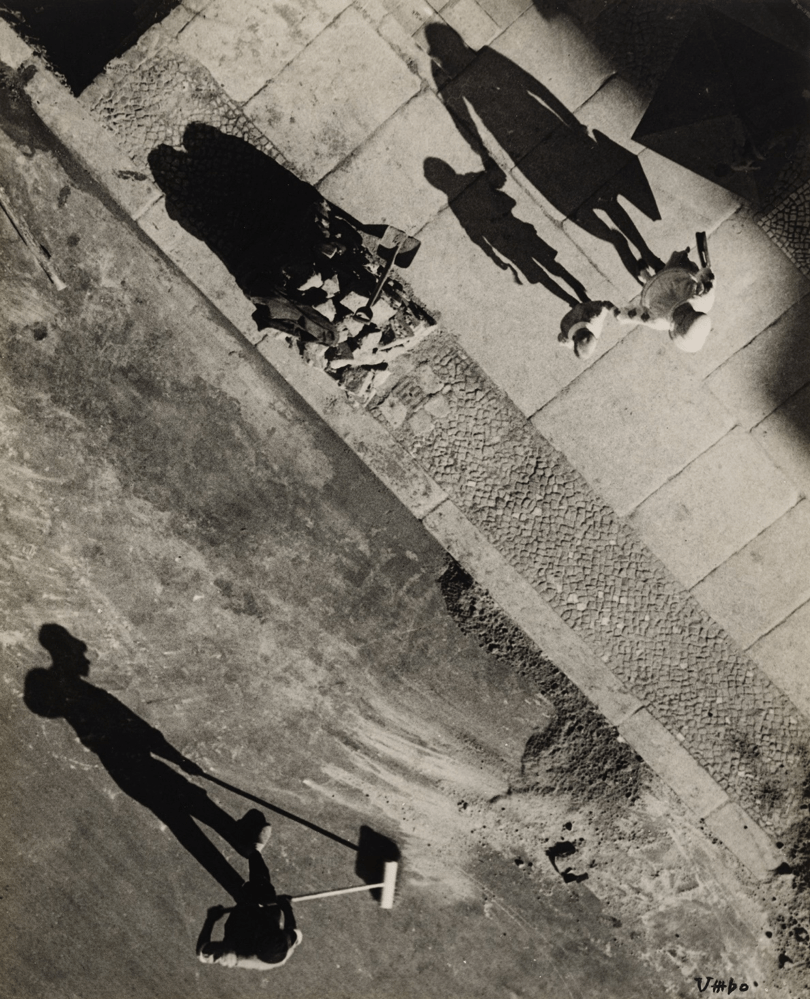
Umbo (Otto Umbehr) โ€žTajemnica ulicy (Mysterium der StraรŸe)โ€, 1928, Thomas Walther Collection / Umbo (Otto Umbehr) โ€žMystery of the Street (Mysterium der StraรŸe)โ€, 1928, Thomas Walther Collection

***

Thank you to everyone who began with us the work during this very unusual session.

Together we looked at โ€žMystery of the Street (Mysterium der StraรŸe),โ€ a painting by Umbo (Otto Umbehr), posted above.

Our prompt for today was: โ€œAnswer the question of the street.โ€

The mystery expressed in the title of the photography seemed to be a strong motivation for discovering the unknown during today’s session. The work was demanding, and sometimes even tedious and going separate ways. Participants presented their interpretations in a comprehensive and closing way, defending individual perspectives. The extraordinary dynamics of agreeing and disagreeing with the way of looking at another could be observed. Mutual perception turned out to be not so obvious, and the group interpreting the text talked about not seeing and overlooking. In the response to the prompt, one could hear a voice of opposition, the impossibility of knowing the unknown. However, full readiness to interpret expressed when the participants introduced themselves was not given up. When at the end the group decided to come back to the text together, the unexpected change in perspective (literally and figuratively turning the photo upside down) brought a satisfying sense of discovery.

Please join us for our next session: Wednesday July 8th, 12pm EDT (in English), with more times listed on our Live Virtual Group Sessions page.

If you have questions, or would like to schedule a personalized narrative medicine session for your organization or team, email us at narrativemedicine@cumc.columbia.edu.

We look forward to seeing you again soon!

Live Virtual Group Session: 6pm EDT July 6th 2020

On Monday July 6, 2020 28 participants, including a handful of newcomers, came together from all across  the USA, as well as Canada, New Zealand, UK, and India.

The text we read together was โ€œBring Me the Sunflower So I Can Transplant Itโ€ by Eugenio Montale. After listening to two different voices read the poem aloud in English, we experienced the original text in Italian, listening for differences in sounds, word choices, and musicality. We were moved to examine the translation and the complexity of the process. For example, what changes for a reader when a sunflower is said to โ€œshow all day to the blue reflection of the sky the anxiety of its golden faceโ€ and what happens when the flower is seen to โ€œlift the craving of its golden face to the mirroring blueโ€?

In our close reading, we paid attention to โ€œplantโ€ and โ€œtransplantโ€, which we observed are both nouns and verbs. In doing so, we looked at the โ€œspecial language of placeโ€, as highlighted by one of our participants: the art of planting and transplanting involves a dialogue among the plant in question, its roots, the new and the old soil, and the hands that are placing a living thing in the earth. One person read the text as implying: people, as well as flowers, put down roots.

Discussions open up when participants share their different reader-responses. It is always incredibly humbling for us to remember that there are as many interpretations as there are participants in the room. In particular, we focused on the โ€œIโ€ and โ€œyouโ€ in the poem, and the varied shades the word โ€œbringโ€ can have. This evening, one participant heard the poemโ€™s โ€œIโ€ as making a โ€œdemand of the youโ€ and explained that seeing, in the Italian version, the familiar form โ€œtuโ€ caused her to sense a power imbalance between the one โ€œwho commands to bring a sunflowerโ€ and the one โ€œwho will do the work of plantingโ€. Another participant focused on contrasts in the poemโ€”beauty and darkness appearing in proximity โ€“ and the interpretation of โ€œbring meโ€ more as a โ€œgentle pleaโ€ than a command. Another person shared that the poem made her think of Vincent Van Goghโ€™s paintings of sunflowers (which we readily projected alongside paintings by Klimt and Van Gogh).  The poemโ€™s mention of โ€œanxietyโ€, she said, brought her back to Van Goghโ€™s struggles with anxiety, and the parallels between his love of light and Montaleโ€™s โ€œsunflower sent mad with light.โ€

After the group was prompted to write for 4 minutes, beginning with the words โ€œBring meโ€ฆโ€ three readers read their work. Listeners reflected back the beauty, generosity, grace, and gratitude expressed in the writing. The first piece of writing expressed a manโ€™s deep yearning for his children living thousands of miles away. โ€œBring meโ€ was repeated three times in ways that resonated with many in the group as we continue to find ourselvesโ€”due to the coronavirusโ€”isolated and separated from those we love. The second text was an invitation for an open exchange between a giver and a receiver: an exchange of lies, secrets, wrongdoings โ€œthat have not been told beforeโ€. In this piece there was not only an offering to listen but also a confession of oneโ€™s own failings. The ending suggested that an outcome of such an exchange might be that both could feel โ€œlighterโ€. A fellow participant highlighted how the writing described โ€œwhat we love in a good conversationโ€: openness, desire for dialogue, a determination to openly share what we tend to hide. The third reader asked to be brought the light and color of a sunflower in order to share with the universe.

In these times, when current events and fear of contagion lead us to reconsider terms of sharing, touching, passing on, we thoroughly enjoyed sharing this time with our participants, and โ€“ in the words of one of our participants โ€“ โ€œsharing the contagion of what transpires in our communityโ€. We left each other with the image of โ€œa smiling sunflowerโ€, โ€œgrace and reminders of what is importantโ€ and โ€œrich metaphors of transformation and optimismโ€. We hope this new week brings you all a similar richness of colors, experiences, and community sharing.

Participants are warmly encouraged to share what you wrote below (โ€œLeave a Replyโ€), to keep the conversation going here, bearing in mind that the blog of course is a public space where confidentiality is not assured.

Also, we would love to learn more about your experience of these sessions, so if youโ€™re able, please take the time to fill out a follow-up survey of one to two quick questions!

Please join us for our next session Wednesday, July 8th at 12pm EDT, with more times listed on our Live Virtual Group Sessions page.

We look forward to seeing you again soon!

Bring me the sunflower so I can transplant it โ€“ Eugenio Montale

Bring me the sunflower so I can transplant it
here in my own field burned by salt-spray,
so it can show all day to the blue reflection of the sky
the anxiety of its golden face.

Darker things yearn for a clarity,
bodies fade and exhaust themselves in a flood
of colors, as colors do in music. To vanish,
therefore, is the best of all good luck.

Bring me the plant that leads us
where blond transparencies rise up
and life evaporates like an essence;
bring me the sunflower sent mad with light. 

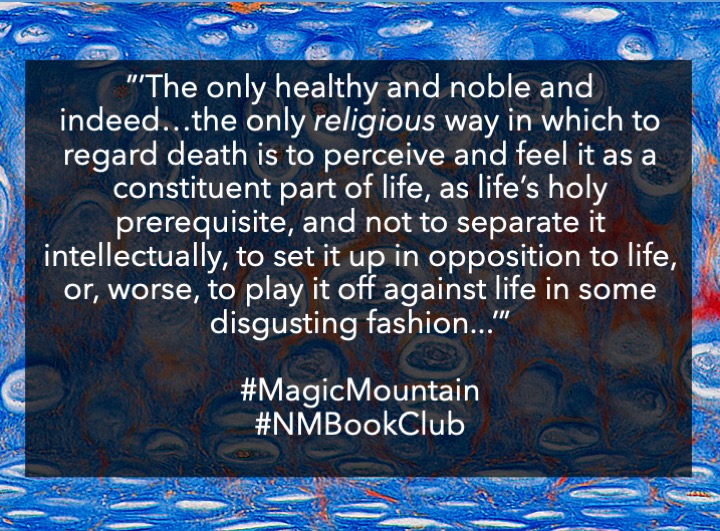
Narrative Medicine Book Club: Magic Mountain, Week 6

Week 6: Castorp stays in bed for three weeks, “impounded by fate.” Time collapses — “it is always the same day – it just keeps repeating itself … [so] it is surely not correct to speak of ‘repetition.’ One should speak of monotony, of an abiding now, of eternalness.” This description reminded me of the eternal present tense of our recent months in quarantine. Castorp has fully become “one of them,” though as he is “only slightly ill” he is “considered inferior by local standards,” a fascinating clue to the logic of this place, and one Castorp abides by. He and his cousin go and have their X-rays done (the Clavdia obsession deepens!), and Castorp is unnerved both at seeing the “interior” of his cousin’s body and of his own hand, feeling in both cases that it is an encounter with the grave. One aspect surely of what this entire stay in the sanatorium has been?ย 

For next week: read to the section “Humaniora” in Chapter 5.

And join our zoom meeting next week, July 12th, at 11 am! Go to http://www.narrativemedicine.blog/narrative-medicine-book-club to register.


Laboratori Di Medicina Narrativa: sabato 4 luglio dalle 16 alle 17.30

Siamo stati molto lieti di avervi qui con noi!

Abbiamo letto insieme il testo “Con gli occhi del nemico” di David Grossman (allegato al termine di questa pagina)ย ย 

In seguito, abbiamo usato il prompt “Caro nemico, ti scrivoโ€ฆโ€

Condivideremo ulteriori dettagli della sessione nei prossimi giorni; vi invitiamo a rivisitare questa pagina nei prossimi giorni!

Invitiamo i partecipanti del laboratorio a condividere i propri scritti nella parte “blog” dedicata alla fine della presente pagina (“Leave a Reply”). Speriamo di creare, attraverso questo forum di condivisione, uno spazio in cui continuare la nostra conversazione!

Stiamo raccogliendo impressioni e breve feedback sui nostri laboratori di medicina narrativa su Zoom!

Questo breve questionario (anonimo, e aperto a chiunque abbia frequentato almeno un laboratorio) รจ molto importante per noi, e ci permetterร  di elaborare sul valore dei nostri laboratori e sul ruolo dello spazio per riflettere e metabolizzare il momento presente. Vi preghiamo quindi di condividere le nostre riflessioni con noi!ย 


David Grossman, Con gli occhi del nemico. Raccontare la pace in un paese di guerra. Mondadori, 2007 pagg 40-45, estratti.

โ€œNel momento in cui uno scriveโ€ dice Natalia Ginzburg ย โ€œรจ miracolosamente spinto a ignorare le circostanze presenti della sua propria vita. Certo รจ cosรฌ. Ma lโ€™essere felici o infelici si porta a scrivere in un modo o nellโ€™altro. Quando siamo felici la fantasia ha piรน forza; quando siamo infelici, agisce allora piรน vivacemente la nostra memoriaโ€. Si fa fatica a parlare di se stessi. Dirรฒ allora quello che posso in questo momento, nella condizione in cui mi trovo.

Io scrivo. La sciagura che mi รจ capitata, la morte di mio figlio Uri durante la seconda guerra del Libano, permea ogni momento della mia esistenza. La forza della memoria รจ in effetti smisurata, enorme. A tratti possiede qualitร  paralizzanti. Eppure lโ€™atto stesso di scrivere crea per me, ora, una specie di โ€œluogoโ€. Uno spazio emotivo che non avevo mai conosciuto prima, in cui la morte non รจ solo la contrapposizione totale, categorica, della vita. (โ€ฆ)

Io scrivo. Il mondo non mi si chiude addosso, non diventa piรน angusto. Mi si apre davanti, verso un futuro, verso altre possibilitร . Io immagino. Lโ€™atto stesso di immaginare mi ridร  vita. Non sono pietrificato, paralizzato dinanzi alla follia. Creo personaggi. Talora ho lโ€™impressione di estrarli dal ghiaccio in cui li ha imprigionati la realtร . Ma forse, piรน di tutto, sto estraendo me stesso da quel ghiaccio. (โ€ฆ)

Io scrivo. E mi rendo conto di come un uso appropriato e preciso delle parole sia talora una sorta di medicina che cura una malattia. Uno strumento per purificare lโ€™aria che respiro dalle prevaricazioni e dalle manipolazioni dei malfattori della lingua, dai suoi vari stupratori.  (โ€ฆ)

Io scrivo. Mi libero da una delle vocazioni ambigue e caratteristiche dello stato di guerra in cui vivo, quella di essere un nemico, solo ed esclusivamente un nemico. Io scrivo, e mi sforzo di non proteggere me stesso dalle sofferenze del nemico, dalle sue ragioni, dalla tragicitร  e dalla complessitร  della sua vita, dai suoi errori, dai suoi crimini. E nemmeno dalla consapevolezza di quello che io faccio a lui, nรฉ dai sorprendenti tratti di somiglianza che scopro tra lui  e me.

Io scrivo. Ad un tratto non sono piรน condannato a una dicotomia totale, fasulla e soffocante: la scelta brutale tra essere โ€œvittima o aggressoreโ€, senza che mi sia concessa una terza possibilitร , piรน umana. Quando scrivo riesco ad essere un uomo nel senso pieno del termine, un uomo che si sposta con naturalezza tra le varie parti di cui รจ composto, che ha momenti in cui si sente vicino alla sofferenza e alle ragioni dei suoi nemici senza rinunciare minimamente alla propria identitร .(โ€ฆ)

E scrivo anche ciรฒ che non potrร  mai piรน essere, per cui non cโ€™รจ consolazione. E anche allora, in un modo che ancora non so spiegare, le circostanze della mia vita non mi si chiudono addosso, non mi paralizzano. Piรน volte al giorno, seduto alla mia scrivania, tocco con mano il dolore, la perdita, come si tocca un filo della corrente a mani nude. E non muoio. Non capisco come questo accada. (โ€ฆ)

E scrivo della vita del mio paese, Israele. Un paese tormentato, intossicato da troppa storia, da sentimenti esasperati che non possono essere umanamente contenuti, da troppi eventi e tragedie, da ansie parossistiche, da una luciditร  paralizzante, da un eccesso di memorie, da speranze deluse, dalle circostanze di un destino unico nel suo genere tra tutti i popoli del mondo, da unโ€™esistenza che a volte appare mitica, al punto che sembra che qualcosa sia andato storto nei suoi rapporti con la vita e con la possibilitร  che noi, Israeliani, potremmo un giorno condurre unโ€™esistenza regolare, normale, come un popolo tra gli altri popoli, uno Stato tra gli altri Stati.

Noi scrittori conosciamo momenti di sconforto  e di scarsa autostima (โ€ฆ). Il nostro lavoro ci porta ripetutamente a essere consapevoli dei nostri limiti, sia come uomini che come artisti. Eppure รจ questa la cosa meravigliosa, lโ€™alchimia che si crea in ciรฒ che facciamo: in un certo senso, nel momento in cui prendiamo in mano la penna, o la tastiera del computer, non siamo piรน vittime impotenti di tutto ciรฒ che ci asserviva, o ci sminuiva, prima che cominciassimo a scrivere. Noi scriviamo, siamo molto fortunati. Il mondo non ci si chiude intorno, non diventa piรน angusto.


Live Virtual Group Session: 12pm EDT July 1st 2020

Thank you to everyone who joined us for this session!

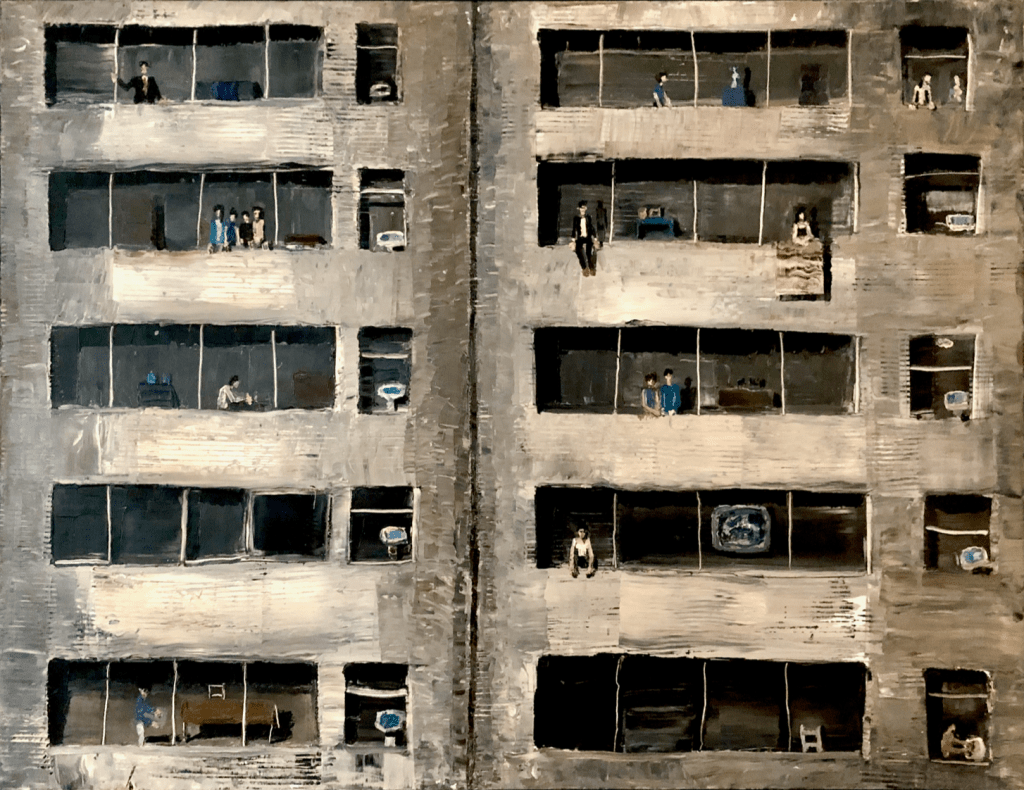
Together we closely looked at the painting Historias de Nuestros Condominios (Stories of our Condos) by Ignacio Iturria, posted below. After a brief moment of silence, during which we centered ourselves in preparationย for our close viewing exercise, we all turned our focus to the painting. One participant noted how viewing the painting was like reading a book: each of the “characters” in the windows opened into a story, the paintingย uniting them all, allowing us to move from one narrative to the other. This participant even noted that there is a dividing line down the center of the painting, like the split between pages of a book. Another viewer was struck by the way the painting’s compositionย creates patterns of repetition and variation that organize all of the characters who exist in the structure. Many participants found the “mood” of the painting to be “devastating,” or “sad,” with one participant noting that they felt “sucked into a vortex of suffering” and another describing it as a “scene of destruction.” Participants also commented on the “texture” of the painting, one viewer sharing that it looked like “unfinished cement.” Another viewer was struck by the “scratches” in the paint, which almost convey the sense of a giant controlling the scene, reminding them of Foucault’s panopticon. This same viewer went on to share that the 4th wall had been removed–that there was a “element of voyeurism” in viewing the painting.

Following our close viewing of the painting, we responded to the prompt, โ€œWrite about a neighbor,โ€ which evoked a wide array of narratives. One person recalled being welcomed to a new neighborhood with a plate of cookies that were delivered by the grandmother of a patient from nine years earlier, and we felt the surprise of reconnection. We also noticed a move from the distanced clinical language of diagnosis at the beginning to the sensory warmth of the baked goods at the end, while the nine years between the two encounters remained a black hole for us and for the clinician. Another writer also began with a womanโ€™s physical ailment โ€“ย in this case, gangrene โ€“ย and then shifted to the action of daughters pinching and pruning before returning to the mother, now looking out to the sky. One participant noticed how a sad story had still managed to evoke nice memories for him personally. A third writer wrote about her neighbors Luminance and Silence, and the parallel growth in the back yard and in the mind. We remarked on the pairing of the visual (Luminance) and the aural (Silence), and how we can compare thoughts to congealed sunlight. Our last writer had a different take on silence, considering the path or paths to salvation. We were reminded of how of late the media have been telling so many stories of immigrants, but we will never know the outcome of those stories; the comment recalled an observation on the first response, about those patients whose outcomes remain a mystery to the clinicians who treat them.

Participants are warmly encouraged to share what you wrote below (โ€œLeave a Replyโ€), to keep the conversation going here, bearing in mind that the blog of course is a public space where confidentiality is not assured.

Also, we would love to learn more about your experience of these sessions, so if youโ€™re able, please take the time to fill out a follow-up survey of one to two quick questions!

Please join us for our next session Monday, July 6th at 6pm EDT, with more times listed on our Live Virtual Group Sessions page.

We look forward to seeing you again soon!

Historias de Nuestros Condominios (Stories of our Condos)
Ignacio Iturria (b. 1949, Montevideo, Uruguay)