Narrative Medicine Book Club: Magic Mountain, Week 12

Week 12: Joachim leaves the Bergdof! Quite suddenly, in a brief chapter, Castorp’s cousin has had enough and quickly departs. The cousins awkwardly say farewell, Joachim calling Castorp “Hans” in a “moment of the most embarrassing exuberance,” and then Castorp is alone, having chosen to stay on at the sanatorium despite the doctor having given him permission to leave. So interesting, the way the idea of health and illness is still played with here, with Castorp continuing to tell himself he is ill even when the veil is lifted and the doctor all but says it’s a hoax! In the next section, Castorp’s great uncle comes to visit — so much comedy ensues, as inevitably the doctors try to get him to admit he’s sick and should stay, and he himself wrestles against the pull of the sanatorium’s “spirit,” so strong that he literally has to flee in the night. But even after “a stay of only eight days,” Castorp thinks, “everything down in the flatlands would seem totally false, unnatural, and wrong for a good while…”


For next week: Read to section “A Good Soldier” in Chapter 6.ย 

And our next meeting via Zoom will be August 23 at 11am! Register Here!


Live Virtual Group Session: 12pm EDT August 12th 2020

We opened with 28 participants from New York, California, Dallas, Philadelphia, central
Massachusetts, Montreal, Hamilton, Bahrain, the Philippines, and elsewhere.


The text was Ron Padgettโ€™s poem โ€œHello Central,โ€ and the opening question was โ€œWho
is this poemโ€™s narrator?โ€ Who is telling the story? The first respondent thought this
speaker could be any one of us. Someone else offered that the positioning of the
speaker outside of โ€œcentralโ€ suggested that she or he is part of a marginalized group.
Several people mentioned that they werenโ€™t sure the gender of the speaker, though
some thought the speaker may be female given the pointed reference to โ€œillustrious
menโ€ and the speakerโ€™s position outside of the majority group. Still another person
thought the speaker might be the poet himself. We spoke about the poetโ€™s move from
the general to the particular or, as one responder put it, from the community view to the
individual view, from the communal history to the experience of one individual. Nostalgia
was another theme of our discussion. Participants found that the rather mundane
descriptions of the first stanza took on a warmth and even a romanticism in the
nostalgic recollection of the second stanza. Another noted the direct address in the title
โ€œHello Central,โ€ pointing out that such an address posits a speaker and a listener. The
decentralizing of the school also reflects the decentralizing of the poemโ€™s speaker. But
by the last stanza, the remembered teacher calls for response, thus restoring the
student and speaker of the poem back to the center. Another mentioned that the
student even sits in the โ€œcenterโ€ row. Another question we wrestled with was โ€œWhat
does the phrase โ€˜useful as a brickโ€™ bring up for us?โ€ One reader saw the poemโ€™s very
form (two stacked stanzas) as brick like. Others mentioned the deceptively plain
language of the poem, a blandness that reflects the poetโ€™s view of โ€œCentralโ€ as
colorless and odorless. Another said that by the end of the poem weโ€™ve lost the bricks
and mortar of the school, but thereโ€™s still the brick and mortar of its existence in
memory.


We wrote to the prompt, โ€œWrite a place you returned to.โ€ Our first reader turned this idea
around. Beginning with the idea that โ€œthereโ€™s no going back,โ€ she explored what the
alternatives might be. We noticed that how this response highlighted something
embedded in the promptโ€™s call to think about returning to a place: that the place,
wherever and whatever it is, holds importance to us. Our second reader used poetic
devices like alliteration of s-words to whisper to us about an outdoor space, quite in
contrast to the plain prose about a very plainly named building that was featured in the
prose poem where we started our session. We also remarked that when we return to a
place, we often also return to the age we were when we were there before, as the
poemโ€™s narrator imagines being back in a classroom with Miss Quesenbery. Our fourth
reader used metaphors of traveling in circles to describe her thoughts. And, curiously,
those thoughts were pulled forward by the tracks in the dirt, rather than making the
tracks. Her idea of things she couldnโ€™t help returning to added yet another interpretation
of the prompt. In the dayโ€™s final piece, we heard about a narrator who saw the โ€œsame
lush trees of Juneโ€ but found them distorted because she was not the same and never
could be. We thought about how the passage of time means we can never return to the
same space.

Participants are warmly encouraged to share what you wrote below (โ€œLeave a Replyโ€), to keep the conversation going here, bearing in mind that the blog of course is a public space where confidentiality is not assured.

Also, we would love to learn more about your experience of these sessions, so if youโ€™re able, please take the time to fill out a follow-up survey of one to two quick questions!

Please join us for our next session Monday, August 17th at 6pm EDT, with more times listed on our Live Virtual Group Sessions page.


Hello Central by Ron Padgett

I attended a high school whose name was colorless and odorless: Central
High School. It was called that because it was built in the middle of town,
so that students could converge on it equidistantly. Then the city added
other high schools, all named after illustrious men. The students there
could associate their schools with these figures, but we at Central could
no longer even associate our school with centrality, since by then the
city had expanded and become lopsided. The name Central had become
totally abstract. After sixty years the structure was deemed inadequate,
and a new Central was builtโ€”in the northwest corner of townโ€”discon-
necting the school’s name from its last vestige of meaning.
       In the many times I have returned to my hometown I have never once
driven out to see the new Central. Instead I cruise past the renovated old
structure that now is used as an office building. In my mind’s eye I dash
up the steps and into the hallways crowded with students who only an
hour ago were lost in sleep. I enter room 212 and take my seat at the back
of the center row and feel the day click into place when the bell rings and
Miss Quesenbery looks at her roll book, brushes back an errant strand of
hair, and starts down the alphabet. A rush of anticipation rises in me as
she approaches my name, and when she says it, I answer “Here” in a voice
that makes me feel useful, like a brick.

“Hello Central” by Ron Padgett from Collected Poems. ยฉ Coffee House Press, 2013.


Live Virtual Group Session: 6pm EDT August 10th 2020

Thirty people Zoom-gathered this evening from Argentina, Brazil, Canada, England, India and several states in the USA.

Today, we โ€œclose lookedโ€ at a new kind of text: a mural found in the city of Philadelphia titled “Everything the Light Touches,” designed by Brad Carney with The U School students, and painted with Asociacion Puertorriquenos en Marcha and the 8th and Diamond Rec Center for Mural Arts Philadelphia. After one minute of silent close looking, we shared our impressions and observations. Our first respondent brought attention to the movement in the piece by sharing some of the words that came to her in observing the painting; participants brimmed with observations of what they saw as actions of โ€œreaching, grasping, expandingโ€ in the postures of figures in the mural who they saw โ€œskating, dancing, writingโ€ as they looked for freedom and connection. Some saw women represented and thought of โ€œsisterhoodโ€ and added the idea of โ€œfemale energyโ€ even attempts to โ€œemancipate through writing.โ€

One person said, โ€œPhilly is a city of muralsโ€ and followed with a โ€œseeing Ben Franklin.โ€ Freedom was again mentioned, which seems fitting with what we know about the cityโ€™s early history, congresses, and the Liberty Bell. The second time it was mentioned as โ€œFreedom into flyingโ€ and pointing to a figure that looked as if about to leave the ground.

More than one participant saw music–music floating, music โ€œadding colorโ€, music reaching different corners.  The muralโ€™s narrative brought associations to Yeatsโ€™ โ€œnegative capability,โ€ which suggests the value of living with uncertainty. (A value held by NM close-reading and slow-looking in which we explore together without illusions of โ€œsolvingโ€ or certainty in deciphering texts.)

Attention was paid to the bright colors, the โ€œopacityโ€ of the blue, red, pink, and green; the combination of realism, impressionism, and abstraction, and how these aspects โ€œenliven architecture.โ€ As one participant contributed: โ€œThere is more to an inner city than bricks and cement.โ€ That comment took us back to an earlier visual text and our discussion of that which is โ€œswirling in the air.โ€ Another said the lines in the muralโ€™s design made her think of the technique of drawing without lifting the lead from the paper, which provides continuity to the rendering.

Before prompting 4-minutes of writing, when we asked participants to โ€œchatโ€ possible titles for the (as yet unrevealed) title for this community mural, people suggested;

Freedom

Blowing Circlesโ€”Walls of Jericho

Color Me Here

Chromatic Scripts

Flights of Fancy

Seize Your Joy

Philadelphia Notes

Unconditional Colorful Release

Urban Ballet

Urban Jazz

Urban Jam

When asked to โ€œPortray a person, place, or thing that you wish the light touchedโ€ those who read their work aloud shared odes to people (family or friends) whose lives seemed limited due to aging or other situations that writers wished light (internal or external) could shine on them. There were comments about limiting our own assumptions about who or when to shine a light on another. As we shared our thoughts, we reflected on the need to be attentive and mindful as we shine light on others – what kind of light would they prefer? whose stories are we taking up and colonizing? Participants were grateful for the new perspective this piece and each otherโ€™s writings contributed, flipping โ€œour expectations of light being a good thingโ€. It also revealed how assumptions may shape what we see and hear, or what we look for.

These comments fit well with another personโ€™s writing about turning over rocks in nature and uncovering life that preferred the dark. The writer gave voice to the lives of these โ€œroly-poliesโ€ who asked the narrator to cover them up again and leave them in the dark.    

We closed off by asking ourselves questions about the nature and the origin of light:  โ€œDoes lightness have to come from the outside?โ€ โ€œOr can it come from the inside?โ€ โ€œOr does it matter as long as we get to experience it?โ€

Participants are warmly encouraged to share what you wrote below (โ€œLeave a Replyโ€), to keep the conversation going here, bearing in mind that the blog of course is a public space where confidentiality is not assured.

Also, we would love to learn more about your experience of these sessions, so if youโ€™re able, please take the time to fill out a follow-up survey of one to two quick questions!

Please join us for our next session Wednesday, August 12th at 12pm EDT, with more times listed on our Live Virtual Group Sessions page.


โ€œEverything the Light Touchesโ€
Designed by Brad Carney with The U School students and painted with Asociacion Puertorriquenos en Marcha and the 8th and Diamond Rec Center. For Mural Arts Philadelphia.

Narrative Medicine Book Club: Magic Mountain, Week 11

Week 11: I may need someone to explain this week’s pages to me! Castorp and his cousin listen, in two different scenes, to discourse between Settembrini and his new housemate, Naphta, who, we learn late in these pages, is (gasp!) a Jesuit. The two men speak at length of lofty concepts, arguing about freedom, humanism, dualism, Man and Nature, communism, capitalism, the polarity of God. I admit my attention flagged in these pages, and then I had to laugh when Castorp says: “I was paying attention, but none of it was clear. Instead, the more they talked the more confused I got.” Looking forward to the historians and philosophers among you explaining all of this to me! Meanwhile, time on the mountain continues, and Castorp’s enthusiasm for learning everything never flags…

For next week: read to section “Operationes Spirituales” in Chapter 6


Live Virtual Group Session: 12pm EDT August 5th 2020

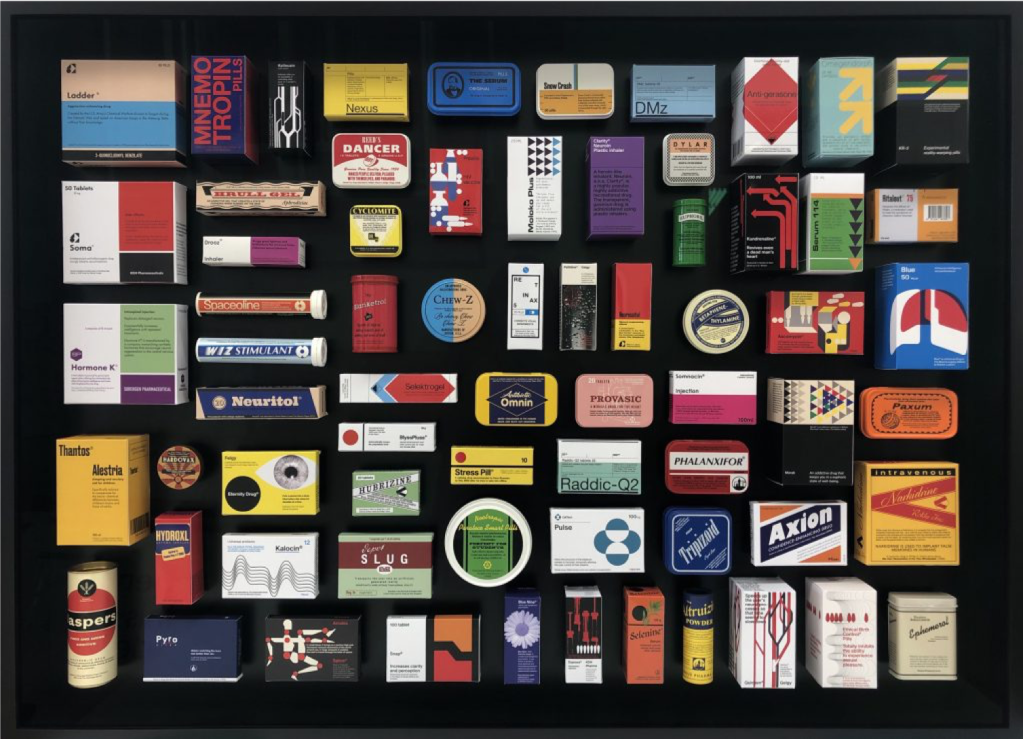
Our text was a top-view photograph ofย  Placebo VIII (2018) by Polish artist Agnieszka Kurant. It is described as a โ€œcustom display cabinet with custom printed paper, metal and plastic containers,โ€ย  33 x 45.5 x 4 inch. For two minutes we gazed in silence at the art, then opened a dialogue with โ€œWhat do we have here?โ€

We immediately went to the sly names on the containers. โ€œProvasic,โ€ near the center of the art, for example, is the medication at play in the 1993 film The Fugitive, with Harrison Ford. Other names, like โ€œTripizoid,โ€ had us laughing, and โ€œHubrizineโ€ made us think about how medicines address what we think is wrong with us. We wondered what โ€œSlugโ€ might be for. Understanding that the medications were not real, as referenced in the artworkโ€™s title, we wondered about the uses of placebos, and we thought about how placebos might offer care as much as cure.

The designs seen on the various packages ranged from old-fashioned to modern, moving us through time and drawing our attention to which ones we found appealing and which we shied away from. The black spaces between the containers emphasized their tidy organization, reminding one person of a quilt.

Taken as a whole, the collection reminded one participant of the ever-growing collection in her grandmotherโ€™s drawer. One person felt seduced by the colors and composition of the presentation, while another person found herself resisting it for its consumerist flavor at a time when she was trying to shed unwanted belongings. We also noticed that the colorful packaging is customer-oriented, unlike the plain packaging dispensed from pharmacies, so the medications look like something we might want to take, when of course we donโ€™t.

Todayโ€™s prompt was โ€œWrite about something you collected.โ€ Five participants read their writing, each with a different take on what we choose to keep, what is given to us, and what we give away (or not) and why.

Bookending our discussion, one writer reflected on her own writing: She led with mentioning/foreshadowing boxes versus their contents (a baby bracelet, a pin from skiing), employing these descriptions of these things in contrast to a brief life.

In every single box was a treasure, understated but reflecting a connection to something worth saving versus letting go.

Thematically in concert with the first writer but using the quite different form of a list, another writer described โ€œtrinkets from another lifeโ€ and explored the grammar of emotions and specters of relationships that are formed by metaphorical locks and keys while revealing a physical body/mind connection.

A collection of details emerged as writers explored the quantitative nature of collecting โ€“ when it comes to art, books, photos, magazines, toys and souvenirs, how many is enough? โ€“  as well as the intentionality of collecting and purging: โ€œIโ€™m trying to eliminate. I have enough.โ€ A participant wrote about not being able to imagine her collection of stuffed animals stuffed in a landfill. Another wrote about a collection including Beanie Babies, slights and insults, genetic syndromes, ancestors, thank-you cards from patients, friends, and (unsuccessfully) fridge magnets.

Each piece of writing revealed bits of detail about its narrator: one participant described her collection of friends and relationships โ€“ like birds that may head south, yet leaving us with something behind. Some of these relationships end because of time and others because of death, and either way, we must grapple with the losses.

Participants are warmly encouraged to share what you wrote below (โ€œLeave a Replyโ€), to keep the conversation going here, bearing in mind that the blog of course is a public space where confidentiality is not assured.

Also, we would love to learn more about your experience of these sessions, so if youโ€™re able, please take the time to fill out a follow-up survey of one to two quick questions!

Please join us for our next session Monday, August 10th at 6pm EDT, with more times listed on our Live Virtual Group Sessions page.


Placebo VIII
Agnieszka Kurant
2018

(33 x 45.5 x 4 inch)

Custom display cabinet with custom printed paper, metal and plastic containers


Live Virtual Group Session: 6pm EDT August 3rd 2020

Twenty people from around the globe: Canada, Chile, India, and the northeast USA: MA, ME, NJ, NY, PA gathered in our narrative Clearing to piece together possible meanings in a nineteen-line poem by Mary Oliver.

โ€œThe Summer Dayโ€ slowed us, focused us into moments of deep awareness in the presence of the speaker–someone heard as a young girl, another as the grasshopper mentioned in the poem, another as a deity, and still another as Mary Oliver. Whoever spoke, they brought our attention to an individual creature, toย  many presences and wonders in nature.

Two different voices read the text out loud for us before we each contributed our piece of the puzzle – whether โ€œcorner piecesโ€ or center pieces that added to the picture we built together. We started off by acknowledging โ€œhow intentional the grasshopper isโ€. Another participant envisioned a conversation unfolding, and particularly revolving around โ€œhow to be idle and blessedโ€. Next, we looked at the title and its relationship to the poem. We think of the summertime โ€œas that time when our life slows downโ€, someone said. Itโ€™s  one in which  โ€œwe are able to contemplate these ideasโ€ about what it means to live and be in the world. Many agreed, reflecting on how the pandemic, and staying at home, has altered our timeline this year. One participant noted the extraordinary nature of the โ€œgood lifeโ€ presented in this poem: โ€œHow often will someone tell you that a grasshopper is a โ€œreally good quality way to spend a dayโ€? Some else shared admiration for the message conveyed in the poem, pointing out how much they loved the phrase โ€œI do know how to fall downโ€; we โ€œusually think about rising upโ€ and โ€œthe only time we think of falling, is the time we fall in loveโ€.

Several participants offered intertextual references: the Book of Job (wondering if the final lines of the poem represents God confronting a complaining Job and inquiring what the man intended to do with the rest of his life), Anais Nin, and Annie Dillard, a prose writer who glories in the natural world.

In addition to aspects of space (in tall grass), we looked at time. The title immediately lets the reader know the season. One person drew our attention to the way in which the poet parses time into moments. Primarily in the present moment of โ€œslow lookingโ€ and โ€œclose readingโ€ a grasshopper, the speaker points to a future moment–a moment we will all come to–the moment of death, which prompts the speakerโ€™s need to question how the โ€œIโ€ and โ€œyouโ€ spend time.

This session, we offered two prompts, asking participants to select one:

–ย  โ€œWrite about what you plan to do with your one wild and precious life.โ€ย 

– โ€œWrite about what you pay attention to.โ€

Our first reader shared a list, an eight-point actionable plan of how the writer wants and already does spend the time of her life. The facilitators were reminded that lists are genres as well; we thoroughly enjoyed following along. We had previously observed how Mary Oliver offered โ€œa breakdown of the dayโ€ into smaller pieces for us to enjoy; similarly, our author was able to make a life plan into a digestible list of items. Towards the end, the use of the present tense woven into the list served as a powerful reminder that plans start in the present. At the same time we as a group reflected on how, specifically in pandemic times, โ€œplans are just hopes for the futureโ€ (as conveyed by a gorgeous recent piece recently published by our creative director Nellie Herman: โ€œPlans, now, are really just hopes. But isnโ€™t this always true? Wasnโ€™t it always folly to think otherwise?) 

Participants offered several wonderful comments about sound following the reading in which a voice reveals loss of cognitive ability to decipher words and how the sound still conveys meaning (hence the resolution to โ€œnow rely on your musicโ€). We talked about developmental skills gained and lost from infancy until the end of life. We reminded each other about the importance of music for people in nursing homes (iPAD Project), how we can listen to poetry in a language we donโ€™t speak yet appreciate rhythm and sounds expressing something that moves us. Someone chatted in that they don’t understand German or Italian but can listen to opera for hours. Someone else pointed out that โ€œafter all, we do learn language through soundsโ€, to which another participant shared how โ€œvoice may very well be our fingerprintโ€ given the unique sounds and music each of us contributes to the world.

Another reader wrote about paying attention to โ€œpeople and plans and not things.โ€, sharing simultaneously the difference between their approach through life and that of their life partner. Many in the group were able to empathize with the struggle of โ€œsyncing up with our partnersโ€ even when they prioritize or pay attention to different things. Our reader pointed out how paying attention is like โ€œnecessary nutritionโ€: โ€œeating, feeding oneself with wonder.โ€

As our session came to a close, we returned to Mary Oliverโ€™s invitation to slow down, soaking in the wonder of what someone described as the โ€œgrandiousness of the universeโ€ and the โ€œsmall size of the insectsโ€. As we signed off, we each chatted in something we were taking away with us from this session into the week. Weโ€™d like to share some with you below, in the hopes that you can carry these with you into the week as well.

  • โ€œThe joy of paying attentionโ€
  • The โ€œroot of everythingโ€ – โ€œlook closely at natureโ€
  • โ€œA sense of wonderโ€ and โ€œa wonderful reminder of the constant availability of wonderโ€
  • โ€œListening for the music and the wordsโ€
  • โ€œHow to choose what to do with my wild and precious lifeโ€
  • โ€œConnection and peaceโ€
  • โ€œA grateful heartโ€
  • โ€œThe beautiful circle of lifeโ€

Participants are warmly encouraged to share what you wrote below (โ€œLeave a Replyโ€), to keep the conversation going here, bearing in mind that the blog of course is a public space where confidentiality is not assured.

Also, we would love to learn more about your experience of these sessions, so if youโ€™re able, please take the time to fill out a follow-up survey of one to two quick questions!

Please join us for our next session Wednesday, August 5th at 12pm EDT, with more times listed on our Live Virtual Group Sessions page.


The Summer Day by Mary Oliver

Who made the world?
Who made the swan, and the black bear?
Who made the grasshopper?
This grasshopper, I mean-
the one who has flung herself out of the grass,
the one who is eating sugar out of my hand,
who is moving her jaws back and forth instead of up and down-
who is gazing around with her enormous and complicated eyes.
Now she lifts her pale forearms and thoroughly washes her face.
Now she snaps her wings open, and floats away.
I don't know exactly what a prayer is.
I do know how to pay attention, how to fall down
into the grass, how to kneel down in the grass,
how to be idle and blessed, how to stroll through the fields,
which is what I have been doing all day.
Tell me, what else should I have done?
Doesn't everything die at last, and too soon?
Tell me, what is it you plan to do
with your one wild and precious life?

from New and Selected Poems, 1992
Beacon Press, Boston, MA

Copyright 1992 by Mary Oliver.
All rights reserved.

Laboratori Di Medicina Narrativa: sabato 1 agosto dalle 16 alle 17.30

Siamo stati molto lieti di avervi avuti con noi!

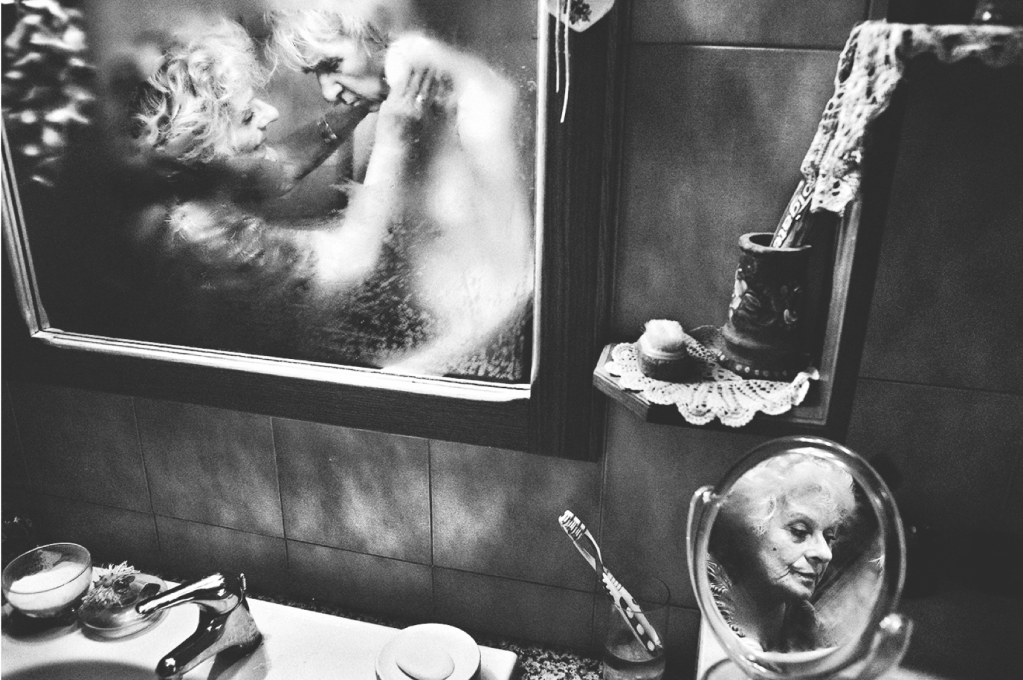
Abbiamo esaminato insieme la fotografia โ€œยซMiRelLaยปโ€ di Faustoย Podavini, che trovate alla fine della pagina.ย 

ย Poi, abbiamo scritto al prompt: Specchio, specchio delle mie brame…”(continua tu)

Al piรน presto, condivideremo ulteriori dettagli della sessione. Vi invitiamo a visitare di nuovo questa pagina nei prossimi giorni.

Se avete partecipato al laboratorio, potete condividere i vostri scritti alla fine della pagina (โ€œLeave a Replyโ€). Attraverso questo forum speriamo di creare uno spazio per continuare la nostra conversazione! 

Stiamo raccogliendo impressioni e breve feedback sui nostri laboratori di medicina narrativa su Zoom!

Questo breve questionario (anonimo, e aperto a chiunque abbia frequentato almeno un laboratorio) รจ molto importante per noi, e ci permetterร  di elaborare sul valore dei nostri laboratori e sul ruolo dello spazio per riflettere e metabolizzare il momento presente. Vi preghiamo quindi di condividere le nostre riflessioni con noi!ย 


Faustoย Podavini, ยซMiRelLaยป, Roma, 2008-2012, in “rivistaย per le Medical Humanities”,ย gennaio-aprileย 2015, n. 30, anno 9. p. 2, http://www.rivista-rmh.ch


Encuentros virtuales en vivo: sรกbado 1 agosto, 14:00 EST

ยกTuvimos otra sesiรณn en espaรฑol y nos fue muy bien. Atendieron 16 participantes en total representando Chile, Espaรฑa, Estados Unidos, y Argentina. Varios asistรญan a estas sesiones por primera vez.

Nuestro texto fue โ€œEntre ir y quedarseโ€ de Octavio Paz, publicado a continuaciรณn. Dos voluntarios leyeron el poema en voz alta. Desde el principio, los comentarios de varios de los participantes se dirigรญan a subrayar una musicalidad del texto, un movimiento pendular, que generaba sensaciรณn de vaivรฉn y de paz. El autor se nota โ€œen pazโ€ a la hora de escribir el texto. Mientras que unos participantes hablan del existencialismo que genera la lectura del texto, otros perciben el texto como una descripciรณn onรญrica, un mundo de ensueรฑo. En la misma lรญnea, otro participante se refiriรณ, dentro de esta musicalidad a la que se aludรญa, a la regularidad, al ritmo, sobre todo en relaciรณn al latido de sangre, lo cual puede ser algo muy deseable para los que tienen arritmias, por ejemplo, cuyo corazรณn se define por la irregularidad. Una participante hizo notar que el texto iba describiendo desde lo mรกs externo a lo mรกs interno del ser humano, como un embudo, rodeado de los mismos verbos, ir y quedarse, pero con distinta entonaciรณn e intenciรณn. Otro participante se identificรณ mucho con el concepto de pausa que aparece en el texto, como un lugar de refugio afuera del cual pasa el tiempo. Del mismo modo, otra participante identificรณ esta pausa con un sentido de inmortalidad, dado que el tiempo estรก detenido mientras dure esta pausa. Por รบltimo, esta pausa supuso para otro de los participantes la soluciรณn al problema que plantea el texto, de la duda entre ir y quedarse: la pausa lo solucionarรญa todo.

Escribir en conjunto: โ€œEscribe acerca de un momento en pausaโ€. Varios participantes compartieron sus escritos, inspirando una muy nutrida variedad de respuestas del resto de los participantes. Las respuestas fueron variadas, pero casi todos los textos fueron โ€œen la sombra del texto originalโ€. Una respuesta fue una reinterpretaciรณn del texto, muy a la sombra del texto original, pero con una intensidad mayor, haciendo รฉnfasis en lo irrefutable del tiempo. Una de las participantes describiรณ una pausa enmarcada en un momento de gran tensiรณn que se viviรณ como algo casi eterno, manteniendo en vilo a los otros oyentes. Por รบltimo, una participante entregรณ su texto desde un punto de vista de profesional de la salud, manifestรกndose en paz y tranquila sin sentirse indispensable, en un raro momento de pausa durante esta pandemia.

Se alienta a los participantes a compartir lo que escribieron a continuaciรณn (“Deja una respuesta”), para mantener la conversaciรณn aquรญ, teniendo en cuenta que el blog, por supuesto, es un espacio pรบblico donde no se garantiza la confidencialidad.

Por favor, รบnase a nosotros para nuestra prรณxima sesiรณn en espaรฑol: Sรกbado, 15 de agosto a las 2 pm EST, con mรกs oportunidades de sesiones en otros idiomas listadas en nuestra pรกgina de sesiones grupales virtuales en vivo.

ยกEsperamos verte pronto!


โ€œEntre ir y quedarseโ€ 
de Octavio Paz

Entre irse y quedarse duda el dรญa,
enamorado de su transparencia.

La tarde circular es ya bahรญa:
en su quieto vaivรฉn se mece el mundo.

Todo es visible y todo es elusivo,
todo estรก cerca y todo es intocable.

Los papeles, el libro, el vaso, el lรกpiz
reposan a la sombra de sus nombres.

Latir del tiempo que en mi sien repite
la misma terca sรญlaba de sangre.

La luz hace del muro indiferente
un espectral teatro de reflejos.

En el centro de un ojo me descubro;
no me mira, me miro en su mirada.

Se disipa el instante. Sin moverme,
yo me quedo y me voy: soy una pausa.