Live Virtual Group Session: 6pm EDT July 27th 2020

Twenty-three people gathered together via Zoom to close-read Charles Simicโ€™s 1938 poem โ€œIn the Libraryโ€ and, after discussing the text, write to a prompt.

96% of participants revealed, via the NM survey, that they have participated in four or more of these NM live, virtual sessions, which, again tonight, brought together people from three continents. We love coming back together each Monday night, welcoming back our core group of veteran participants and welcoming new faces as well. Our community has grown with time, our bonds strengthened, and our eagerness to expand our narrative medicine family always growing.

After quickly reviewing the use of technology and the guidelines emanating from Narrative Medicineโ€™s values of confidentiality and narrative humility: approaching texts with openness, welcoming diverse perspectives, and responding to each other with respect and specific references to what is โ€œseenโ€ and heard in each otherโ€™s writing.

As we did last week we co-constructed possible meanings in the text by offering each observation, intertextual association, or visceral reaction as โ€œa piece of the puzzle.โ€ The first piece of the puzzle attended to the title โ€œIn the Libraryโ€ which locates the reader, as well as the speaker of the poem, in a library. (Many of us chatted our remembrances of libraries/librarians in our past or named famous librarians such as Jorge Luis Borges of Argentinaโ€™s National Library.) Later there was attention paid to being in the dictionary that was in the library where โ€œ[a]ngels and gods huddled [i]n dark unopened booksโ€ (books that are โ€œwhisperingโ€) and how those words suggested a hallowed space. As we explored the space of the poem, we noted the how many languages come together within the library. For example, โ€œthe language of the library is silenceโ€, but the โ€œthe language of books are wordsโ€ that are being whispered to us as we browse through the space.

One person drew attention to the lines alluding to the prevalence of angels, in times past, being โ€œas plentiful [a]s species of fliesโ€ making it necessary โ€œto wave both arms [j]ust to keep them away.โ€ Another person heard the speaker wishing for the special power of the librarian to hear what s(he) could hear. There was speculation about the identity of Octavio, to whom Simic had dedicated the poem. We agreed that there was not only a secret in the dictionary but also mystery in the poem to which we were not privy.  As we wondered what the books are whispering, we wondered also โ€œwhat kind of deep listening is enough to hear what they are sayingโ€. We noted that Mrs. Jonesโ€™ โ€œhead tipped as it listeningโ€ โ€“ what kind of gestures and adjustments are necessary for us to really listen to whatโ€™s around us?

We moved to the prompt: Write about what Mrs. Jones hears as she passes A Dictionary of Angels and wrote for four minutes.

Four participants read aloud. One person styled Mrs. Jonesโ€™s hair into a bun (and someone later added a pencil pushing through the bun!) and imagined her hearing an angel tell a joke. Another wrote as if she were the librarian and offered to be a witness to what the book held. One person expressed her desire for the angels to have stories. One narrative ended with a loose page of the dictionary floating down onto the surprised librarianโ€™s feetโ€”and left the reader to imagine what was on the page. Another writer had Mrs. Jones hear the angels murmuring, in ancient languages, doubts, kindness, peace, and โ€œright wisdom.โ€

We thank you all for your participation and contributions to our collective puzzle. See you soon!

Participants are warmly encouraged to share what you wrote below (โ€œLeave a Replyโ€), to keep the conversation going here, bearing in mind that the blog of course is a public space where confidentiality is not assured.

Also, we would love to learn more about your experience of these sessions, so if youโ€™re able, please take the time to fill out a follow-up survey of one to two quick questions!

Please join us for our next session Wednesday, July 29th at 12pm EDT, with more times listed on our Live Virtual Group Sessions page.


In the Library - Charles Simic (1938)

For Octavio
 
Thereโ€™s a book called
A Dictionary of Angels.
No one had opened it in fifty years,
I know, because when I did,
The covers creaked, the pages
Crumbled. There I discovered
 
The angels were as plentiful                           
As species of flies.
The sky at dusk
Used to be thick with them.
You had to wave both arms
Just to keep them away.

Now the sun is shining
Through the tall windows.
The library is a quiet place.
Angels and gods huddled
In dark unopened books.
The great secret lies
On some shelf Miss Jones
Passes every day on her rounds.
 
Sheโ€™s very tall, so she keeps
Her head tipped as if listening.
The books are whispering.
I hear nothing, but she does.
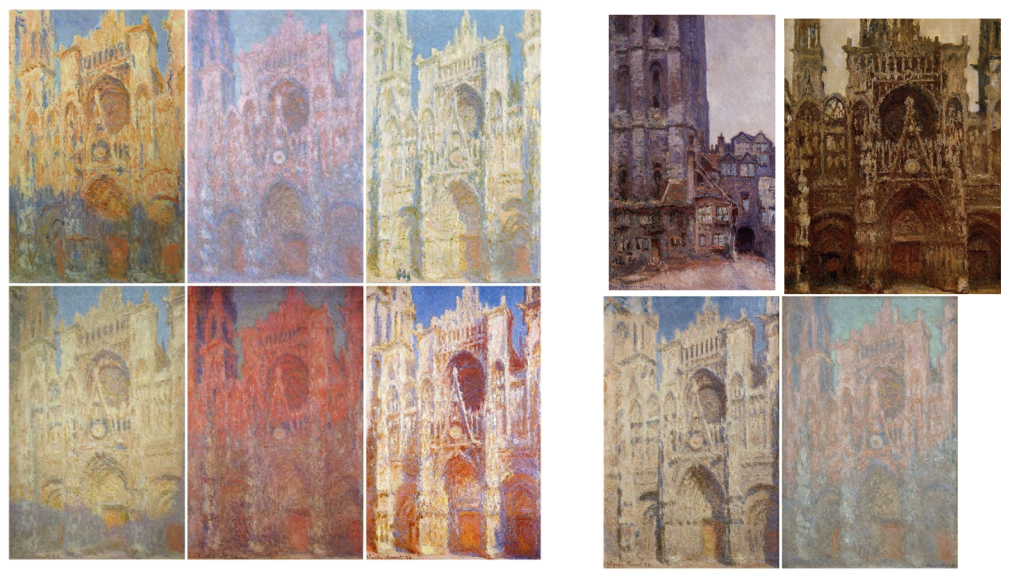
Laboratori Di Medicina Narrativa: sabato 25 luglio dalle 16 alle 17.30

Siamo stati molto lieti di avervi avuti con noi!

Abbiamo letto insieme la poesia โ€œMonet rifiuta lโ€™operazioneโ€ di Lisel Mueller, che trovate alla fine della pagina. Abbiamo analizzato anche i quadri di Monet della Cattedrale Rouen. Poi, abbiamo scritto al prompt: “Dipingi un mondo in flusso”.

Al piรน presto, condivideremo ulteriori dettagli della sessione. Vi invitiamo a visitare di nuovo questa pagina nei prossimi giorni.

Se avete partecipato al laboratorio, potete condividere i vostri scritti alla fine della pagina (โ€œLeave a Reply”). Attraverso questo forum speriamo di creare uno spazio per continuare la nostra conversazione!ย 

Stiamo raccogliendo impressioni e breve feedback sui nostri laboratori di medicina narrativa su Zoom!

Questo breve questionario (anonimo, e aperto a chiunque abbia frequentato almeno un laboratorio) รจ molto importante per noi, e ci permetterร  di elaborare sul valore dei nostri laboratori e sul ruolo dello spazio per riflettere e metabolizzare il momento presente. Vi preghiamo quindi di condividere le nostre riflessioni con noi!ย 


Monet Rifiuta Lโ€™Operazione - Lisel Mueller
Dottore, lei dice che non ci sono aloni
intorno ai lampioni di Parigi
e quel che vedo รจ unโ€™aberrazione
causata dalla tarda etร , una malattia.
Le dico che mi ci รจ voluta tutta la vita
per arrivare a vedere i lampioni come angeli,
per ammorbidire e sfuocare e infine eliminare
i contorni che a lei dispiace che io non scorga,
per imparare che la linea che chiamavo orizzonte
e il cielo e lโ€™acqua,
cosi divisi, sono della stessa sostanza.
54 anni fa io potevo vedere
che la cattedrale di Rouen รจ stata costruita
con raggi paralleli
e ora lei vuole correggere
i miei errori giovanili: nozioni
rigide di alto e basso,
lโ€™illusione di uno spazio tridimensionale,
il ponte separato dal glicine che lo ricopre.
Cosa posso dire per convincerla
che il palazzo del Parlamento si dissolve
notte dopo notte fino a diventare
il sogno fluido del Tamigi?
Non tornerรฒ in un universo
di oggetti che non si compenetrano tra loro
come se le isole non fossero i bambini perduti
di un unico grande continente. Il mondo
รจ flusso, e tutto diventa luce,
diventa acqua, gigli sullโ€™acqua,
sopra e sotto lโ€™acqua,
diventaย  luci color lilla, malva e giallo
bianco e azzurro,
piccoli pugni che si passano lโ€™uno allโ€™altro la luce del sole
cosรฌ velocemente
che ci vorrebbero sete lunghe e fluenti
nel mio pennello per catturarle.
Dipingere la velocitร  della luce.
Le nostre sagome appesantite, linee verticali,
si incendiano mescolandosi con lโ€™aria
fino a trasformare in gas le nostre ossa, la nostra pelle, gli abiti.
Dottore
se solo lei potesse vedere
come il cielo attira la terra tra le sue braccia
e come il cuore si espande allโ€™infinito
per rendere questo mondo vapore blu senza fine.

Live Virtual Group Session: 12pm EDT July 22nd 2020

Thank you to everyone who joined us for this session!

Our text was an excerpt from The Night Watchman by Louise Erdrich, posted below.

Our prompt was: “Write about a quilt of dreams.”

More details will be posted on this session soon, so check back!

Participants are warmly encouraged to share what you wrote below (โ€œLeave a Replyโ€), to keep the conversation going here, bearing in mind that the blog of course is a public space where confidentiality is not assured.

Also, we would love to learn more about your experience of these sessions, so if youโ€™re able, please take the time to fill out a follow-up survey of one to two quick questions!

Please join us for our next sessionย Monday, July 27thย at 6pm EDT,ย with more times listed on ourย Live Virtual Group Sessionsย page.


From The Night Watchman by Louise Erdrich.

The sun flooded the sleeping floor of the old house. A few late flies banged against the window glass, or died buzzing around in circles on the floor. The top of the quilt was warm. Thomas removed his trousers and folded them along the creases to renew their sharpness. He kept a pair of long underwear pants under the pillow.

He slipped them on, hung his shirt over a chair, and rolled under the heavy blanket. It was a quilt of patches left over from the woolen coats that had passed through the family. Here was his motherโ€™s navy blue. It had been made from a trade wool blanket and to a blanket it had returned. Here were the boyโ€™s padded plaid wool jackets, ripped and worn. These jackets had surged through fields, down icy hills, wrestled with dogs, and been left behind when they took city work. Here was Roseโ€™s coat from the early days of their marriage, blue-gray and thin now, but still bearing the fateful shape of her as she walked away from him, then stopped, turned, and smiled, looking at him from under the brim of a midnight-blue cloche hat, daring him to love her. Theyโ€™d been so young. Sixteen. Now married thirty-three years. Rose got most of the coats from the Benedictine Sisters for working in their charity garage. But his double-breasted camel coat was bought with money heโ€™d earned on the harvest crews. The older boys had worn it out, but he still had the matching fedora. Where was that hat? Last seen in its box atop the highboy dresser. His review of the coats with their yarn ties, all pressing down on him in a comforting way, always put him to sleep as long as he rushed past Falonโ€™s army greatcoat. That coat would keep him awake if he thought too long about it.

From The Night Watchman by Louise Erdrich. Copyright ยฉ 2020


Wirtualna Grupa Narracyjna: Wtorek 21 lipca, 18:00 CET

{English Below}

Dziฤ™kujemy wszystkim, ktรณrzy wziฤ™li udziaล‚ w dzisiejszej, ostatniej w te wakacje, grupie narracyjnej!

Wspรณlnie uwaลผnie przeczytaliล›my, dostฤ™pny poniลผej, fragment pierwszego rozdziaล‚u โ€žSzczelin istnieniaโ€ Jolanty Brach-Czainy.

Inspiracja do kreatywnego pisania brzmiaล‚a: โ€žCzฤ™ล›ciฤ… jakiej caล‚oล›ci jestemโ€.

Dzisiejsza praca skupiona byล‚a na relacjach czฤ™ล›ci i caล‚oล›ci. Uczestnicy wypowiadali trudnoล›ฤ‡ z doล›wiadczeniem caล‚oล›ci tekstu, ktรณra z rรณลผnych przyczyn wychodziล‚a poza indywidualne ramy percepcji. Jawiล‚a siฤ™ jako nieuchwytna. Pojedyncze zdania stawaล‚y siฤ™ fragmentami, przyciฤ…gajฤ…cymi oล›rodkami grawitacji, od ktรณrych, ze wzglฤ™du na zasugerowanฤ… w tekล›cie caล‚oล›ciowoล›ฤ‡, nie moลผna byล‚o ล‚atwo odchodziฤ‡, przechodzฤ…c do nastฤ™pnych.

Sytuacja zmieniล‚a siฤ™, gdy zaproponowano odnalezienie w tekล›cie pewnych punktรณw zaczepienia, ktรณrych doล›ฤ‡ szybkie wskazanie przyniosล‚o zintensyfikowanie pracy. Ze wzglฤ™du na charakter tekstu wypowiedzi uczestnikรณw byล‚y szczegรณlnie refleksyjne i odniesione do szerokich kategorii egzystencjalnych, powiฤ…zanych miฤ™dzy innymi z kwestiฤ… odpowiedzialnoล›ci zawodowej i naukowej. Wskazywano na to, jak istotna jest ล›wiadomoล›ฤ‡, ลผe fragment nie jest caล‚oล›ciฤ…, jak fragment otwiera przestrzeล„ spekulacji i jak wiele frustracji rodzi ล›wiadomoล›ฤ‡ naturalnych ograniczeล„ percepcji. Tekst staล‚ siฤ™ w oczach grupy swego rodzaju przewodnikiem po poznaniu. W odpowiedziach na inspiracjฤ™ daล‚o siฤ™ wysล‚uchaฤ‡ bardzo wyraลบny wspรณlny gล‚os mรณwiฤ…cy o tym, ลผe fragmentarycznoล›ฤ‡ jest intuicyjnym, naturalnym doล›wiadczeniem codziennoล›ci, ktรณre pokazuje takลผe, ลผe postrzeganie caล‚oล›ci nie jest nieosiฤ…galnฤ… abstrakcjฤ…, lecz swobodnym przejล›ciem.

Praca dzisiejszej grupy byล‚a wiฤ™c nastawiona nie na analizฤ™, lecz syntezฤ™, a wejล›cie w niฤ… wymagaล‚o sporego nakล‚adu energii. Synteza ta zachodziล‚a nie tylko na poziomie tekstu โ€“ wskazywano na to, ลผe odpowiedzi na inspiracjฤ™ byล‚y domkniฤ™tymi caล‚oล›ciami, lecz takลผe na poziomie samej grupy. Pokazano, ลผe grupa staล‚a siฤ™ caล‚oล›ciฤ… zapewniajฤ…cฤ… poczucie bezpieczeล„stwa i komfort wspรณlnego milczenia, a przypomnienie, ลผe spotkamy siฤ™ juลผ tylko raz w te wakacje wywoล‚aล‚o wyraลบne wzruszenie.

Zapraszamy do udziaล‚u w kolejnych sesjach, ktรณrych terminy podane sฤ… na polskiej podstronie Wirtualnych Grup Narracyjnych. Najbliลผsza grupa odbฤ™dzie siฤ™ 30 lipca (czwartek) o godzinie 18:00.

Wszelkie pytania oraz proล›by o organizacjฤ™ indywidualnych grup narracyjnych dla Waszych zespoล‚รณw moลผna przesyล‚aฤ‡ na adres: narrativemedicine@cumc.columbia.edu oraz humanistykamedyczna@cm.uj.edu.pl.

Do zobaczenia niebawem!


Jolanta Brach-Czaina

Szczeliny istnienia

(fragment rodziaล‚u pierwszego)

Przedstawicielstwo istnienia, jakim jest โ€žcoล›โ€ jako drobina bytu, nie moลผe byฤ‡ mylone z fragmentem rzeczywistoล›ci. Fragmenty sฤ… elementami samowolnie odciฤ™tymi od caล‚oล›ci i nie stanowiฤ… naturalnych struktur, jakimi sฤ… drobiny istnienia wcielone w konkret egzystencjalny. Fragmenty sฤ… rzeczywistoล›ciฤ… okaleczonฤ…. Odล‚ฤ…czone od caล‚oล›ci przez kataklizm โ€” jak urwana noga stoล‚u czy czล‚owieka โ€” albo oddzielane sztucznie, by, jak mniemamy, ล‚atwiej byล‚o je poznaฤ‡, wyrwane z naturalnego otoczenia, przyciฤ™te do rozmiarรณw preparatu i umieszczone pod elektronowym mikro-skopem โ€” milczฤ…. Wycinanie z rzeczywistoล›ci fragmentรณw powodowane jest rozpaczliwฤ… walkฤ… umysล‚u o rozeznanie w ล›wiecie, przedsiฤ™brane jednak w taki sposรณb, by ล›wiata nie sล‚uchaฤ‡, tylko otaczajฤ…cฤ… nas rzeczywistoล›ฤ‡ porozrywaฤ‡, zmiaลผdลผyฤ‡ i pospiesznie wykorzystaฤ‡. Moลผna tak postฤ™powaฤ‡ i tak teลผ siฤ™ dzieje, ale po-rozumienia to nie uล‚atwia i wyrywa nas z miejsca, do ktรณrego na-leลผymy. Kaลผdy fragment ล›wiata, jaki udaje nam siฤ™ wskazaฤ‡ czy wytknฤ…ฤ‡, zaล›wiadcza o naszej samowoli i coraz bardziej dezorientuje.

Gdy jednak zauwaลผamy โ€žcoล›” i w dodatku potrafimy dostrzec, ลผe to jest coล›, a nie byle co, sprawy przedstawiajฤ… siฤ™ inaczej. Dzielฤ…c bowiem ล›wiat na fragmenty, nie pozwalamy mu przemรณwiฤ‡ wล‚asnym gล‚osem. Natomiast gdy godzimy siฤ™ na to, by coล› zdobyล‚o naszฤ… uwagฤ™, zajmujemy pozycjฤ™ skromniejszฤ…, lecz umoลผliwiajฤ…cฤ… rozeznanie w tym, co nas otacza i nie zaleลผy od naszej woli. Fragmenty rzeczywistoล›ci sฤ… jej czฤ™ล›ciami wycinanymi z caล‚oล›ci arbitralnie, mocฤ… naszej decyzji motywowanej najczฤ™ล›ciej nieuwagฤ… bฤ…dลบ krรณtkowzrocznฤ… wygodฤ…. Natomiast drobiny bytu same domagajฤ… siฤ™ uwagi. Istnienie zagฤ™szcza siฤ™ w nich w konkret egzystencjalny, ktรณry nie powinien byฤ‡ lekcewaลผony. Sami przecieลผ jesteล›my drobinฤ… bytu, a nie fragmentem. Jesteล›my egzystencjalnym konkretem. Fragmentacjฤ™ rzeczywistoล›ci trzeba wiฤ™c odrzuciฤ‡ jako postฤ™powanie niegodne partnerรณw, jakimi w ล›wiecie jesteล›my, i nierozsฤ…dne. Nie aspirujemy tu bowiem do wynoszenia siฤ™ ponad ล›wiat, lecz do wysล‚uchania, ktรณre nie pozbawiaล‚oby nas szansy rozumienia siebie. Jednakลผe by coล› usล‚yszeฤ‡, trzeba samemu zamilknฤ…ฤ‡.

Wiล›nia przeciฤ™ta noลผem. Jakkolwiek to zrobimy, nie wypada dobrze. Tniemy przez ล›rodek โ€” nรณลผ uderza w pestkฤ™, wiฤ™c prze-ciฤ…gamy nim dookoล‚a, rozล‚upujemy owoc, sok cieknie nam po palcach, chlapie na wszystkie strony. Koล„cowy efekt zabiegu do-prawdy ลผaล‚osny. Pรณล‚ wiล›ni z pestkฤ…, pรณล‚ z dziurฤ…. Niczemu to nie sล‚uลผy. Nawet nie moลผemy zobaczyฤ‡, czym naprawdฤ™ jest wnฤ™trze wiล›ni, gdy obserwujemy jฤ… w takim okaleczeniu. Tniemy wiฤ™c brzegiem. Nadszarpniฤ™ty w ten sposรณb owoc moลผe co najwyลผej posล‚uลผyฤ‡ za preparat, gdybyล›my chcieli obejrzeฤ‡ przekrรณj poprzeczny miฤ…ลผszu. Wiล›nia przeciฤ™ta pozbawiona jest sensu. Te komรณrki wypeล‚nione cieczฤ…. Nienaturalnie powiฤ™kszone pod mikroskopem. Nie warto nawet nazywaฤ‡ tego wiล›niฤ….

[Jolanta Brach-Czaina, โ€žSzczeliny istnienia”, Dowody Na Istnienie, Warszawa 2018, ss. 14-16.]


Thank you to everyone who joined us for this session!

Together we read closely an excerpt from Jolanta Brach-Czaina’s โ€œSzczeliny istnieniaโ€ (โ€œChasms of existence”).

Our prompt for today was: โ€œWhich whole are you a part of.โ€

Today, the group paid attention to the relationship between fragments and the whole. Participants expressed difficulties experiencing the whole of the text which, for various

reasons, exceeded individualsโ€™ perceptual abilities. The whole appeared elusive. Single sentences became fragments, separate gravitational poles, from which, because of the idea of wholeness suggested in the text, it was difficult to proceed.

The atmosphere changed when it was suggested to identify in the text an anchoring point(s) which resulted in an animated discussion. The subject of the text generated reflection and discussion of numerous categories of existence, including professional identity. The participants appeared to realize that a fragment is not representative of the whole, that fragmenting the whole results in speculation; they also expressed their frustration with the limits of perception. The text became a specific guide to knowing. The responses to the writing prompt were united in expressing the belief that fragmentation is an intuitive and natural experience of the everyday which, in turn, demonstrated that the perception of the whole is not an unattainable abstraction.

Thus, todayโ€™s work was not an experience of analysis of the text but rather its synthesis, which required a lot of energy. The synthesis occurred not only at the level of the text โ€“ the participants pointed out that the writing responses appeared well-thought-out and complete โ€“ but also at the level of the group itself. The participants expressed their satisfaction with the fact that the group has become a safe space for silence while the reminder that this was the penultimate meeting this summer resulted in an outpouring of emotions.

Please join us for our next sessions: Wednesday July 22nd, 12pm EDT (in English) and Monday July 27th, 6pm EDT (in English), with more times listed on our Live Virtual Group Sessions page.

If you have questions, or would like to schedule a personalized narrative medicine session for your organization or team, email us at narrativemedicine@cumc.columbia.edu.

We look forward to seeing you again soon!


Live Virtual Group Session: 6pm EDT July 20th 2020: Our 50th Session in English!

Mary Sormanti welcomed 39 Zoomers into our Monday evening CELEBRATION OF THE 50TH LIVE VIRTUAL NARRATIVE MEDICINE SESSION WITH THE WORLD IN ENGLISH. There were many familiar faces in our Brady Bunch boxes and new faces too. We usually begin by dropping into the chat where we are zooming from, but this evening we began by chatting one thing we are grateful for, as Mary reviewed what we have done together during these weekly gatherings:

  • weโ€™ve read poetry and excerpts from novels
  • weโ€™ve listened to poetry and music
  • weโ€™ve looked at paintings and photographs

And weโ€™ve done all of this โ€œcloselyโ€, โ€œslowlyโ€ –ย  with great interest, curiosity and care โ€“ noticing textures and colors and mood, perspectives of space and time and many other things.

Weโ€™ve responded to all kinds of prompts. Weโ€™ve written about:

  • โ€œneighborsโ€       
  • โ€œclearingsโ€     
  • โ€œawakeningsโ€      and
  • โ€œchoices crying to be takenโ€

Weโ€™ve written about:

  • โ€œshattering the silenceโ€ and
  • โ€œstepping into the sunโ€ 

Weโ€™ve written about:

  • โ€œthe frontlineโ€
  • โ€œwhat weโ€™ve foundโ€ and
  • โ€œwhatโ€™s swirling in the airโ€

And perhaps above all weโ€™ve listened to one another and to ourselves.

Meanwhile, appearing in the chat were participantsโ€™ words of gratefulness for:

Community

Connection

Family without conflicts

Friendly faces

Grace of this space

Immersion in arts

Insights

Interesting Ideas

Strangers who are no longer strangers

The space of a Clearing

Wisdom

Before turning to this eveningโ€™s text, Lynne introduced the idea of approaching the text as a puzzle and suggested that each comment would be a small piece of the โ€œpuzzleโ€ we would assemble together. In Narrative Medicine we refer to the process as co-constructing meaning. We know before we begin that we will not โ€œsolveโ€ a text as we intentionally choose texts that are inexhaustible.

A rich discussion developed in the shadow of Nataliaโ€™s sharing a screen with the image of a partially completed jigsaw with blue puzzle pieces and hearing two participants read aloud โ€œGirls Overheard While Assembling a Puzzleโ€ by Mary Szybist (posted below) The blues of sky and water and โ€œthe veins in my grandmotherโ€™s handsโ€ drew us in. One person likened the poem to bodies of water that have no shape of their own but flow from place to place, taking the shape of their containers. We considered how the puzzle, which the girls were assembling, and the text, which we were puzzling over, needed to be shaped. That led one participant to comment on the importance of having a frame to work within and another to underscore the search for pieces that fit together. Early on, someone noticed that the form of the poem was that of an abecedariumโ€”each line beginning with a letter of the alphabet in alphabetical order. She told us that this is an ancient form that appeared early on in Iran and in the Hebrew bible. There were wonderful intertextual associations to movies โ€œA Wonderful Lifeโ€ and โ€œWings of Desire.โ€ While several people heard the poem as a stream of consciousness, others heard a conversation between girls. One person identified himself as a father who had overheard just this kind of exchange (associative, interrupted, broken lines) among his daughter and her friends.ย 

We were pulled deeper and deeper into the mystery of the text as the speaker of the poem depicts the girls wanting to enter the garden in the puzzle. One participant said that the girls want to understand what is โ€œunder the surfaceโ€โ€”even โ€œX-Rayโ€ the action. Or, another said, (because that word, in particular, puzzled  readers, โ€œX-Rayโ€ was inserted into the poem to satisfy its abecedarian form?!

What images formed as participants worked in parallel with the girls? Although no specific image was described, several people saw โ€œa classic imageโ€ or โ€œsomething holyโ€ forming.   

Before we โ€œeavesdroppersโ€ moved to our own writing, Natalia shared a screen with a mosaic of images (including the cover of Mary Szybistโ€™s poetry collection Incarnadine) that many painters have rendered and titled: The Annunciation.

The poemโ€™s attention to young girls, curious about sexuality, as they assemble a puzzle that several participants described as โ€œholyโ€ seemed to unleash playfulness and sexual language in writing to the prompt: Imagine, then write a conversation between angels.

One writer named her angels Electricity and Metallica and they, in turn, called their charges โ€œhomo fabriosโ€ for all the trouble they can manufacture. Several other angels expressed worry and frustration and powerlessness as they recognized that they couldnโ€™t protect humans, who had been given free will. In listening to each otherโ€™s writing, we heard the exhaustion of these guardian angels. In addition we heard and experienced the power of creativity, laughter, and a lightness that abounded. It was almost as if we had grown wings and our voices became a choir of angels.

Participants are warmly encouraged to share what you wrote below (โ€œLeave a Replyโ€), to keep the conversation going here, bearing in mind that the blog of course is a public space where confidentiality is not assured. In commemoration of our 50th English Language session, our facilitation team selected their favorite 50 texts for Narrative Medicine, posted below, and we encourage you to share one or two of yours as well, along with your writing!

Also, we would love to learn more about your experience of these sessions, so if youโ€™re able, please take the time to fill out a follow-up survey of one to two quick questions!

Please join us for our next session Wednesday, July 22nd at 12pm EDT, with more times listed on our Live Virtual Group Sessions page.


Girls Overheard While Assembling a Puzzle
by Mary Szybist

Are you sure this blue is the same as the
blue over there? This wallโ€™s like the
bottom of a pool, its
color I mean. I need a
darker two-piece this summer, the kind with
elastic at the waist so it actually
fits. I canโ€™t
find her hands. Where does this gold
go? Itโ€™s like the angelโ€™s giving
her a little piece of honeycomb to eat.
I donโ€™t see why God doesnโ€™t
just come down and
kiss her himself. This is the red of that
lipstick we saw at the
mall. This piece of her
neck could fit into the light part
of the sky. I think this is a
piece of water. What kind of
queen? You mean
right here? And are we supposed to believe
she can suddenly
talk angel? Who thought this stuff
up? I wish I had a
velvet bikini. That flowerโ€™s the color of the
veins in my grandmotherโ€™s hands. I
wish we could
walk into that garden and pick an
X-ray to float on.
Yeah. I do too. Iโ€™d say a
zillion yeses to anyone for that.

Our Facilitator’s 50 Favorite Texts for Narrative Medicine

  1. The Mississippi River Empties Into the Gulf by Lucille Clifton
  2. The Last Remaining Speaker of Eyak Has Died by Michael Grabell
  3. Girl by Jamaica Kincaid 
  4. For Calling the Spirit Back from Wandering the Earth in Its Human Feet by Joy Harjo
  5. Little Prayer- Danez Smith OCD by Neil Hilborn
  6. Good Bones by Maggie Smith
  7. Kindness by Naomi Shihab Nye
  8. โ€œBone Boxโ€ from Body of Work by Christine Montrose
  9. The Universe: Original Motion Picture Soundtrack by Tracy K Smith
  10. 19 by Lawrence Ferlinghetti  (from A Coney Island of the Mind)
  11. Lady Freedom Among Us by Rita Dove (from On The Bus With Rosa Parks)
  12. Lights From Other Windows by Naomi Shihab Nye (from Words Under The Words)
  13. Interrogative by Tracy K. Smith (from Duende)
  14. September  1, 1939 by W. H. Auden (from Another Time)
  15. The Departure by Rachel Hadas (from Laws)
  16. Evening Walk by Charles Simic (from Sixty Poems)
  17. Dead Doe by Briget Pegeen Kelly (from Song)*
  18. Public Transportation by Elaine Sexton (from Sleuth)
  19. Visions of Johanna by Bob Dylan (from Blonde on Blonde)
  20. Musee des Beaux Arts by W. H. Auden
  21. Peaches by Adrienne Su
  22. The Hope I Know The Hope I Know by Thomas Centolella
  23. The Artist by William Carlos Williams
  24. Praise Song for the Day by Elizabeth Alexander
  25. Those Winter Sundays by Robert Hayden
  26. On Earth We’re Briefly Gorgeous by Ocean Vuong
  27. Tamaraโ€™s Opus, spoken word performance by Joshua Bennett
  28. The Mailman by Nazim Hikmet
  29. A worker’s speech to a doctor by Bertold Brecht
  30. The Chart by Rafael Campo
  31. The Salon by Angelica Recierdo
  32. A Sacred Place Never Spoken Of by Angelica Recierdo
  33. Anosmia Collection by Vibhu Krishna
  34. Days by Philip Larkin
  35. Where I’m From by George Ella Lyon
  36. In Shock by Rana Awdish
  37. Los Nadies by Eduardo Galeano
  38. Give Your Daughters Difficult Names by Assรฉtou Xango
  39. In Tennessee I Found a Firefly by Mary Szybist
  40. Hairs by Sandra Cisneros
  41. The Vantage Point by Robert Frost
  42. Ode to a Pair of Scissors by Pablo Neruda
  43. The English Patient (first page) by Michael Ondaatje
  44. What Do We Have in Our Pockets/Etgar Keret
  45. Tรญa Josรฉ by รngeles Mastretta
  46. Who Will Run the Frog Hospital? (last page) by Lorrie Moore
  47. Medical History by Eleanor Stanford
  48. Monet Refuses the Operation by Lisel Mueller
  49. Two Answers by Mark Strand
  50. A Summer Day by Mary Oliver

Encuentros virtuales en vivo: sรกbado 18 julio, 14:00 EST

ยกGracias por unirse a nuestra sesiรณn hoy!

Nuestro texto fue โ€œAl bordeโ€ย de Gloria Fuertes, publicado a continuaciรณn.

Vamos a escribir:ย โ€œEscribe acerca de estar al borde.โ€

Se alienta a los participantes a compartir lo que escribieron a continuaciรณn (โ€œDeja una respuestaโ€), para mantener la conversaciรณn aquรญ, teniendo en cuenta que el blog, por supuesto, es un espacio pรบblico donde no se garantiza la confidencialidad.

ยกCuรฉntenos mรกs sobre su experiencia en este taller completando esta breve encuesta!

Por favor, รบnase a nosotros para nuestra prรณxima sesiรณn en espaรฑol:ย Sรกbado, 1 de agosto a las 2 pmย EST, con mรกs veces listadas en inglรฉs en nuestra pรกgina deย sesiones grupales virtuales en vivo.


Al borde - Gloria Fuertes

Soy alta;
en la guerra
lleguรฉ a pesar cuarenta kilos.
He estado al borde de la tuberculosis,
al borde de la cรกrcel,
al borde de la amistad,
al borde del arte,
al borde del suicidio,
al borde de la misericordia,
al borde de la envidia,
al borde de la fama,
al borde del amor,
al borde de la playa,
y, poco a poco, me fue dando sueรฑo,
y aquรญ estoy durmiendo al borde,
al borde de despertar.

Laboratori Di Medicina Narrativa: sabato 18 luglio dalle 16 alle 17.30

Siamo stati molto lieti di avervi qui con noi!

Abbiamo letto insieme la poesia “Ex Voto” di Eugenio Montale (allegato al termine di questa pagina)ย ย 

In seguito, abbiamo usato il prompt “Era o non era…”.

Condivideremo ulteriori dettagli della sessione nei prossimi giorni; vi invitiamo a rivisitare questa pagina nei prossimi giorni!

Invitiamo i partecipanti del laboratorio a condividere i propri scritti nella parte “blog” dedicata alla fine della presente pagina (“Leave a Reply”). Speriamo di creare, attraverso questo forum di condivisione, uno spazio in cui continuare la nostra conversazione!

Stiamo raccogliendo impressioni e breve feedback sui nostri laboratori di medicina narrativa su Zoom!

Questo breve questionario (anonimo, e aperto a chiunque abbia frequentato almeno un laboratorio) รจ molto importante per noi, e ci permetterร  di elaborare sul valore dei nostri laboratori e sul ruolo dello spazio per riflettere e metabolizzare il momento presente. Vi preghiamo quindi di condividere le nostre riflessioni con noi!ย 


Ex voto
ย 
Eugenio Montale, โ€œSaturaโ€, 1971
ย 
Accade
che le affinitร  dโ€™anima non giungano
ai gesti e alle parole ma rimangano
effuse come un magnetismo. รˆ raro
ma accade.

Puรฒ darsi
che sia vera soltanto la lontananza,
vero lโ€™oblio, vera la foglia secca
piรน del fresco germoglio. Tanto e altro
puรฒ darsi o dirsi.

Comprendo
la tua caparbia volontร  di essere sempre assente
perchรฉ solo cosรฌ si manifesta
la tua magia. Innumeri le astuzie
che intendo.

Insisto
nel ricercarti nel fuscello e mai
nellโ€™albero spiegato, mai nel pieno, sempre
nel vuoto: in quello che anche al trapano
resiste.

Era o non era
la volontร  dei numi che presidiano
il tuo lontano focolare, strani
multiformi multanimi animali domestici;
forsโ€™era cosรฌ come mi pareva
o non era.

Ignoro
se la mia inesistenza appaga il tuo destino,
se la tua colma il mio che ne trabocca,
se lโ€™innocenza รจ una colpa oppure
si coglie sulla soglia dei tuoi lari. Di me,
di te tutto conosco, tutto
ignoro.

Wirtualna Grupa Narracyjna: Czwartek 16 lipca, 18:00 CET

Dziฤ™kujemy wszystkim, ktรณrzy wziฤ™li udziaล‚ w dzisiejszej grupie narracyjnej!

Wspรณlnie uwaลผnie przeczytaliล›my, dostฤ™pny poniลผej, fragment โ€žBajki o Raลกceโ€ Oty Pavla w tล‚umaczeniu Justyny Wodzisล‚awskiej.

Inspiracja do kreatywnego pisania brzmiaล‚a: โ€žNiezwykล‚a codziennoล›ฤ‡โ€.

Istotnym elementem pracy dzisiejszej grupy byล‚ gatunek literacki tekstu โ€“ bajka. Jej struktura znalazล‚a odzwierciedlenie w dynamice grupy, ktรณra zdawaล‚a siฤ™ dฤ…ลผyฤ‡ do rozpoznania moraล‚u. Rรณwnieลผ niedosล‚ownoล›ฤ‡ zdarzeล„, ktรณre skล‚adaล‚y siฤ™ na fabuล‚ฤ™ byล‚a tematem dyskusji grupy. Wskazywano na to, jak โ€žmajstrowanie pociech pรณล‚ na pรณล‚โ€ stawaล‚o siฤ™ zdarzeniem magicznym, pstrฤ…g jawiล‚ siฤ™ niczym mityczny stwรณr, a podziaล‚ miฤ™dzy chล‚opcami i dziewczynkami zaczynaล‚ odzwierciedlaฤ‡ konkurencjฤ™ sportowych druลผyn. Poczฤ…tek pracy odbywaล‚ siฤ™ w atmosferze bliskoล›ci i towarzyszyล‚o mu poczucie niezwykล‚oล›ci codziennoล›ci. Waลผny okazaล‚ siฤ™ rรณwnieลผ sam gest czytania, ktรณry staล‚ siฤ™ dla grupy wyrazem zaopiekowania. Gล‚os niezgody, ktรณry pojawiล‚ siฤ™ w trakcie interpretacji tekstu wywoล‚aล‚ obserwowalnฤ… zmianฤ™ nastroju. Spowodowaล‚o to pojawienie siฤ™ licznych zgล‚oszeล„ do wypowiedzi, ktรณre wywoล‚aล‚y potrzebฤ™ ich uszeregowania, co przypominaล‚o rozproszenie dzieci w trakcie gรณrskiej wycieczki. Komentarze uczestnikรณw byล‚y peล‚ne rozkojarzeล„, przypominaล‚y chwilowe impresje i niepowiฤ…zane ze sobฤ… spostrzeลผenia. Wypowiedzenie wprost podziaล‚u spowodowaล‚o osล‚abienie wraลผenia wspรณlnego wฤ™drowania, doprowadzajฤ…c do poczucia kล‚ฤ™bienia siฤ™ w miejscu. Warto zaznaczyฤ‡ rรณwnieลผ, ลผe zarรณwno pierwszej, jak i drugiej czฤ™ล›ci towarzyszyล‚o poczucie nieล›miaล‚oล›ci, jakby niepewnoล›ci celu wฤ™drowania, ktรณre zdawaล‚o siฤ™ byฤ‡ niewypowiedzianฤ… potrzebฤ… przewodnika. Pewnฤ… zmianฤ™ przyniosล‚a jedna z odpowiedzi na inspiracjฤ™. Okazaล‚a siฤ™ ona jakby deskฤ… ratunku dla rozproszonej grupy, przynoszฤ…c ulgฤ™, spokรณj, takลผe dziฤ™ki jej humorystycznemu wymiarowi. Tekst ten wprowadziล‚ teลผ do rozmowy kategoriฤ™ cudu, wokรณล‚ ktรณrego rozwinฤ™ล‚y siฤ™ liczne refleksje, bฤ™dฤ…ce jakby moraล‚em bajki dotyczฤ…cym (nie)zwykล‚oล›ci codziennoล›ci lub, jak wypowiedziaล‚a to jedna z osรณb, niedziennoล›ci cozwykล‚oล›ci. Motyw wฤ™drรณwki zostaล‚ odczytany rรณwnieลผ w perspektywie metagrupowej โ€“ caล‚y cykl wirtualnych grup narracyjnych zostaล‚ nazwany przez uczestnikรณw wspรณlnฤ… wyprawฤ…, ktรณra rรณwnieลผ okazjonalnie pojawiajฤ…cym siฤ™ osobom dawaล‚a poczucie bycia wล‚ฤ…czonym we wspรณlny proces.

Zapraszamy do udziaล‚u w kolejnych sesjach, ktรณrych terminy podane sฤ… na polskiej podstronie Wirtualnych Grup Narracyjnych. Najbliลผsza grupa odbฤ™dzie siฤ™ 21 lipca (wtorek) o godzinie 18:00 โ€“ zarejestruj siฤ™ juลผ dziล›.

Wszelkie pytania oraz proล›by o organizacjฤ™ indywidualnych grup narracyjnych dla Waszych zespoล‚รณw moลผna przesyล‚aฤ‡ na adres: narrativemedicine@cumc.columbia.edu oraz humanistykamedyczna@cm.uj.edu.pl.

Do zobaczenia niebawem!


Ota Pavel

Bajka o Raลกce
(fragment)

W niewielkim mieล›cie Frenลกtรกt pod Radhoลกtฤ›m, poล›rรณd beskidzkich lasรณw, ลผyล‚ sobie szewc Oldล™ich Raลกka. Pojฤ…ล‚ za ลผonฤ™ Bedล™iลกkฤ™ i miaล‚ z niฤ… czworo dzieci. Dwie cรณreczki, Vฤ›rฤ™ i Ladislavฤ™, oraz dwรณch synkรณw, Zdenka i Jirkฤ™. Trzeba byฤ‡ nie lada sztukmistrzem, ลผeby zmajstrowaฤ‡ pociechy tak pรณล‚ na pรณล‚.

(โ€ฆ)

W bล‚ฤ™kitnawe niedziele tata zabieraล‚ dzieci w gรณry. Bล‚ฤ™kitnawa niedziela to taka, gdy niebo jest bล‚ฤ™kitne i pล‚ynฤ… po nim tylko obล‚oki jak biaล‚e baranki, i przeganiajฤ… ciฤ™ลผkie chmurzyska, co czasem siusiajฤ… na Matkฤ™ Ziemiฤ™. Lasy takลผe niebieszczejฤ…, peล‚ne wonnych drzew, pachnฤ…cych ลผywicฤ…. I wszystko wokรณล‚ jest tajemnicze niczym w zamku czarodzieja. A potoki sฤ… najbardziej niebieskie ze wszystkiego: w bล‚ฤ™kicie ultramaryny. Wysoko, w gรณrze potoku, puszczasz ล‚รณdeczkฤ™ z papieru, a u podnรณลผa, gdy zaczyna laฤ‡ jak z cebra, po rozpฤ™dzonej rzece gna parowiec.

Maล‚y Jirka staล‚ nad ultramarynowym potokiem i obserwowaล‚ nieznanego stwora. Stwรณr pล‚ynฤ…ล‚ pod wodฤ… i czasem wyskakiwaล‚. Prฤ™ลผyล‚ siฤ™ tak, ลผe byล‚o widaฤ‡ jego czerwone i czarne cฤ™tki. Tata opowiedziaล‚ Jirce, ลผe to zwierzฤ™ to ryba โ€“ pstrฤ…g. Taka ryba, ktรณra nie siedzi tylko na zapiecku ani nie ukrywa siฤ™ zawsze za kamieniem, ale ลผyje gล‚รณwnie w bystrej wodzie. Ryba, ktรณra pokonuje wodospady i zdobywa gรณry. Ryba skoczek: potrafi lataฤ‡.

A pstrฤ…g jakby go usล‚yszaล‚, przeciฤ…ล‚ powietrze i wskoczyล‚ do wodospadu. Zniknฤ…ล‚ w biaล‚ym wirze wody czy moลผe poleciaล‚ wysoko w bล‚ฤ™kitne niebo? Czy nie bawi siฤ™ w chowanego z biaล‚ymi barankami?

Tata Raลกka wchodziล‚ na szczyty zawsze pierwszy. A za nim gฤ™siego szล‚y jego dzieci. Raz, dwa, trzy โ€“ to my, chล‚opcy. Cztery, piฤ™ฤ‡, szeล›ฤ‡ โ€“ teraz my, dziewczyny. Wฤ™drowali przez malinowe zaroล›la, przez ล‚ฤ…ki peล‚ne granatowych goryczek, przez pola czerwonych poziomek. Mijali ลผmije, ktรณre podnosiล‚y ล‚ebki i zerkaล‚y, kto taki siฤ™ tu krฤ™ci. Raลกkowie musieli dotrzeฤ‡ aลผ na wierzchoล‚ek. Wyลผej iล›ฤ‡ juลผ nie byล‚o moลผna, bo wyลผej byล‚o juลผ tylko niebo. Ojciec tak to zachwalaล‚:

โ€“ Tu oddycha mi siฤ™ najlepiej. To jest dopiero, mocium panie, powietrze. ลagodniejsze niลผ w warsztacie i jeszcze lepsze niลผ w Syberii.

Potem pozbieraล‚ wszystkie dzieci wokรณล‚ siebie i powaลผnie im oznajmiล‚:

โ€“ Gdy przyjdziecie tu w swoim czasie same, dostrzeลผecie pod sklepieniem nieba skraj ล›wiata. A jak bฤ™dziecie pracowite, odnajdziecie tam swoje szczฤ™ล›cie.

Na niebie nie byล‚o ani jednej chmurki: to byล‚ zล‚oty dzieล„. Kiedy padaล‚o, a czarne owce sikaล‚y z nieba bez ustanku, dzieล„ byล‚ srebrny. Dzieล„ czarny to taki, kiedy tata miaล‚ mnรณstwo pracy, a dzieci musiaล‚y siedzieฤ‡ w domu. A w tamtym zล‚otym dniu, o ktรณrym opowiadamy, mama wyciฤ…gnฤ™ล‚a z zawiniฤ…tka buchty. Byล‚y to woล‚oskie buchty z kapustฤ…. A w blaszance przyniosล‚a sล‚abฤ… kawฤ™ zboลผowฤ…. Dzieci i doroล›li zapeล‚nili brzuszki, popili kawฤ… i powฤ™drowali z powrotem do Frenลกtรกtu. Byli szczฤ™ล›liwi, a tata Oldล™ich ล›piewaล‚ na caล‚y gล‚os:

Bo myล›my Woล‚osi
i kaลผdy z nas przyzna:
Morawska Woล‚oszczyzna
to nasza ojczyzna…

przeล‚oลผyล‚a z jฤ™zyka czeskiego Justyna Wodzisล‚awska

[Fragment โ€žBajki o Raลกceโ€ Oty Pavla w przekล‚adzie Justyny Wodzisล‚awskiej pochodzi z ksiฤ…ลผki โ€žBajka o Raลกce i inne reportaลผe sportoweโ€ wydanej przez Wydawnictwo Dowody Na Istnienie w 2016 roku.]


Live Virtual Group Session: 12pm EDT July 15th 2020

32 participants gathered today from around the world to explore the form, tone, voice and resonance of the poem โ€œMonet Refuses the Operation,โ€ written by German-American poet Lisel Mueller. After introductions and a 10-second silence/centering, the group heard the poem read aloud twice (once as text only and then again while looking at an image of Rouen Cathedral, by artist Claude Monet.)

Initial questions of โ€œWho is speaking? What do we know? What do our senses tell us?โ€ provided momentum for a discussion of identity (could be Monetโ€ฆor anyone), doctor/patient intersubjectivity (what is real vs. a โ€œdoctorโ€™s realโ€), vulnerability (as an aging artist), and the illusion of reality (even with fixed points of reference).  We recognized that there is comfort in the idea that itโ€™s ok to change, that there is a beauty in aging beyond whatโ€™s a baseline โ€œnormalโ€ toward a perhaps-better โ€œnon-normal.โ€  Reality, it was said, is in the eye of the individual, and this vision of the artist seems to manifest itself in the poem about Monet as well as in his painting.

Our conversation settled into an exploration of tone (humorous?), reactions (some positive, others negative), form (โ€œline breaks are illusions of borders, of thoughtsโ€), and conflict (impressionism vs. realism).  The artist-patient urgency in the poem (โ€œYou say/I tell youโ€) informed our appreciation for the poem itself as art and our commitment to it as listeners/readers: what do we as individuals bring to the poem?

Participants wrote to the prompt โ€œWrite about a time you saw things differently.โ€ One writer described herself as having been โ€œstuck in quicksandโ€ not being able to budge until she recovered a memory of โ€œcolor singing in my soul.โ€ย  Another began a poem in the shadow of the Mueller text: โ€œMy son, your heart . . . .โ€ย  And our readings came full circle when our last writer, mirroring the text discussion that began with a reflection on aging, took us all the way back to a childhood vision of sweets.

Participants are warmly encouraged to share what you wrote below (โ€œLeave a Replyโ€), to keep the conversation going here, bearing in mind that the blog of course is a public space where confidentiality is not assured.

Also, we would love to learn more about your experience of these sessions, so if youโ€™re able, please take the time to fill out a follow-up survey of one to two quick questions!

Please join us for our next session Monday, July 20th at 6pm EDT, with more times listed on our Live Virtual Group Sessions page.

We look forward to seeing you again soon!


Monet Refuses the Operation by Lisel Mueller

Doctor, you say there are no haloes
around the streetlights in Paris
and what I see is an aberration
caused by old age, an affliction.
I tell you it has taken me all my life
to arrive at the vision of gas lamps as angels,
to soften and blur and finally banish
the edges you regret I donโ€™t see,
to learn that the line I called the horizon
does not exist and sky and water,
so long apart, are the same state of being.
Fifty-four years before I could see
Rouen cathedral is built
of parallel shafts of sun,
and now you want to restore
my youthful errors: fixed
notions of top and bottom,
the illusion of three-dimensional space,
wisteria separate
from the bridge it covers.
What can I say to convince you
the Houses of Parliament dissolve
night after night to become
the fluid dream of the Thames?
I will not return to a universe
of objects that donโ€™t know each other,
as if islands were not the lost children
of one great continent. The world
is flux, and light becomes what it touches,
becomes water, lilies on water,
above and below water,
becomes lilac and mauve and yellow
and white and cerulean lamps,
small fists passing sunlight
so quickly to one another
that it would take long, streaming hair
inside my brush to catch it.
To paint the speed of light!
Our weighted shapes, these verticals,
burn to mix with air
and changes our bones, skin, clothes
to gases. Doctor,
if only you could see
how heaven pulls earth into its arms
and how infinitely the heart expands
to claim this world, blue vapor without end.

Lisel Mueller, "Monet Refuses the Operation" from Second Language.
Copyright ยฉ 1996 by Lisel Mueller. 

Live Virtual Group Session: 6pm EDT July 13th 2020

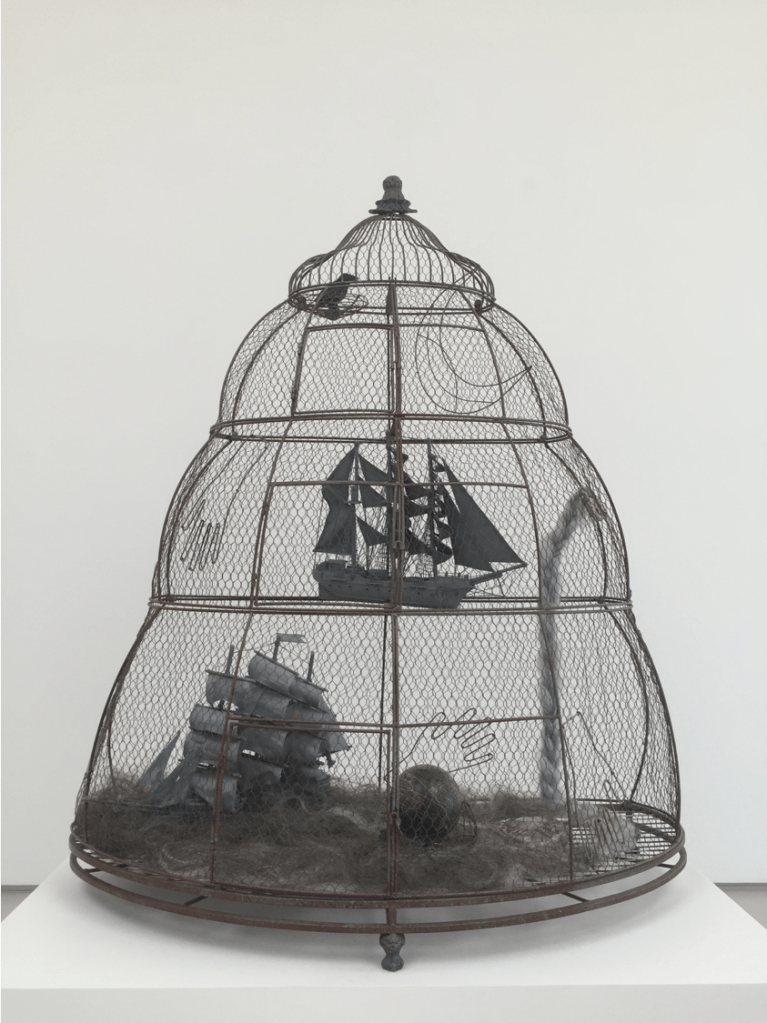
With participants from around the U.S., Canada, the U.K. and India, we jumped into a discussion of the assemblage, โ€œThe Destiny of Latitude and Longitudeโ€ by Betye Saar.ย  Participants began by observing what they saw in the piece, noting the shape of the cage, which for some evoked the image of a beehive and for others had very feminine resonances, of a breast or of an antebellum hooped skirt.ย  The sailing vessels opened up a lot of speculation, recalling the pirate ship inย Peter Panย and the world of childhood imagination; at the other end of the spectrum, some saw the history of the Middle Passage, of slave ships.ย  The dangling piece of rope suggested bondage, the lynching noose, and, for some, a lost promise of escape.ย  The hands reaching out in different directions were seen as โ€œasking for helpโ€ or “reaching out to lift up.โ€ ย The facilitators noted that the artist, Betye Saar is African American, and that this piece (from 2010) was part of a series of works all contained in cages of different shapes.ย  The discussion turned to the art of assemblage, the repurposing of objects, a thing known in one context that is transformed when placed in a new context.ย  The African-American artistic tradition of re-purposing found objects was noted.ย  The surprising and marvelous experience of the piece, some suggested, was in part accounted for by the beauty and charm of the objects, including the rather innocent rendering of a crescent moon, ย the toy-like ships, and the small bird seeking, it seems, a way out of the cage, in such startling combination with the hints at the horrors of the Slave Trade.ย  One participant observed that the piece made her feel like she couldnโ€™t breathe. ย ย 

The prompt was:ย Describe an object you own that says something about your or your familyโ€™s history,ย and the responses were wonderful and varied, fig trees, a bronzed golfball, a desk lamp, a genetic marker for twins. ย There was also an interesting and unexpected common thread of references to grandparents that manifested in the writing that was shared.

Participants are warmly encouraged to share what you wrote below (โ€œLeave a Replyโ€), to keep the conversation going here, bearing in mind that the blog of course is a public space where confidentiality is not assured.

Also, we would love to learn more about your experience of these sessions, so if youโ€™re able, please take the time to fill out a follow-up survey of one to two quick questions!

Please join us for our next session Wednesday, July 15th at 12pm EDT, with more times listed on our Live Virtual Group Sessions page.

We look forward to seeing you again soon!