Laboratori Di Medicina Narrativa: sabato 5 settembre dalle 16 alle 17.30

Siamo stati molto lieti di avervi avuti con noi!

Abbiamo letto insieme la poesia I pastori di Gabriele Dโ€™Annunzio, il cui testo trovate alla fine. In molti hanno osservato come, allโ€™inizio di Settembre, ognuno di noi si trova in un momento di transizione, allโ€™inizio di un viaggio – per alcuni il viaggio รจ verso lโ€™autunno, per altri verso lโ€™inizio di un nuovo anno scolastico diverso, per altri ritorno al lavoro in tempi di incertezza e cambiamenti. Lโ€™immagine della della transumanza ha accompagnato il nostro close reading, immaginando i pastori abruzzesi che lasciano i pascoli montani e si spostano verso il sud per trovare un inverno piรน mite. Nel parlare del โ€œrito anticoโ€ che ci ricorda di tempi passati, abbiamo riflettuto su cosa ci portiamo con noi in ogni nuovo viaggio. In questo caso, i pastori hanno con sรฉ quasi niente, ma almeno โ€œhanno bevuto profondamente ai fontiโ€. I nostri partecipanti hanno notato come settembre รจ un periodo di grande cambiamento dellโ€™anno, il passaggio dallโ€™estate allโ€™autunno, durante il quale risuona la nostalgia per la natura e la malinconia della fine delle vacanze. Alcuni partecipanti hanno proposto la domanda, โ€œchi sono i pastori di oggi?โ€, e hanno parlato di come i pastori di oggi sono i migranti, sia im-migrati ed e-migrati, che si spostano da una terra verso allโ€™altra alla ricerca di lavoro, vita e pace. Un partecipante ha notato come il migrare non รจ soltanto un tempo per i migranti: tutti noi abbiamo โ€œun tempo di migrazioneโ€. E per di piรน, la migrazione non รจ soltanto un spostamento fisico, ma puรฒ essere anche una trasformazione metafisica, in cui si confronta con quello che si ha davanti per poi comprendere che cosa si vuole lasciare andare e a che cosa si vuole tornare. Nel leggere il testo di oggi abbiamo anche riflettuto sul modo in cui esperienze e conoscenze passate colorano letture presenti. Invece di metterle abbiamo deciso di onorare e riconoscere le nostre emozioni (โ€œnelle professioni dโ€™aiuto questo andrebbe valorizzato di piรนโ€, ha osservato un partecipante. โ€œCi viene spesso chiesto di sospendere il personaleโ€, anche quando inevitabilmente ci portiamo ricordi ed esperienze passate in ogni nuovo incontro con ogni paziente).

Poi abbiamo scritto ispirati dallo stimolo: “Settembre, andiamoโ€ฆ(continua tu)”. I nostri partecipanti hanno introdotto nuove varianti ispirate dalla poesia: nuovi ritmi, ripetizioni, uso di imperativi e domande nei loro scritti. Hanno evidenziato i contrasti tra il mettersi in viaggio o restare fermi, tra lo spostamento o la staticitร . Un partecipante ha descritto la tenerezza del vento di settembre, delle nuvole morbide, della โ€œnatura che ci accompagna e che ci sollevaโ€. Altri hanno parlato dellโ€™energia spirituale che viene ogni anno con il mese di settembre, e dei sensi che usiamo per vivere e sperimentare i cambiamenti dellโ€™autunno: โ€œil sole che scalda ma non bruciaโ€, la dolcezza dellโ€™aria, i colori vivaci delle foglie. Nellโ€™ascoltare i testi composti dagli altri partecipanti, abbiamo meditato anche sulla consapevolezza del momento presente e sulla bellezza del linguaggio. รˆ state una sessione molto ricca di riflessioni e parole, di gratitudine per le opportunitร  di โ€œso-stareโ€ consapevolmente e di โ€œandare senza dimenticareโ€ .

Se avete partecipato al laboratorio, potete condividere i vostri scritti alla fine della pagina (โ€œLeave a Reply”). Attraverso questo forum speriamo di creare uno spazio per continuare la nostra conversazione!

Stiamo raccogliendo impressioni e breve feedback sui nostri laboratori di medicina narrativa su Zoom!

Questo breve questionario (anonimo, e aperto a chiunque abbia frequentato almeno un laboratorio) รจ molto importante per noi, e ci permetterร  di elaborare sul valore dei nostri laboratori e sul ruolo dello spazio per riflettere e metabolizzare il momento presente. Vi preghiamo quindi di condividere le nostre riflessioni con noi! 


I Pastori - Gabriele Dโ€™Annunzio
Settembre, andiamo. รˆ tempo di migrare.
Ora in terra d'Abruzzi i miei pastori
lascian gli stazzi e vanno verso il mare:
scendono all'Adriatico selvaggio
che verde รจ come i pascoli dei monti.
Han bevuto profondamente ai fonti
alpestri, che sapor d'acqua natia
rimanga ne' cuori esuli a conforto,
che lungo illuda la lor sete in via.
Rinnovato hanno verga d'avellano.
E vanno pel tratturo antico al piano,
quasi per un erbal fiume silente,
su le vestigia degli antichi padri.
O voce di colui che primamente
conosce il tremolar della marina!
Ora lungh'esso il litoral cammina
La greggia. Senza mutamento รจ l'aria.
Il sole imbionda sรฌ la viva lana
che quasi dalla sabbia non divaria.
Isciacquio, calpestio, dolci romori.
Ah perchรฉ non son io cรฒ miei pastori?

Live Virtual Group Session: 12pm EDT September 2nd 2020

Our text today took us to a 1970s jitney station in Philadelphia, Pennsylvania, where a husband and wife (Darnell and Rena) discuss a recent surprise home purchase. The excerpt from Act 2, Scene 1 of the play Jitney by August Wilson, was read by two different pairs of readers without stage directions, so they โ€œperformedโ€ solely through dialogue. We began our exploration of the exchange by asking who is present in this conversation beyond Darnell and Rena, the two characters who actually speak. There are quite a few, including a child named Jesse, Darnellโ€™s friends Ba Bra and Earl, someone named Peaches, and Renaโ€™s mother. One participant noted that each of them influence the dynamics between the two speakers. Others commented that Darnell also refers to his old self, so the past Darnell also becomes a factor in the present day. Beyond those other characters, we thought about whether gender roles are at play. One person saw a male aspect to the way Darnell seemed to be seeking affirmation with his grand gesture, trying to win Renaโ€™s approval but coming up short โ€“ again. Some of us found the conversation uncomfortable to hear and wondered if Rena was being too hard on Darnell, while others thought Darnellโ€™s gift of the home was actually for himself rather than for Rena. We commented on how the two have different desires: Rena focused on practical concerns like whether the yard has a fence, while Darnell imagined how nice it would be to have a den in the basement. We picked up on the subtext in the conversation, which was about more than just the house but about their entire relationship; we had the feeling these two people have had this same discussion many times before.

Participants wrote for 5 minutes to the prompt, โ€œWrite about slippingโ€ (inspired by Renaโ€™s last line: โ€œI know people change…but I know they can slip back tooโ€). Five readers shared their work, and everyone had a chance to respond. The one reader reflected on โ€œUnpacking this year and all the disturbing thingsโ€ฆwhat has happened to the world? What has happened to my world?โ€ As the narrator situates herself in space and time, she does so with a sense of exploration (and a tropical beverage). Another reader also explored memory, but in extreme conditions of another sort: โ€œMontreal is cold…Not once, twice, but thrice — slipped on ice. Canada is free, but frozen.โ€ The group appreciated the humor, and drew connections between the good intentions of the husband in the writing and Youngblood in Jitney. We were intrigued by a reader describing how a slip tests both friction and gravity, where metaphorical back stairs โ€œpermit myriad sins, not all even pleasurable but rather necessary, filling in holes from the past that youโ€™re supposed to pretend donโ€™t even exist but โ€“ if you do that โ€“ they chew out your entrails like a fox.โ€ One reader crafted her inquisitive position with alliteration (โ€œCurable inmates: what do they wake up to? Slipping into wakefulness has poisoned their minds…constantly conscious carefulโ€). This reminded one participant of patients in an ICU. Lastly, one writerโ€™s piece clipped along with conversational energy and conflict with much like what plays out in Jitney: โ€œItโ€™s so damn easy to judge, isnโ€™t it?…Donโ€™t throw a stone, unless youโ€™ve never broken a promise.โ€ An overarching theme to the discussion of the scene and subsequent writing was bias — how it shows up, plays out, and is mitigated (or not) by reflection and communication. ย 

Participants are warmly encouraged to share what you wrote below (โ€œLeave a Replyโ€), to keep the conversation going here, bearing in mind that the blog of course is a public space where confidentiality is not assured.

Also, we would love to learn more about your experience of these sessions, so if youโ€™re able, please take the time to fill out a follow-up survey of one to two quick questions!

We will be breaking with our usual schedule next week in honor of Labor Day on Monday September 7th. Please join us for our next session Wednesday, September 9th at 12pm EDT, with more times listed on our Live Virtual Group Sessions page.


From “Jitney” by August Wilson New York: The Overlook Press, 2001.

YOUNGBLOOD: You want to know what I was hiding from you? I’ll tell you. I been hustling … working day and night … while you accuse me of running the streets … and all I’m trying to do is save enough money so I can buy a house so you and Jesse have someplace decent to live. I asked Peaches if she would go with me to look at houses, cause I wanted to surprise you. I wanted to pull a truck up to the house and say, โ€œCome on, baby, we moving.โ€ And drive on out to Penn Hills and pull that truck up in front of one of them houses and say, โ€œThis is yours. This is your house baby.โ€ That’s what she was trying to hide from you. That’s why Turnbo seen her riding in my car all the time. I found a house and I come up a hundred and fifty dollars short from closing the deal, and I come and took the eighty dollars out the drawer.

RENA: A house? A house, Darnell? You bought a house without me!

YOUNGBLOOD: I wanted to surprise you.

RENA: You gonna surprise me with a house? Don’t do that. A new TV maybe. A stereo … a couch … a refrigerator … okay. But don’t surprise me with a house that I didn’t even have a chance to pick out! That’s what you been doing? That’s the debt you had to pay?

YOUNGBLOOD: You always saying you don’t want to live your whole life in the projects.

RENA: Darnell, you ain’t bought no house without me. How many times in your life do you get to pick out a house?

YOUNGBLOOD: Wait till you see it. It’s real nice. It’s all on one floor … it’s got a basement … like a little den. We can put the TV down there. I told myself Rena’s gonna like this. Wait till she see I bought her a house.

RENA: Naw, you bought a den for Darnell … that’s what you did. So you can sit down there and watch your football games. But what about the kitchen? The bathroom? How many windows does it have in the bedroom? Is there some place for Jesse to play? How much closet space does it have? You can’t just surprise me with a house and I’m supposed to say, โ€œOh, Darnell, that’s nice.โ€ At one time I would have. But I’m not seventeen no more. I have responsibilities. I want to know if it has a hookup for a washer and dryer cause I got to wash Jesse’s clothes. I want to know if it has a yard and do it have a fence and how far Jesse has to go to school. I ain’t thinking about where to put the TV. That’s not what’s important to me. And you supposed to know, Darnell. You supposed to know what’s important to me like I’m supposed to know what’s important to you. I’m not asking you to do it by yourself. I’m here with you. We in this together. See … house or no house we still ain’t got the food money. But if you had come and told me … if you had shared that with me … we could have went to my mother and we could have got eighty dollars for the house and still had money for food. You just did it all wrong, Darnell. I mean, you did the right thing but you did it wrong.

YOUNGBLOOD: No matter what I do it’s gonna come out wrong with you. That’s why you jump to conclusions. That’s why you accused me of running around with Peaches. You can’t look and see that I quit going to parties all the time … that I quit running with Ba Bra and Earl … that I quit chasing women. You just look at me and see the old Darnell. If you can’t change the way you look at me … then I may as well surrender now. I can’t beat your memory of who I was if you can’t see I’ve changed. I go out here and work like a dog to try and do something nice for you and no matter what I do, I can’t never do it right cause all you see is the way I used to be. You don’t see the new Darnell. You don’t see I’ve changed.

RENA: I know people change … but I know they can slip back too.


Live Virtual Group Session: 6pm EDT August 31st 2020

Twenty people from Canada, England, Greece, ME, PA, MI, NY, WA, and RI chatted in their geography and, with their presence, showed an interest in puzzling together possible meanings in Lucille Cliftonโ€™s โ€blessing the boats.โ€ This poem, written entirely in small cap and sans punctuation, furnished a gentle feeling for many participants, who heard โ€œa prayer for these times,โ€ โ€œan Irish prayer with โ€˜the wind at your back,โ€โ€™ a blessing, a sendoff to another place, perhaps even to a time and place beyond death. We selected this poem mindful of the transition of going into September, into the fall, and โ€“ for many โ€“ into the school year. In the shadow of the poem, each of us identified a transition in our own lives, envisioning ourselves collectively โ€œin our boatsโ€. As someone observed: โ€œwe are now beyond our initial understanding of what COVID is all aboutโ€, getting โ€œglimpses or brightnessโ€ and yet still navigating the unknown. The word โ€œmayโ€ (appearing four times in the body of poem) suggests uncertainty, possibility, permission and, in that way, allows readers a freedom to sail the poem at their own pace and understand as they will. For some, the poem exuded โ€œgentle simplicityโ€. One person offered that water in literature suggests baptism and beginnings.

Many highlighted the physicality embedded in the text. The word โ€œlipโ€ (the lip of our understanding), was a stumbling block, a โ€œhaltingโ€ for some and, for others, an evocation of an edge, a cusp, a beginning. The โ€œbackโ€ makes us think of a โ€œconcrete bodyโ€. One person mentioned that she had expected to read the reciprocal โ€œlove you backโ€ but remembered to read closely (narrativeโ€™s MO) and read that the โ€œyouโ€ (addressed in the poem) could turn from the wind and expect the wind to โ€œlove your back.โ€ Oh, the many discoveries we make when we close read! Another participant expressed their experience of physical sensuousness that included feeling hands laid on the back of passenger(s) embarking from a place as nebulous as โ€œthisโ€ to an unnamed โ€œthat.โ€  The word โ€œinnocenceโ€ called to many, who paired the word with ideas of trust, energy, and the protection of not knowing.  

One participant remembered spending time, as an aspirant to medical practice, at St. Maryโ€™s, the geography pointed to by the poet Lucille Clifton, steering a craft on the โ€œlipโ€ of waves in Chesapeake Bay. Like others he brought into the discussion the trust needed to turn oneโ€™s back on the wind and allow/expect the wind to love your back.

The prompt โ€œWrite about turning from the face of fearโ€ brought creative writing that described snorkeling in the Pacific Ocean; feeling fear (โ€œcold, pressing โ€œ) by night and day and respite from this fear that prayer brings; choice/options depicted by Door 1 and Door 2; and references to current events and the promulgation of a fear-based culture. Together, we reflected on how fear takes on different forms, including based on the stories we tell ourselves and others. ย  As we adjourned (knowing we will have a holiday hiatus on September 7 and be together again on September 14), participants chatted words and phrases expressing what they were taking with them this evening: beauty, bravery, gentle transition, hope, letting my back be loved, stillness, surfing gently, and trust. Thank you for sailing with us, and see you soon!

Participants are warmly encouraged to share what you wrote below (โ€œLeave a Replyโ€), to keep the conversation going here, bearing in mind that the blog of course is a public space where confidentiality is not assured.

Also, we would love to learn more about your experience of these sessions, so if youโ€™re able, please take the time to fill out a follow-up survey of one to two quick questions!

Please join us for our next session Wednesday, September 2nd at 12pm EDT, with more times listed on our Live Virtual Group Sessions page.


blessing the boats
BY LUCILLE CLIFTON

                                    (at St. Mary's)

may the tide
that is entering even now
the lip of our understanding
carry you out
beyond the face of fear
may you kiss
the wind then turn from it
certain that it will
love your back     may you
open your eyes to water
water waving forever
and may you in your innocence
sail through this to that


Lucille Clifton, "blessing the boats" 
from Blessing the Boats: New and Selected Poems 1988-2000. 
Copyright ยฉ 2000 by Lucille Clifton.

Encuentros virtuales en vivo: sรกbado 29 agosto, 14:00 EST

Tuvimos la รบltima sesiรณn en espaรฑol del mes y nos fue muy bien. Asistieron 13 participantes en total representando a Chile, Estados Unidos, Espaรฑa, Brasil y Argentina. Como viene siendo habitual, tuvimos una buena combinaciรณn de โ€œveteranos y noveles.โ€

La obra que elegimos para esta sesiรณn fue un poema del chileno Pablo Neruda, llamado โ€œMuere lentamente,โ€ publicado a continuaciรณn. Dos voluntarias leyeron el texto en voz alta. Desde el principio, hubo gente que se mostrรณ incรณmoda con el texto, puesto que habla de la muerte, y ademรกs algunos lo leyeron como una admoniciรณn, como una suerte de โ€œreprimendaโ€ a los que no hacen lo que dice el texto que hay que hacer โ€œpara no morirโ€ (se verรญa mรกs como una orden en vez de una sugerencia). Otra participante seรฑalรณ explรญcitamente una idea con la que todos se identificaron en estos tiempos de pandemia: convertirse en esclavos del hรกbito, haciendo todos los dรญas lo mismo. Conceptos como estos llevaban a darle una interpretaciรณn โ€œoscuraโ€ al texto, como que el lector estuviera obligado a cambiar si es que no hacรญa algo de lo que decรญa el texto. Sin embargo, otra participante no lo entendiรณ como algo impositivo, sino como una metรกfora, donde acciones como leer, escuchar mรบsica, eran equivalentes a otras como tejer, nadar, o practicar algรบn deporte; serรญan como consejos de alguien querido para poder disfrutar mejor de la vida. A otra participante le llamรณ mucho la atenciรณn lo โ€œlentoโ€ del morirโ€ฆ en contraposiciรณn a lo rรกpido del vivir? Es morir lentamente una agonรญa? Puso de relieve y generรณ un intercambio acerca de lo subjetivo del tiempo.

Asimismo, fue interesante el detalle que pesquisรณ otra participante de lo impersonal de casi todos los versos, excepto los รบltimos, donde se ve un tono mucho mรกs imperativo, y dirigido al lector. Algo que sobrevolรณ toda la conversaciรณn fue la sensaciรณn de que el poema no era โ€œnerudiano,โ€ no parecรญa un texto propio del poeta, sino escrito por otra persona, lo que generรณ cierta controversia. Finalmente, algo sobre lo que todos los participantes estuvieron de acuerdo fue en que no existe una sola receta para ser feliz.

Escribir en conjunto: โ€œEscribe acerca de un momento en que te sintieras vivo.โ€ Varios participantes compartieron sus momentos, algunos โ€œa la sombra del texto original,โ€ y otros โ€œdesmarcรกndoseโ€ del texto, en formas muy creativas, lo que generรณ un rico intercambio entre los participantes. Sin embargo, a pesar de esta mezcla de resultados, todos fueron explรญcitos en demostrar la vida que recorrรญa sus venas, ya fuera expresando, casi exclamando, lo viva que se sentรญa la autora, en otro aporte, una participante puso en contraposiciรณn los conceptos de vida y muerte, y lo necesario que son el uno para el otro (no se entenderรญan sin el otro). Otra participante puso de manifiesto el concepto de โ€œvida en parรฉntesis,โ€ y por รบltimo, y como colofรณn a la sesiรณn, una participante afirmรณ en su escrito que โ€œse sentรญa tan viva que la muerte la aterraba,โ€ lo que generรณ multitud de comentarios.

Se alienta a los participantes a compartir lo que escribieron a continuaciรณn (“Deja una respuesta”), para mantener la conversaciรณn aquรญ, teniendo en cuenta que el blog, por supuesto, es un espacio pรบblico donde no se garantiza la confidencialidad.

Por favor, รบnase a nosotros para nuestra prรณxima sesiรณn en espaรฑol: Martes, 15 de septiembre a las 4:30 pm EDT, con mรกs oportunidades de sesiones en otros idiomas listadas en nuestra pรกgina de sesiones grupales virtuales en vivo.

ยกEsperamos verte pronto!

ยกCuรฉntenos mรกs sobre su experiencia en este taller completando esta breve encuesta!


Muere Lentamente (Pablo Neruda)

Muere lentamente quien no viaja,
quien no lee, quien no escucha mรบsica,
quien no halla encanto en si mismo.

Muere lentamente quien destruye su amor propio,
quien no se deja ayudar.

Muere lentamente quien se transforma en esclavo del habito,
repitiendo todos los dรญas los mismos senderos,
quien no cambia de rutina,
no se arriesga a vestir un nuevo color
o no conversa con desconocidos.

Muere lentamente quien evita una pasiรณn
Y su remolino de emociones,
Aquellas que rescatan el brillo en los ojos
y los corazones decaidos.

Muere lentamente quien no cambia de vida cuando estรก insatisfecho con su trabajo o su amor,
Quien no arriesga lo seguro por lo incierto
para ir detrรกs de un sueรฑo,
quien no se permite al menos una vez en la vida huir de los consejos sensatosโ€ฆ
ยกVive hoy! - ยกHaz hoy!
ยกAriesga hoy!ยกNo te dejes morir lentamente!
ยกNo te olvides de ser feliz!


ฮ–ฯ‰ฮฝฯ„ฮฑฮฝฮฎ ฯƒฯ…ฮฝฮตฮดฯฮฏฮฑ ฮฑฯ†ฮทฮณฮทฮผฮฑฯ„ฮนฮบฮฎฯ‚ ฮนฮฑฯ„ฯฮนฮบฮฎฯ‚: ฮ ฮญฮผฯ€ฯ„ฮท 27 ฮ‘ฯ…ฮณฮฟฯฯƒฯ„ฮฟฯ…, 6 m.m. EEST

ฮฃฮฑฯ‚ ฮตฯ…ฯ‡ฮฑฯฮนฯƒฯ„ฮฟฯฮผฮต ฯ€ฮฟฯ… ฯƒฯ…ฮผฮผฮตฯ„ฮตฮฏฯ‡ฮฑฯ„ฮต ฯƒฮต ฮฑฯ…ฯ„ฮฎฮฝ ฯ„ฮท ฯƒฯ…ฮฝฮตฮดฯฮฏฮฑ.

ฮคฮฟ ฮบฮตฮฏฮผฮตฮฝฯŒ ฮผฮฑฯ‚ ฮณฮนฮฑ ฯƒฮฎฮผฮตฯฮฑ ฮฎฯ„ฮฑฮฝ:ย ยซฮงฮฟฮนฯฮฟฮบฮฌฮผฮทฮปฮฟฯ‚ยป ฯ„ฮทฯ‚ ฮˆฯฯƒฮทฯ‚ ฮฃฯ‰ฯ„ฮทฯฮฟฯ€ฮฟฯฮปฮฟฯ…

ฮ˜ฮญฮผฮฑ:ย ฮ“ฯฮฌฯˆฯ„ฮต ฮณฮนฮฑ ฮญฮฝฮฑ ฯ‡ฯŽฯฮฟ ฯ†ฯฮฟฮฝฯ„ฮฏฮดฮฑฯ‚

ฮฃฯฮฝฯ„ฮฟฮผฮฑ ฮธฮฑ ฮผฮฟฮนฯฮฑฯƒฯ„ฮฟฯฮผฮต ฯ€ฮตฯฮนฯƒฯƒฯŒฯ„ฮตฯฮตฯ‚ ฯ€ฮปฮทฯฮฟฯ†ฮฟฯฮฏฮตฯ‚ ฯƒฯ‡ฮตฯ„ฮนฮบฮฌ ฮผฮต ฮฑฯ…ฯ„ฮฎฮฝ ฯ„ฮท ฯƒฯ…ฮฝฮตฮดฯฮฏฮฑ, ฮณฮน โ€˜ฮฑฯ…ฯ„ฯŒ ฮตฯ€ฮนฯƒฯ„ฯฮญฯˆฯ„ฮต ฮพฮฑฮฝฮฌ.

ฮฃฮฑฯ‚ ฯ€ฯฮฟฯƒฮบฮฑฮปฮฟฯฮผฮต ฮฝฮฑ ฮผฮฟฮนฯฮฑฯƒฯ„ฮตฮฏฯ„ฮต ฯ„ฮฑ ฮณฯฮฑฯ€ฯ„ฮฌ ฯƒฮฑฯ‚ ฮผฮฑฮถฮฏ ฮผฮฑฯ‚ ฯ€ฮฑฯฮฑฮบฮฌฯ„ฯ‰.

ฮšฮฑฮปฮฟฯฮผฮต ฯŒฮปฮตฯ‚ ฮบฮฑฮน ฯŒฮปฮฟฯ…ฯ‚ ฯ€ฮฟฯ… ฯƒฯ…ฮผฮผฮตฯ„ฮตฮฏฯ‡ฮฑฯ„ฮต ฮฝฮฑ ฮผฮฟฮนฯฮฑฯƒฯ„ฮตฮฏฯ„ฮต ฯŒฯƒฮฑ ฮณฯฮฌฯˆฮฑฯ„ฮต ฮบฮฑฯ„ฮฌ ฯ„ฮท ฮดฮนฮฌฯฮบฮตฮนฮฑ ฯ„ฮทฯ‚ ฯƒฯ…ฮฝฮตฮดฯฮฏฮฑฯ‚ ฮผฮฑฯ‚ ฯ€ฮฑฯฮฑฮบฮฌฯ„ฯ‰ (โ€œLeave a replyโ€) ฮบฮฑฮน ฮฝฮฑ ฮบฯฮฑฯ„ฮฎฯƒฮฟฯ…ฮผฮต ฮฑฯ…ฯ„ฮฎ ฯ„ฮทฮฝ ฯ„ฯŒฯƒฮฟ ฮตฮฝฮดฮนฮฑฯ†ฮญฯฮฟฯ…ฯƒฮฑ ฯƒฯ…ฮถฮฎฯ„ฮทฯƒฮฎ ฮผฮฑฯ‚ ฮถฯ‰ฮฝฯ„ฮฑฮฝฮฎ, ฯ…ฯ€ฮตฮฝฮธฯ…ฮผฮฏฮถฮฟฮฝฯ„ฮฌฯ‚ ฯƒฮฑฯ‚, ฮฒฮตฮฒฮฑฮฏฯ‰ฯ‚, ฯŒฯ„ฮน ฮฑฯ…ฯ„ฮฎ ฮตฮฏฮฝฮฑฮน ฮผฮนฮฑ ฮดฮทฮผฯŒฯƒฮนฮฑ ฯ€ฮปฮฑฯ„ฯ†ฯŒฯฮผฮฑ ฮบฮฑฮน ฮท ฯ€ฯฯŒฯƒฮฒฮฑฯƒฮท ฮฑฮฝฮฟฮนฯ‡ฯ„ฮฎ ฯƒฯ„ฮฟ ฮบฮฟฮนฮฝฯŒ.

ฮ˜ฮฑ ฮธฮญฮปฮฑฮผฮต ฮฝฮฑ ฮผฮฌฮธฮฟฯ…ฮผฮต ฯ€ฮตฯฮนฯƒฯƒฯŒฯ„ฮตฯฮฑ  ฮณฮนฮฑ ฯ„ฮทฮฝ ฮตฮผฯ€ฮตฮนฯฮฏฮฑ ฯƒฮฑฯ‚ ฮผฮต ฮฑฯ…ฯ„ฮญฯ‚ ฯ„ฮนฯ‚ ฯƒฯ…ฮฝฮตฮดฯฮฏฮตฯ‚. ฮ‘ฮฝ ฯ„ฮฟ ฮตฯ€ฮนฮธฯ…ฮผฮตฮฏฯ„ฮต, ฯ€ฮฑฯฮฑฮบฮฑฮปฮฟฯฮผฮต ฮฑฯ†ฮนฮตฯฯŽฯƒฯ„ฮต ฮปฮฏฮณฮฟ ฯ‡ฯฯŒฮฝฮฟ ฯƒฮต ฮผฮนฮฑ ฯƒฯฮฝฯ„ฮฟฮผฮท ฮญฯฮตฯ…ฮฝฮฑ ฮดฯฮฟ ฮตฯฯ‰ฯ„ฮฎฯƒฮตฯ‰ฮฝ!

ฮ‘ฮบฮฟฮปฮฟฯ…ฮธฮฎฯƒฯ„ฮต ฯ„ฮฟฮฝ ฯƒฯฮฝฮดฮตฯƒฮผฮฟ:ย https://tinyurl.com/nmedg-survey


ฮ‘ฯ€ฯŒฯƒฯ€ฮฑฯƒฮผฮฑ ฮฑฯ€ฯŒ ฯ„ฮฟ ฮดฮนฮฎฮณฮทฮผฮฑ ยซฮงฮฟฮนฯฮฟฮบฮฌฮผฮทฮปฮฟฯ‚ยป ฯ„ฮทฯ‚ ฮˆฯฯƒฮทฯ‚ ฮฃฯ‰ฯ„ฮทฯฮฟฯ€ฮฟฯฮปฮฟฯ… (ฮงฮฟฮนฯฮฟฮบฮฌฮผฮทฮปฮฟฯ‚. ฮ‘ฮธฮฎฮฝฮฑ, ฮšฮญฮดฯฮฟฯ‚, 1992)

ฮ’ฮฑฯƒฮฏฮปฮตฯ…ฮต ฮฑฯ€ฯŒฮปฯ…ฯ„ฮท ฮทฯƒฯ…ฯ‡ฮฏฮฑ ฯƒฯ„ฮฟ ฮณฯฮฑฯ†ฮตฮฏฮฟ. ฮ‘ฯ…ฯ„ฯŒฯ‚ ฮฎฯ„ฮฑฮฝ ฮญฮฝฮฑฯ‚ ฮฑฯ€ฯŒ ฯ„ฮฟฯ…ฯ‚ ฮปฯŒฮณฮฟฯ…ฯ‚ ฯ€ฮฟฯ… ฮญฮบฮฑฮฝฮฑฮฝ ฯ„ฮนฯ‚ ฮตฯ€ฮนฯƒฮบฮญฯˆฮตฮนฯ‚ ฮฑฯ…ฯ„ฮญฯ‚ ฯ„ฯŒฯƒฮฟ ฮตฯ…ฯ‡ฮฌฯฮนฯƒฯ„ฮตฯ‚. ฮŒฮปฮฑ ฮฎฯ„ฮฑฮฝ ฯ„ฮฑฮบฯ„ฮฟฯ€ฮฟฮนฮทฮผฮญฮฝฮฑ ฮบฮฑฮน ฮบฮฑฮธฮฑฯฮฌ ฮบฮฑฮน ฯ„ฮฑฯ…ฯ„ฯŒฯ‡ฯฮฟฮฝฮฑ ฯ†ฯฮญฯƒฮบฮฑ, ฮฑฯ€ฮฟฯ€ฮฝฮญฮฟฮฝฯ„ฮฑฯ‚ ฮผฮนฮฑ ฮฑฮฏฯƒฮธฮทฯƒฮท ฮดฯฮฟฯƒฮนฮฌฯ‚ ฯ€ฮฟฯ… ฮดฮตฮฝ ฮฎฯ„ฮฑฮฝ ฮตฯ†ฮฎฮผฮตฯฮท. ฮ‘ฮปฮปฮฌ ฮฎฯ„ฮฑฮฝ ฮบฯ…ฯฮฏฯ‰ฯ‚ ฮญฮฝฮฑ ฮผฮญฯฮฟฯ‚ ฮถฮตฯƒฯ„ฯŒ ฮบฮน ฮฑฯ…ฯ„ฯŒ ฮฌฯฮตฯƒฮต ฯƒฯ„ฮท ฮฆฯฮญฮฝฯ„ฯ…. ฮŸ ฮตฮพฯ‰ฯ„ฮตฯฮนฮบฯŒฯ‚ ฮบฯŒฯƒฮผฮฟฯ‚ ฯƒฯ„ฮฑฮผฮฑฯ„ฮฟฯฯƒฮต ฯ€ฮฏฯƒฯ‰ ฮฑฯ€ฯŒ ฯ„ฮฟ ฯ‡ฮฑฮผฮทฮปฯŒ ฮบฮฏฯ„ฯฮนฮฝฮฟ ฯ€ฮฑฯฮฌฮธฯ…ฯฮฟ ฮผฮต ฯ„ฮฑ ฮบฮปฮตฮนฯƒฯ„ฮฌ ฯ€ฮฑฮฝฯ„ฮถฮฟฯฯฮนฮฑ ฮบฮฑฮน ฮฟ ฮฑฯƒฮธฮตฮฝฮฎฯ‚ ฮฒฮฟฯ…ฮปฮนฮฌฮถฮฟฮฝฯ„ฮฑฯ‚ ฯƒฮต ฮผฮนฮฑ ฯ†ฮธฮฑฯฮผฮญฮฝฮท, ฮฒฮตฮปฮฟฯฮดฮนฮฝฮท ฯ€ฮฟฮปฯ…ฮธฯฮฟฮฝฮฏฯ„ฯƒฮฑ ฮฑฯ€ฮญฮฝฮฑฮฝฯ„ฮน ฯƒฯ„ฮฟ ฮณฮนฮฑฯ„ฯฯŒ, ฮผฯ€ฮฟฯฮฟฯฯƒฮต, ฯƒฮบฯฮฒฮฟฮฝฯ„ฮฑฯ‚ ฮปฮฏฮณฮฟ ฯ„ฮฟ ฮบฮตฯ†ฮฌฮปฮน ฮบฮฑฮน ฮบฮฑฮผฯ€ฮฟฯ…ฯฮนฮฌฮถฮฟฮฝฯ„ฮฑฯ‚ ฮฑฯฮนฯƒฯ„ฮตฯฮฌ, ฮฝฮฑ ฮดฮตฮน ฯŒฮปฮฟ ฯ„ฮฟ ฯƒฮบฮทฮฝฮนฮบฯŒ ฯ„ฮฟฯ… ฮนฮฑฯ„ฯฮตฮฏฮฟฯ… ฮฝฮฑ ฯƒฯ…ฮผฯ€ฯ…ฮบฮฝฯŽฮฝฮตฯ„ฮฑฮน ฯƒฯ„ฮทฮฝ ฮฑฮฝฯ„ฮฑฮฝฮฌฮบฮปฮฑฯƒฮท ฯ„ฮฟฯ… ฯ„ฮถฮฑฮผฮนฮฟฯ ฯŒฯ€ฯ‰ฯ‚ ฯƒฮต ฮผฮนฮฑ ฮผฮฑฮณฮนฮบฮฎ ฯƒฯ†ฮฑฮฏฯฮฑ. ฮˆฯ„ฯƒฮน ฮตฮฏฯ‡ฮต ฯƒฮบฯฯˆฮตฮน ฮบฮน ฮท ฮฆฯฮญฮฝฯ„ฯ… ฮตฮบฮตฮฏฮฝฮฟ ฯ„ฮฟ ฯ€ฯฯŽฯ„ฮฟ ฮฑฯ€ฯŒฮณฮตฯ…ฮผฮฑ ฯ€ฮฟฯ… ฯ€ฮฌฯ„ฮทฯƒฮต ฯ„ฮฟ ฯ€ฯŒฮดฮน ฯ„ฮทฯ‚ ฮตฮดฯŽ ฮบฮฑฮน ฮตฮฏฯ‡ฮต ฮดฮตฮน ฯ„ฮฟ ฯƒฯŽฮผฮฑ ฯ„ฮทฯ‚ ฮฝฮฑ ฮผฮนฮบฯฮฑฮฏฮฝฮตฮน ฮบฮฑฮน ฯ„ฮฟ ฯ€ฯฯŒฯƒฯ‰ฯ€ฯŒ ฯ„ฮทฯ‚ ฮฝฮฑ ฮผฮตฮณฮตฮธฯฮฝฮตฯ„ฮฑฮน ฮบฮฑฯ„ฮฑฯ€ฮฏฮฝฮฟฮฝฯ„ฮฑฯ‚ ฯŒฮปฮฟ ฯ„ฮฟ ฯƒฮบฮทฮฝฮนฮบฯŒ. ฮˆฮบฮธฮฑฮผฮฒฮท ฮตฮฏฯ‡ฮต ฮบฮฟฮนฯ„ฮฌฮพฮตฮน ฮผฮญฯƒฮฑ ฯƒฯ„ฮนฯ‚ ฮบฯŒฯฮตฯ‚ ฯ„ฯ‰ฮฝ ฮผฮฑฯ„ฮนฯŽฮฝ ฯ„ฮทฯ‚ ฯŒฯ€ฮฟฯ… ฮฟ ฮผฮนฮบฯฯŒฮบฮฟฯƒฮผฮฟฯ‚ ฯ„ฮฟฯ… ฯ„ฮถฮฑฮผฮนฮฟฯ ฮญฯ€ฮฑฮนฯฮฝฮต ฮถฯ‰ฮฎ ฮบฮฑฮน ฮฑฯƒฯ„ฯฮฑฯ€ฮนฮฑฮฏฮฑ ฯ‡ฮฑฮฝฯŒฯ„ฮฑฮฝ.

ย ย ย ย ย ย  ฮคฮทฮฝ ฮตฮฏฯ‡ฮต ฯ†ฮญฯฮตฮน ฮผฮต ฯ„ฮฟ ฮถฯŒฯฮน ฮท ฮผฮทฯ„ฮญฯฮฑ ฯ„ฮทฯ‚ ฮบฮฑฮน ฯƒฯ„ฮทฮฝ ฮตฮพฯŽฯ€ฮฟฯฯ„ฮฑ ฮตฮฏฯ‡ฮฑฮฝ ฮบฮฑฯ…ฮณฮฑฮดฮฏฯƒฮตฮน. ยซฮ“ฮนฮฑฯ„ฮฏ ฮธฮญฮปฮตฮนฯ‚ ฮฝฮฑ ฮผฮต ฯˆฮฑฯ‡ฮฟฯ…ฮปฮญฯˆฮตฮน ฮฌฮปฮปฮฟฯ‚ ฮญฮฝฮฑฯ‚ ฮณฮนฮฑฯ„ฯฯŒฯ‚;ยป ฯฯ‰ฯ„ฮฟฯฯƒฮต ฯ„ฯฮญฮผฮฟฮฝฯ„ฮฑฯ‚ ฮท ฮฆฯฮญฮฝฯ„ฯ…. ฮงฯ‰ฯฮฏฯ‚ ฮฑฯ€ฮฌฮฝฯ„ฮทฯƒฮท ฮท ฮผฮทฯ„ฮญฯฮฑ ฯ„ฮทฯ‚ ฮตฮฏฯ‡ฮต ฯ€ฮฑฯ„ฮฎฯƒฮตฮน ฯ„ฮฟ ฮบฮฟฯ…ฮดฮฟฯฮฝฮน ฮบฮฑฮน ฮตฮฏฯ‡ฮฑฮฝ ฯ€ฮตฯฮฌฯƒฮตฮน ฯƒฯ„ฮฟ ฯ†ฯ‰ฯ„ฮนฯƒฮผฮญฮฝฮฟ ฯ€ฯฮฟฮธฮฌฮปฮฑฮผฮฟ ฯ‡ฯ‰ฯฮฏฯ‚ ฮฝฮฑ ฮบฮฟฮนฯ„ฮฌฮถฮฟฮฝฯ„ฮฑฮน.

ฮ•ฮฏฯ‡ฮต ฯ€ฮตฯฮฌฯƒฮตฮน ฮฑฯฮบฮตฯ„ฯŒฯ‚ ฮบฮฑฮนฯฯŒฯ‚ ฮฑฯ€ฯŒ ฯ„ฯŒฯ„ฮต. ฮคฯŽฯฮฑ ฮฎฯ„ฮฑฮฝ ฯ€ฮนฮฟ ฯ‡ฮปฯ‰ฮผฮฎ, ฯ„ฮฑ ฯ‡ฮญฯฮนฮฑ ฯ„ฮทฯ‚ ฮญฯ„ฯฮตฮผฮฑฮฝ ฯ€ฮตฯฮนฯƒฯƒฯŒฯ„ฮตฯฮฟ. ฮšฮฑฮน ฮฟ ฮณฮนฮฑฯ„ฯฯŒฯ‚ ฮฌฮปฮปฯ‰ฯƒฯ„ฮต ฮตฮฏฯ‡ฮต ฯ€ฮฑฯ‡ฯฮฝฮตฮน ฯ„ฮฟฯ…ฮปฮฌฯ‡ฮนฯƒฯ„ฮฟฮฝ ฮฟฮบฯ„ฯŽ ฮบฮนฮปฮฌ. ฮ ฮฑฯโ€™ ฯŒฮปฮฟ ฯ€ฮฟฯ… ฮตฮบฮตฮฏฮฝฮท ฯ„ฮทฮฝ ฯ€ฯฯŽฯ„ฮท ฯ†ฮฟฯฮฌ ฮฎฯ„ฮฑฮฝ ฮบฮฑฮปฮฟฮบฮฑฮฏฯฮน ฮบฮฑฮน ฮท ฮทฮผฮญฯฮฑ ฮบฯฮฑฯ„ฮฟฯฯƒฮต ฯ‰ฯ‚ ฯ„ฮนฯ‚ ฮตฮฝฮฝฮนฮฌ ฮฎ ฮตฮฝฮฝฮนฮฌฮผฮนฯƒฮน, ฮท ฮฆฯฮญฮฝฯ„ฯ… ฮผฯ€ฮฑฮฏฮฝฮฟฮฝฯ„ฮฑฯ‚ ฯƒฯ„ฮฟ ฮณฯฮฑฯ†ฮตฮฏฮฟ ฮตฮฏฯ‡ฮต ฯ„ฮทฮฝ ฮตฮฝฯ„ฯฯ€ฯ‰ฯƒฮท ฯŒฯ„ฮน ฮตฮฏฯ‡ฮต ฮบฮนฯŒฮปฮฑฯ‚ ฮฝฯ…ฯ‡ฯ„ฯŽฯƒฮตฮน ฮบฮน ฮฑฯ…ฯ„ฯŒ ฮฑฯƒฯ…ฮฝฮฑฮฏฯƒฮธฮทฯ„ฮฑ ฯ„ฮทฮฝ ฮญฮบฮฑฮฝฮต ฮฝฮฑ ฯ‡ฮฑฮปฮฑฯฯŽฯƒฮตฮน. ฮ•ฮฏฯ‡ฮต ฮฑฯฯ‡ฮฏฯƒฮตฮน ฮฝฮฑ ฯƒฯ…ฮผฯ€ฮฑฮธฮตฮฏ ฯ„ฮฟ ฮนฮฑฯ„ฯฮตฮฏฮฟ ฮบฮฑฮน ฯ„ฮฟ ฮณฮนฮฑฯ„ฯฯŒ ฮบฮฑฮน ฯƒฯ„ฮฟ ฮตฮพฮฎฯ‚, ฯƒโ€™ ฯŒฮปฮฑ ฯ„ฮฑ ฯฮฑฮฝฯ„ฮตฮฒฮฟฯ ฯ€ฮฟฯ… ฮฑฮบฮฟฮปฮฟฯฮธฮทฯƒฮฑฮฝ, ฮบฮฌฮธฮต ฯ†ฮฟฯฮฌ ฯ€ฮฟฯ… ฮตฮบฮตฮฏฮฝฮฟฯ‚ ฮญฮบฮปฮตฮนฮฝฮต ฯ„ฮทฮฝ ฯ€ฯŒฯฯ„ฮฑ ฯ€ฮฏฯƒฯ‰ ฯ„ฮทฯ‚ ฮบฮฑฮน ฯ€ฮฎฮณฮฑฮนฮฝฮต ฮฝฮฑ ฯƒฯ„ฮฑฮธฮตฮฏ ฯŒฯฮธฮนฮฟฯ‚ ฮฑฯ€ฮญฮฝฮฑฮฝฯ„ฮฏ ฯ„ฮทฯ‚ ฯ€ฮตฯฮนฮผฮญฮฝฮฟฮฝฯ„ฮฌฯ‚ ฯ„ฮทฮฝ ฮฝฮฑ ฮบฮฑฮธฮฏฯƒฮตฮน, ฮผฮตฯƒฮฟฮปฮฑฮฒฮฟฯฯƒฮต ฮญฮฝฮฑ ฮบฮตฮฝฯŒ ฯ‡ฯฯŒฮฝฮฟฯ…, ฮปฮฏฮณฮฑ ฮดฮตฯ…ฯ„ฮตฯฯŒฮปฮตฯ€ฯ„ฮฑ ฮบฮฑฮธฯ…ฯƒฯ„ฮญฯฮทฯƒฮทฯ‚, ฮฏฯƒฯ‰ฯ‚ ฯ†ฮฑฮฝฯ„ฮฑฯƒฯ„ฮนฮบฮฎฯ‚, ฯ€ฮฟฯ… ฯƒฮฎฮผฮฑฮนฮฝฮฑฮฝ ฯ„ฮทฮฝ ฮญฮฝฮฑฯฮพฮท ฮผฮนฮฑฯ‚ ฮดฮนฮฑฮดฮนฮบฮฑฯƒฮฏฮฑฯ‚ ฮตฮพฮฑฮนฯฮตฯ„ฮนฮบฮฌ ฮตฯ…ฯ‡ฮฌฯฮนฯƒฯ„ฮทฯ‚. ฮ‘ฮผฮญฯƒฯ‰ฯ‚ ฮผฯŒฮปฮนฯ‚ ฮบฮฑฮธฯŒฯ„ฮฑฮฝ ฯƒฯ„ฮทฮฝ ฯ€ฮฟฮปฯ…ฮธฯฯŒฮฝฮฑ, ฮท ฮฆฯฮญฮฝฯ„ฯ… ฮญฯƒฮบฯ…ฮฒฮต ฮณฮญฯฮฝฮฟฮฝฯ„ฮฑฯ‚ ฯ„ฮฟฯ…ฯ‚ ฯŽฮผฮฟฯ…ฯ‚ ฮบฮฑฮน ฮบฮฟฮฏฯ„ฮฑฮถฮต ฯ„ฮฟฮฝ ฮตฮฑฯ…ฯ„ฯŒ ฯ„ฮทฯ‚ ฯƒฯ„ฮฟ ฯ„ฮถฮฌฮผฮน. ฮ‘ฯ…ฯ„ฯŒ ฮฎฯ„ฮฑฮฝ ฯ„ฮฟ ฮดฮตฯฯ„ฮตฯฮฟ ฯƒฮฎฮผฮฑ. ฮ•ฮฝ ฯ„ฯ‰ ฮผฮตฯ„ฮฑฮพฯ ฮฟ ฮณฮนฮฑฯ„ฯฯŒฯ‚ ฮผฮตฮปฮตฯ„ฮฟฯฯƒฮต ฯ„ฮฟ ฮฝฯ„ฮฟฯƒฮนฮญ ฯ„ฮทฯ‚. ฮˆฯ€ฮตฮนฯ„ฮฑ ฯƒฮฎฮบฯ‰ฮฝฮต ฮปฮฏฮณฮฟ ฯ„ฮฟ ฮบฮตฯ†ฮฌฮปฮน, ฮญฯƒฯ„ฯฮตฯ†ฮต ฯ„ฮฟ ฮฒฮปฮญฮผฮผฮฑ ฯ„ฮฟฯ… ฯ€ฮฌฮฝฯ‰ ฯ„ฮทฯ‚ ฮบฮน ฮฌฯฯ‡ฮนฮถฮต ฮฝฮฑ ฯ„ฮทฯ‚ ฮผฮนฮปฮฌฮตฮน. ฮˆฯ„ฯƒฮน ฮฌฯฯ‡ฮนฮถฮตย  ฮบฮฑฮฝฮฟฮฝฮนฮบฮฌ ฮท ฮตฯ€ฮฏฯƒฮบฮตฯˆฮท. ฮŒฮผฯ‰ฯ‚ ฯ„ฮฟ ฮณฮตฮณฮฟฮฝฯŒฯ‚ ฯŒฯ„ฮน ฮญฮผฮตฮฝฮต ฯ€ฮฌฮฝฯ„ฮฑ ฯƒฮนฯ‰ฯ€ฮทฮปฯŒฯ‚ ฯŒฯƒฮท ฯŽฯฮฑ ฮตฮบฮตฮฏฮฝฮท ฯ‡ฮฑฮนฯฮตฯ„ฮฟฯฯƒฮต ฯ„ฮฟ ฮตฮฏฮดฯ‰ฮปฯŒ ฯ„ฮทฯ‚ ฯƒฯ„ฮฟ ฯ„ฮถฮฌฮผฮน, ฮตฯ€ฮนฮฒฮตฮฒฮฑฮฏฯ‰ฮฝฮตย  ฯ„ฮท ฯƒฯ…ฮฝฮตฮฝฮฟฯ‡ฮฎ ฯ„ฮฟฯ… ฯƒโ€™ ฮญฮฝฮฑ ฮดฮนฮบฯŒ ฯ„ฮฟฯ…ฯ‚ ฮผฯ…ฯƒฯ„ฮนฮบฯŒ ฮบฯŽฮดฮนฮบฮฑ.


Live Virtual Group Session: 12pm EDT August 26th 2020

21 people attended todayโ€™s session, from Turkey, London, Pennsylvania, New York, California and other locales. After reading โ€œPlum,โ€ the excerpt from the novel โ€œHow Much of These Hills is Goldโ€ by C Pam Zhang, we considered these opening questions, โ€œWho do we see, who do we hear operating in this piece?โ€ The discussion initially centered around beings and relationships: the narrator (age unknown), the mother and child (โ€œFive, full of destructionโ€), another relative, some important pork, and a dead snake that captured everyoneโ€™s attention.

Participants noted how the childโ€™s (Lucy) spirit and enthusiasm fills a home space already brimming with humidity, odors, textures and other sensations that made us wonder not only where home is, but what home is — the text seemed to reframe our very notion of home as we entered the charactersโ€™ kitchen to learn about how maternal rules govern the snakeโ€™s final home.

The title of the excerpt, โ€œPlum,โ€ inspired dialogue around the juicy fruit with edible skin, desirable and possibly symbolic of other biblical connections to a garden of temptation, a snake, and flooding. As the author referenced unfurling as a revelation, our layered discussion too led us to a paradoxical place, where one participant asserted that โ€œMaโ€™s rules havenโ€™t bound this child; they encourage liberty.โ€ And as one participant described the snake as an ouroboros circling back onto itself eternally, our conversation returned to the snake and its meaning/associations:  a symbol of healing? Caduceus? A mysterious death? What is its future purpose?

The prompt โ€œWrite about the one who makes the rules” elicited a range of rule-making subjects from oneself, to family members, to the spirit. One respondent felt that making choices along theirย  life path requires ย a conversation between a gentler kinder inner being and a โ€œvoice in the heavens.โ€ย  Each human beingย  is multidimensional in listening to and following rules. Another wrote โ€œrules are meant to be brokenโ€ yet confessed to being reluctant to break rules, to cause trouble, to get caught. The same writer proposed, โ€œI admire those who break the rules for a โ€˜greater right.โ€™โ€ A listener responded, โ€œI am a rule breaker, and I encourage you to be one.โ€ย  Sometimes, wrote another participant, the spirit sets the rules and takes us on a wild ride.ย  Still another wrote in a rebellious spirit about a brotherโ€™s rule for his teenaged sister: girls donโ€™t call boys.ย  Another writer observed what happens when a child is allowed to make the rules.ย  First there is hesitancy, then unbridled freedom, then some reactionary rule setting, โ€œworlds within worlds,โ€ and finally a โ€œshrieking as they are visible and naked.โ€ย 

Participants are warmly encouraged to share what you wrote below (โ€œLeave a Replyโ€), to keep the conversation going here, bearing in mind that the blog of course is a public space where confidentiality is not assured.

Also, we would love to learn more about your experience of these sessions, so if youโ€™re able, please take the time to fill out a follow-up survey of one to two quick questions!

Please join us for our next session Monday, August 31st at 6pm EDT, with more times listed on our Live Virtual Group Sessions page.


Plum

          It was Ma who laid down rules for burying the dead.

            Lucyโ€™s first dead thing was a snake. Five and full of destruction, she stomped puddles just to see the world flood. She leapt, landed. When the waves quit their crashing she stood in a ditch emptied of water. Coiled at its bottom, a drowned black snake.

            The ground steamed pungent wet. The buds on the trees were splitting, showing their paler insides. Lucy ran home with scales between her palms, aware that the world unfurled its hidden side.

            Ma smiled to see her. Kept smiling as Lucy opened her hands.

            Later, too late, Lucy would think on how another mother might have screamed, scolded, lied. How Ba, if Ba were there, might have said the snake was sleeping, and spun a tale to chase the hush of death right out the window.

            Ma only hefted her pan of pork and tied her apron tighter. Said, Lucy girl, burial zhi shi another recipe.

            Lucy prepared the snake alongside the meat.

            First rule, silver. To weigh down the spirit, Ma said as she peeled a caul of fat from the pork. She sent Lucy to her trunk. Beneath the heavy lid and its peculiar smell, between layers of fabric and dried herbs, Lucy found a silver thimble just large enough to fit over the snakeโ€™s head.

            Second, running water. To purify the spirit, Ma said as she washed the meat in a bucket. Her long fingers picked maggots free. Beside her, Lucy submerged the snakeโ€™s body.

            Third, a home. The most important rule of all, Ma said as her knife hacked through gristle. Silver and water could seal a spirit for a time, keep it from tarnish. But it was home that kept the spirit safe-settled. Home that kept it from wandering back, restless, returning time and again like some migrant bird. Lucy? Ma asked, knife paused. You know where?

            Lucyโ€™s faced warmed, as if Ma quizzed her on sums she hadnโ€™t studied. Home, Ma said again, and Lucy said it back, chewing her lip. Finally Ma cupped Lucyโ€™s face with a hand warm and slick and redolent of flesh.

            Fang xin, Ma Said. Told Lucy to loosen her heart. Itโ€™s not hard. A snake belongs in its burrow. You see? Ma told Lucy to leave the burying. Told her to run off and play.

From  How Much of These Hills is Gold by C Pam Zhang


Live Virtual Group Session: 6pm EDT August 24th 2020

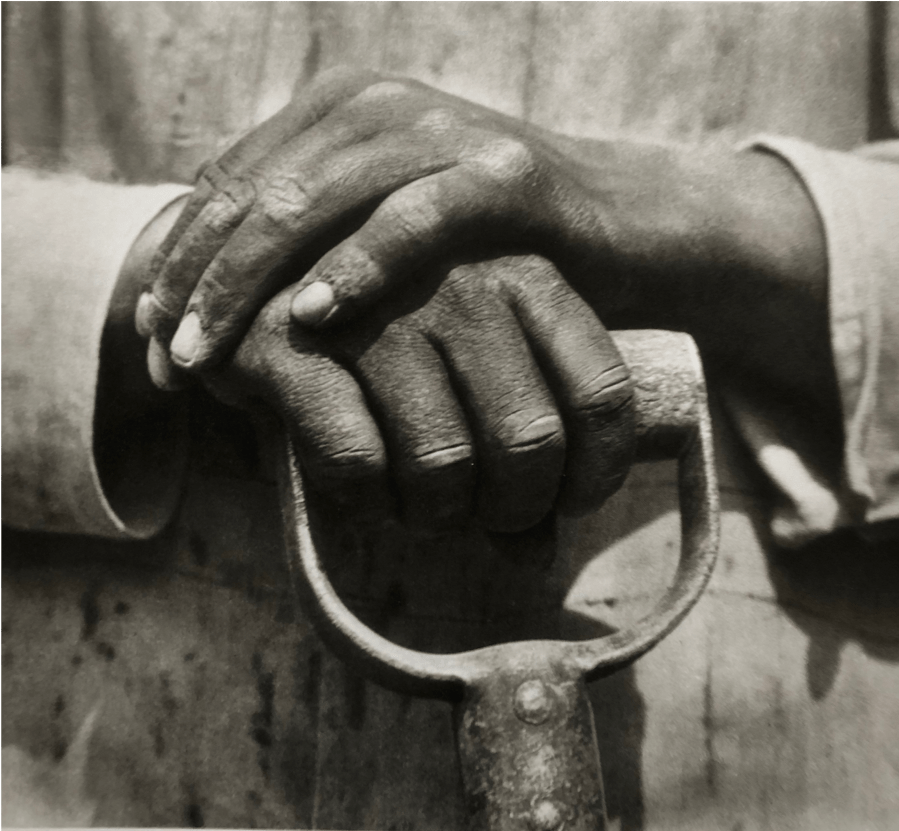
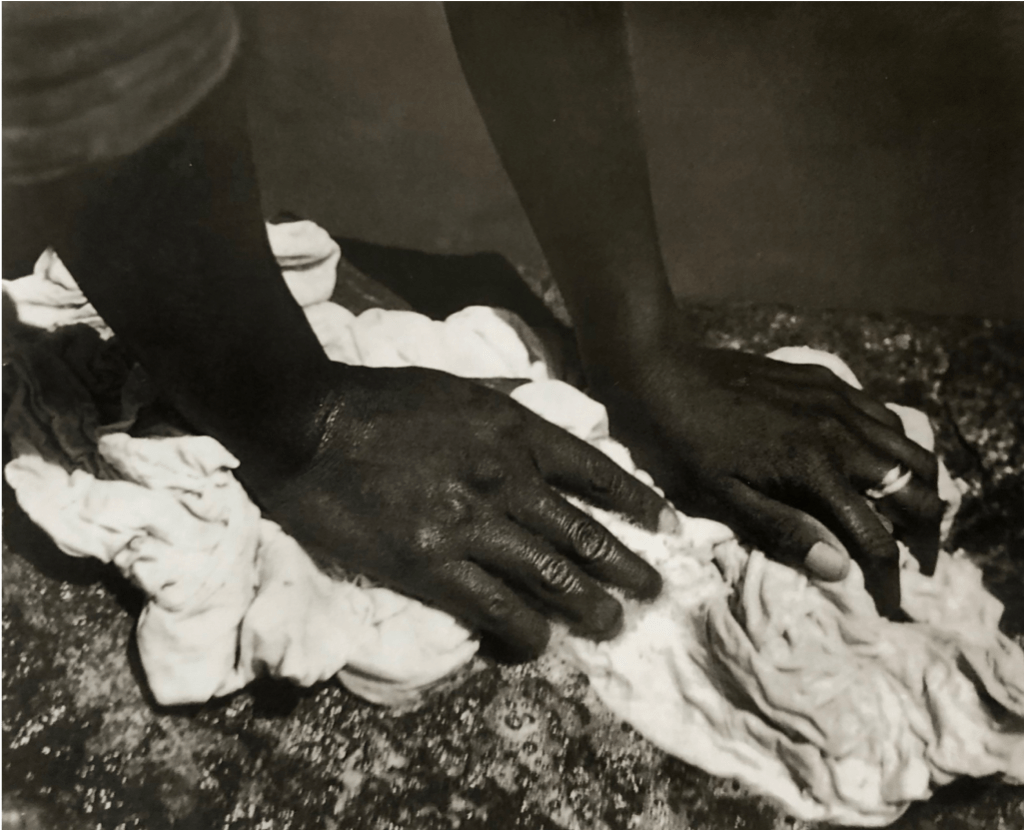
On Monday August 24, 2020 twenty-eight people participated in slow-looking and then discussing two black and white photographs taken by Tina Modotti, who traveled with Edward Weston to Mexico in the 1920s and became involved with the cause of workers.

Participants from England, India, Mexico, and the Philippines joined those from CA, CT, ME, NY, NJ, NM, and PA in responding to the photos titled โ€œHands Resting on a Toolโ€ and โ€œHands Washingโ€: noticing the contrasts of dark and light, motion and stillness, the upright posture of one subject and the stooped or kneeling posture of another. People said they wanted to see the workersโ€™ faces, guessed age and gender, wondered if those who were pictured worked for themselves or others, and drew our attention to the hands of the photographer, which do not appear in the prints. Looking closely at the photographs and creating possible meanings, participants imagined strength and purpose in the workersโ€™ hand, and sympathy with the cause of workers on the part of the one documenting their labor. One person said the photos suggested sculpture, that these portraits of hands might be extended to include torsos and faces and formed into sculptures. Another person observed that the โ€œpinkyโ€ of the hands that were washing was missing a joint. Looking at those hands, one person recalled the axiom โ€œA womanโ€™s work is never doneโ€ and also said that there was no real rest because the โ€œrestingโ€ of hands on a tool was posed. One person remembered that the name Antwerp comes from a story involving hands and that colonial rulers sometimes punished those they colonized in Africa by severing their hands. This lead to discussing the many functions of hands and segued to the prompt: โ€œWrite about what hands can do.โ€

A handful of people read their 5-minutes of writing. These included narratives connecting hands to the mind or the heart, to the capacity to heal and hurt, and to prayerful intentions to โ€œdo only good.โ€ As participants responded to what was read they mentioned images evoked (such as tree branches); comparing and contrasting the capacities that hands hold; the language of hands; gracefulness and movement; a series of questions that narrowed and deepened thought; playfulness in a piece of fiction and the possibilities afforded by prosthetic limbs. One account detailed the procedure of home dialysisโ€”the procedure beginning with the sounds and rhythm of โ€œsnap and tapโ€ that felt like a dance and included the seriousness of purpose to โ€œremove deadly bubblesโ€ from the lines connecting person and machine.

Participants are warmly encouraged to share what you wrote below (โ€œLeave a Replyโ€), to keep the conversation going here, bearing in mind that the blog of course is a public space where confidentiality is not assured.

Also, we would love to learn more about your experience of these sessions, so if youโ€™re able, please take the time to fill out a follow-up survey of one to two quick questions!

Please join us for our next session Wednesday, August 26th at 12pm EDT, with more times listed on our Live Virtual Group Sessions page.


Tina Modotti, Hands Resting on Tool, 1927
From Tina Modotti and Edward Weston, The Mexico Years. 2004. London: Merill Publishers Ltd
Tina Modotti, Wands Washing, 1927
From Tina Modotti and Edward Weston, The Mexico Years. 2004. London: Merill Publishers Ltd


Live Virtual Group Session: 12pm EDT August 19th 2020

Thank you to everyone who joined us for this session!

Our text was โ€œLast Writesโ€ by Sandra Becker, posted below.

After two participants read the poem aloud individually, we read it a third time silently as a group. Participants noted how the poemโ€™s metaphorical language, wry tone and confident humor help make a serious subject not only bearable but darkly funny and surprising as an inroad to consider revising oneโ€™s narrative: โ€œThe poet refers to the darkness but excuses it if itโ€™s well written.โ€ One participant associated the poemโ€™s word play and profanity with a comedy club or spoken word performance; someone else saw/heard it as a meditation, a โ€œrailing on limitations of free will.โ€ The group made a meta-level connection between the philosophy of not being a perfectionist with living/writing/singing off-key.

The conversation continued, exploring the work the poem does: bringing light to a dark subject, providing an opportunity to look at โ€œhard stuffโ€ and effect personal change, linking subjectivity with sensitivity. Aligned with the narrative medicine principle of representation, the group paused to explore the end of the poem (โ€œhope via indecision,โ€ โ€œan intellectual exploration with no resolutionโ€), a place where the narrator gives up the idea of perfectionism, and โ€œtakes the pressure off in a beautiful way.โ€

Our reflective writing was to the prompt: โ€œWrite about something off-key.โ€

We had five individuals who shared their reflective writings. There was a broad range of interpretation starting with a take on the dark humor of the text with an imaginative narrative about the organs of a body having a discussion. The next share set an immediate tone of expectation exploring the childโ€™s ideal with a narrative revealing the differences between adult and child perspectives. Another reflection went right to the subject of suicide directly addressing, through poetic description, patient differences both in being and circumstance. This was followed by a reflection about meeting a man diagnosed with schizophrenia. Our participants’ comments observed that through the eyes of this patient we see something new and that if we look closer we may see something we hadnโ€™t seen before. The final shared writing was about a runner struggling to complete a marathon. A man appears off to the side some distance away โ€“ he calls to her by name saying โ€œyou can make it, you can make it.โ€ No one else had seen this young man cheering the racers on. The last line โ€œI believe in the unexpectedโ€ was commented on as a magical ending, which caused a bit of goosebumps; a wholly different take on something off key.

Participants are warmly encouraged to share what you wrote below (โ€œLeave a Replyโ€), to keep the conversation going here, bearing in mind that the blog of course is a public space where confidentiality is not assured.

Also, we would love to learn more about your experience of these sessions, so if youโ€™re able, please take the time to fill out a follow-up survey of one to two quick questions!

Please join us for our next session Monday, August 24th at 6pm EDT, with more times listed on our Live Virtual Group Sessions page.


Last Writes by Sandra Becker

Swallow bleach โ€” too painful,
go up in flames โ€” lifelong fear.
Ah, a gun with a two-hour safety lesson
(I must get it right this time).
Iโ€™m pro-gun for euthanasia.
This really isnโ€™t meant to be morbid.
When discussing poems, films, and books,
Iโ€™ve always told people I donโ€™t care how dark
the subject as long as itโ€™s well-written.
Iโ€™ve not chosen a day or time yet, so this may be my   last poem.
Iโ€™m giving it a shot (unintended pun).
Iโ€™m aiming (shit!) for truth, yes,
but, more importantly, itโ€™s a poem, for Godโ€™s sake, so
veracity to poetic elements is most important.
So far, strong opening with a good hook, an unexpected turn.
Puns ease tension if used sparingly.
Revision essential to get it right.
Tense โ€” present, of course.
Pacing โ€” that of a waterfall bound to its given course.
Stanza breaks โ€” none. One life, all connected, eternal.
Music โ€” well, itโ€™s life, silly โ€” imperfect, canโ€™t have everything.
Unfathomable, unpredictable, impermanent life.
Is that how God wrote it, and, Lord knows,
Iโ€™ve always been quite the perfectionist.
Why not loosen up, break some rules, have a little fun?
Sing off-key, but sing.

Last Writes by Sandra Becker.
The Sun, Last Writes, C. Bursk Copyright ยฉ 2020

Live Virtual Group Session: 6pm EDT August 17th 2020

Thirty people joined our narrative โ€œsanctuaryโ€ โ€” hailing from Canada, England, India, California, Maine, Massachusetts, New Jersey, New Mexico, New York, Pennsylvania, and Washington.ย  A number of brave first-time participants contributed observations and associations alongside those who have been consistently joining these Monday evening discussions.

Our text was โ€œSanctuaryโ€ by Carolyn Forchรฉ, posted below.

Carolyn Forcheโ€™s poem elicited multiple, possible spaces during our reading: dream, film, memory, a Costa Rican cloud forest, Kentucky mountains, and West Virginia. As one particpant said, despite sentences written in past and conditional tenses, the text radiates a sense of timelessness. Another spoke of memory as a refuge or a sanctuary, like the eponymous title, where one is able to return.  Several people commented on the poemโ€™s suggestion of a confluence of the senses beginning with โ€œ[l]ight pealed, bell-likeโ€ in the first line.  

One reader puzzled over the paradoxical notion of the horsesโ€™ freedom and the unfreedom of bridles.  Group participants discovered care in the poem, in the mention of a poultice applied to โ€œsuck the poisonโ€ applied by an unnamed โ€œshe.โ€ They were reminded of being  givers or receivers of care, when treated with a poultice made by oneโ€™s mother and, conversely, applying a poultice to keep a motherโ€™s wounded horse alive while mother was in the hospital.

More than one person found themselves captivated, midway through the poem, by the mention of a mahogany coffin. Two people wondered if the coffin is where the woman who made the poultice kept her herbs.  Someone else wondered if the coffin signifies death and suggests that death can be a sanctuary from suffering.  

Our prompt was a choice between:

Write about a journey you would make again.

OR

Write about a sanctuary.

Ten people shared their four minutes of writing by reading aloud narratives of travel (alone and with others), care, the well-known topography of a loved oneโ€™s face, and the restoring aspects of being in nature.  In listening, we were told of a trip by donkey to the Valley of the Kings and a new friendship formed.  One personโ€™s writing took her to a place that imaginatively combines many places she has traveled in the past.  Another person described a journey without regard to place as the traveler focused on the face of the traveling companion.   Also, In the shadow of the epigram to Forchรฉโ€™s poem:

Ce voyage, je voulais le refaireโ€“โ€“โ€“

This journey, I would like to make againโ€“โ€“โ€“

one narrative alternated between French and English in a rich evocation of places known or imagined. This prompted, for the second time, the idea that one language may not be enough to contain the complexity of deep experience.

Participants are warmly encouraged to share what you wrote below (โ€œLeave a Replyโ€), to keep the conversation going here, bearing in mind that the blog of course is a public space where confidentiality is not assured.

Also, we would love to learn more about your experience of these sessions, so if youโ€™re able, please take the time to fill out a follow-up survey of one to two quick questions!

Please join us for our next session Wednesday, August 19th at 12pm EDT, with more times listed on our Live Virtual Group Sessions page.

Sanctuary
 
                                         Ce voyage, je voulais le refaireโ€“โ€“โ€“
                                         This journey, I would like to make againโ€“โ€“โ€“
 
 
Light pealed, bell-like through the canopy. Long ago or seems so.
Then the ghost of a deer and crows flapping through smoke.
She made a poultice for me of herbs and mud to suck the poison from the boil.
And then she went into a mahogany coffin. As there were then.
Mornings, horses cantered through ground fog having broken loose.
So I would go out for them, bridles in hand, with no one awake.
The closer I came to them, the further they moved away.
Following them through the clouds is a journey I would make again. 
 
 
Forchรฉ, Carolyn. In the Lateness of the World. 2020. New York: Penguin Press.

Encuentros virtuales en vivo: sรกbado 15 agosto, 14:00 EST

Tuvimos otra sesiรณn en espaรฑol y nos fue muy bien. Atendieron 16 participantes en total representando Chile, Estados Unidos, Brasil y Argentina. Tuvimos una buena mezcla de participantes por primera vez y participantes en su 3era o 4ta sesiรณn.

La obra que elegimos para esta sesiรณn se llama โ€œSeis Aforismosโ€, de la filรณsofa espaรฑola Azahara Alonso, publicada a continuaciรณn. Dos voluntarias leyeron este corto texto en voz alta. Rรกpidamente varios participantes manifestaron que no sabรญan lo que es un aforismo, lo cual una vez resuelto provocรณ numerosas observaciones, acerca de la musicalidad de las oraciones que lo componen, por ejemplo, que se veรญa โ€œrotaโ€ por el รบltimo aforismo, con un tono mรกs sombrรญo y que alejaba un tono โ€œrosadoโ€ que se percibรญa. Otro comentario iba dirigido a la sensaciรณn de equilibrio que habรญa dentro de determinados aforismos, y entre los aforismos. Otro participante se preguntรณ si los aforismos debieran ser equilibrados, lo cual fue negado rotundamente por el resto. Sin embargo, surgieron otros comentarios que iban en la lรญnea de los โ€œbinariosโ€,tanto opuestos como interno / externo, jaulas / ventanas, y similares como pasiรณn / isla (aislante). Hubo tambiรฉn consenso en que el sexto aforismo suponรญa una โ€œroturaโ€ respecto al tono de los aforismos previos. Las dos observaciones que mรกs respuestas generaron, sin embargo, fueron acerca del primer aforismo, que un participante interpretรณ como una ecuaciรณn matemรกtica (que incluso resolviรณ!), y otra participante que manifestรณ que no creรญa en los aforismos, puesto que los aforismos son considerados verdaderos, y para ella los aforismos no representan verdades absolutas, y no se pueden aplicar a todos, dado que por ejemplo, en su experiencia puede haber madres con actitudes violentas hacia sus hijos, lo que va en contra del adjetivo โ€œdulceโ€ del cuarto aforismo. Sin embargo, esa afirmaciรณn (โ€œLos aforismos no son verdades en sรญ mismosโ€) podrรญa ser interpretado como un aforismo, lo que generรณ una animada conversaciรณn entre el resto de participantes.

Escribir en conjunto: โ€œEscribe el sรฉptimo aforismoโ€. Varios participantes compartieron sus aforismos, algunos โ€œa la sombra del texto originalโ€, generรกndose un rico intercambio entre los participantes. Un tema recurrente en los escritos de varios participantes fue el concepto de โ€œverdadโ€, y el escrito que mรกs discusiรณn generรณ, hacรญa menciรณn al aforismo que a su vez fue el mรกs nombrado en la conversaciรณn previa, acerca de las caracterรญsticas de una madre y su semejanza (o no) con dios (o Dios?). Hubo consenso en que los aforismos y frases (โ€œdichosโ€) sobre los que se conversรณ ean muy relevantes en relaciรณn al contexto en que estamos viviendo. En general quedรณ la sensaciรณn de que los aforismos aportados por los participantes gustaron al menos lo mismo que los de la autora.

Se alienta a los participantes a compartir lo que escribieron a continuaciรณn (“Deja una respuesta”), para mantener la conversaciรณn aquรญ, teniendo en cuenta que el blog, por supuesto, es un espacio pรบblico donde no se garantiza la confidencialidad.

Por favor, รบnase a nosotros para nuestra prรณxima sesiรณn en espaรฑol: Sรกbado, 29 de agosto a las 2 pm EST, con mรกs oportunidades de sesiones en otros idiomas listadas en nuestra pรกgina de sesiones grupales virtuales en vivo.

ยกEsperamos verte pronto!

ยกCuรฉntenos mรกs sobre su experiencia en este taller completando esta breve encuesta!


SEIS AFORISMOS (Azahara Alonso)

La dicha es un destino. Todo lo fatal es instantรกneo.

* โ€‹ โ€‹

La esperanza es extranjera.

*

En nuestra jaula se pueden abrir las ventanas.

*

Lo mรกs parecido a un dios es la voz de una madre: sobrenatural y dulce.

*

Toda pasiรณn es una isla.

*

Lo malo del estado de bienestar son los vecinos.