Wirtualne Grupy Narracyjne: Wtorek 23 czerwca, 18:00 CET

Dzisiejsza grupa byล‚a szczegรณlna i dziฤ™kujemy wszystkim, z ktรณrymi tฤ™ pracฤ™ zaczฤ™liล›my.

Wspรณlnie przeczytaliล›my, zamieszczony poniลผej, wiersz Tomasza Rรณลผyckiego โ€žNotatkiโ€, pochodzฤ…cy z tomu โ€žKapitan Xโ€.

Praca dzisiejszej grupy zostaล‚a przerwana z przyczyn technicznych. Problemy zakล‚รณcajฤ…ce przebieg spotkania pojawiaล‚y siฤ™ niemal od samego poczฤ…tku, a ich kumulacja wymusiล‚a decyzjฤ™ o wczeล›niejszym zakoล„czeniu sesji. Jednakลผe interesujฤ…cym pozostaje wyobraลผeniowe powiฤ…zanie (poza schematem fizycznych przyczyn i skutkรณw) pomiฤ™dzy obecnฤ… w wierszu wyprawฤ… w kosmos, w trakcie ktรณrej napotyka siฤ™ na mur z kamienia, a barierฤ… niedogodnoล›ci, jakลผe powszechnych w wirtualnej rzeczywistoล›ci, ktรณre dziล› i dla nas okazaล‚y siฤ™ byฤ‡ ล›cianฤ… nie do przejล›cia. Miejmy nadziejฤ™, ลผe nastฤ™pnym razem uda siฤ™ nam odnaleลบฤ‡ w niej takie szczeliny, przez ktรณre wszyscy wspรณlnie przejdziemy.

Zapraszamy do udziaล‚u w kolejnych sesjach, ktรณrych terminy podane sฤ… na polskiej podstronie Wirtualnych Grup Narracyjnych. Najbliลผsza grupa odbฤ™dzie siฤ™ 2 lipca (czwartek) o godzinie 18:00 โ€“ zarejestruj siฤ™ juลผ dziล›.

Wszelkie pytania oraz proล›by o organizacjฤ™ indywidualnych grup narracyjnych dla Waszych zespoล‚รณw moลผna przesyล‚aฤ‡ na adres: narrativemedicine@cumc.columbia.edu oraz humanistykamedyczna@cm.uj.edu.pl.

Do zobaczenia niebawem!

Tomasz Rรณลผycki

Notatki

Kapitanie, notatki, ktรณre wziฤ…ล‚eล›
ze sobฤ… w kosmos, sฤ… dosyฤ‡ naiwne.
Zrobiliล›my kopiฤ™ i przy piwie
czasem ล›miejemy siฤ™ z dziaล‚em nadzoru,
wyobraลผajฤ…c sobie, jak je czytasz
potencjalnym adresatom, kosmitom,
anioล‚om, kwarkom, ktokolwiek tam mieszka,
dla kogo uล‚oลผyล‚eล› swรณj elementarz.
Powiedzmy, ลผe ta nieskoล„czona przestrzeล„
jednak koล„czy siฤ™ tak jak wszystko, ล›cianฤ…,
murem z kamienia. W szpary sฤ… wtykane
maล‚e karteczki z wielkimi proล›bami.

(Wiersz pochodzi z tomu โ€žKapitan Xโ€, Wydawnictwo a5, Krakรณw 2020.)

***

Thank you to everyone who began with us the work during this very unusual session.

Together we read โ€œNotatki (Notes)โ€, a poem by Tomasz Rรณลผycki from a recent book โ€œKapitan X (Captain X)โ€, unfortunately not yet translated into English.

The work of today’s group was interrupted due to technical reasons. Problems running the virtual meeting appeared almost at the very beginning, and their increase forced the decision to end the session early. However, it is worth noting that the imaginative connection (apart from the scheme of physical causes and effects) between the expedition to the outer space in the poem, during which one encounters a stone wall, and the barrier of inconveniences so common in virtual reality, turned out to be a wall impassable for us today. Let us hope that next time we will be able to find cracks in the wall that will allow all of us to go through it together.

Please join us for our next session: Wednesday June 24th, 12pm EDT (in English), with more times listed on our Live Virtual Group Sessions page.

If you have questions, or would like to schedule a personalized narrative medicine session for your organization or team, email us at narrativemedicine@cumc.columbia.edu.

We look forward to seeing you again soon!

Laboratori Di Medicina Narrativa: martedรฌ 23 Giugno dalle 19 alle 20.30

Siamo stati molto lieti di avervi qui con noi!

Abbiamo letto insieme la poesia “Emozioni” di Lucio Battisti e Mogol (allegato al termine di questa pagina)ย ย 

In seguito, abbiamo usato il prompt “Capire tu non puoiโ€ฆ”

Condivideremo ulteriori dettagli della sessione nei prossimi giorni; vi invitiamo a rivisitare questa pagina nei prossimi giorni!

Invitiamo i partecipanti del laboratorio a condividere i propri scritti nella parte “blog” dedicata alla fine della presente pagina (“Leave a Reply”). Speriamo di creare, attraverso questo forum di condivisione, uno spazio in cui continuare la nostra conversazione!


EMOZIONI โ€“ Lucio Battisti e Mogol
ย 
Seguir con gli occhi un airone sopra il fiume e poi
Ritrovarsi a volare
E sdraiarsi felice sopra l'erba ad ascoltare
Un sottile dispiacere
E di notte passare con lo sguardo la collina per scoprire
Dove il sole va a dormire
Domandarsi perchรฉ quando cade la tristezza
In fondo al cuore
Come la neve non fa rumore
E guidare come un pazzo a fari spenti nella notte per vedere
Se poi รจ tanto difficile morire
E stringere le mani per fermare
Qualcosa che
รˆ dentro me
Ma nella mente tua non c'รจ
Capire tu non puoi
Tu chiamale, se vuoi, emozioni
Uscir nella brughiera di mattina dove non si vede a un passo
Per ritrovar sรฉ stesso
Parlar del piรน e del meno con un pescatore
Per ore ed ore
Per non sentir che dentro qualcosa muore
E ricoprir di terra una piantina verde sperando possa
Nascere un giorno una rosa rossa
E prendere a pugni un uomo, solo perchรฉ รจ stato un po' scortese
Sapendo che quel che brucia non son le offese
E chiudere gli occhi per fermare
Qualcosa che
รˆ dentro me
Ma nella mente tua non c'รจ
Capire tu non puoi
Tu chiamale, se vuoi, emozioni

Live Virtual Group Session: 6pm EDT June 22nd 2020

Thank you to everyone who joined us for this session!

Our text for the session was “Clearing” by Martha Postlewaite.

Our prompt was: “Write about (or draw) your clearing.”

More details on the session will be posted soon, so check back!

Participants are warmly encouraged to share what you wrote below (โ€œLeave a Replyโ€), to keep the conversation going here, bearing in mind that the blog of course is a public space where confidentiality is not assured.

Please join us for our next session Wednesday, June 24th at 12pm EDT, with more times listed on our Live Virtual Group Sessions page.

We look forward to seeing you again soon!


โ€œClearingโ€ by Martha Postlewaite

Do not try to save
the whole world
or do anything grandiose.
Instead, create
a clearing
in the dense forest
of your life
and wait there
patiently,
until the song
that is your life
falls into your own cupped hands
and you recognize and greet it.
Only then will you know
how to give yourself to this world
so worthy of rescue.


Copyright 2020 Mindfulness Northwest
[read in the Winter 2014 MBSR class in Bellingham]ย 

Live Virtual Group Session: 2pm EDT June 20th 2020

A combination of new and returning participants, 28 total, joined us today, representing local and international perspectives.

Our text was Kindness by Naomi Shihab Nye, posted below, and it was a crowd favorite. Two readers read the poem aloud. One participant pointed out how we experience loss internally in order to find kindness externally. We also noticed the juxtaposition of the images in the poem. Before we can find kindness, you must come to know it through sorrow and loss. Another participant mentioned that the dead Indian in a white poncho could be any of us who could contract/have died of Covid. Someone else mentioned that there is something of a universal and cosmopolitan approach to kindness, to see the cloth like a whole humanity needing kindness right now, beginning from an individual thread of sorrow and leading to kindness. Many readers pointed out the personification of kindness in small actions throughout the poem–tying the shoes (what a difference that can make to someone who canโ€™t tie their own shoes) and gazing at bread (honoring it, knowing that itโ€™s there). There was a consensus that we all need to be more attentive to the isolated acts of kindness in our lives.

Our prompt was โ€œWrite about a time that kindness did or did not find you.โ€ Five participants shared their writing, inspiring a rich array of responses from the listeners. Several of the stories shared were about โ€œsimpleโ€ acts of kindness that had lasting, healing effects. Other themes had to do with the power of kindness to unite us with others and with the way kindness can even remake and reshape oneโ€™s life. Some participants wrote poems with striking, revelatory metaphors for kindness–a small bird, a white box; others wrote moving stories in which unexpected expressions of kindness helped them recover from trauma.

Participants are warmly encouraged to share what you wrote below (โ€œLeave a Replyโ€), to keep the conversation going here, bearing in mind that the blog of course is a public space where confidentiality is not assured.

Please join us for our next session Monday, June 22nd at 6pm EDT, with more times listed on our Live Virtual Group Sessions page.

We look forward to seeing you again soon!


 Kindness 
 by Naomi Shihab Nye

Before you know what kindness really is
you must lose things,
feel the future dissolve in a moment
like salt in a weakened broth.
What you held in your hand,
what you counted and carefully saved,
all this must go so you know
how desolate the landscape can be
between the regions of kindness.
How you ride and ride
thinking the bus will never stop,
the passengers eating maize and chicken
will stare out the window forever.

Before you learn the tender gravity of kindness
you must travel where the Indian in a white poncho
lies dead by the side of the road.
You must see how this could be you,
how he too was someone
who journeyed through the night with plans
and the simple breath that kept him alive.

Before you know kindness as the deepest thing inside,
you must know sorrow as the other deepest thing.
You must wake up with sorrow.
You must speak to it till your voice
catches the thread of all sorrows
and you see the size of the cloth.
Then it is only kindness that makes sense anymore,
only kindness that ties your shoes
and sends you out into the day to gaze at bread,
only kindness that raises its head
from the crowd of the world to say
It is I you have been looking for,
and then goes with you everywhere
like a shadow or a friend.

From Words Under the Words: Selected Poems. 
Copyright ยฉ 1995 by Naomi Shihab Nye.

Laboratori Di Medicina Narrativa: sabato 20 giugno dalle 16 alle 17.30

Siamo stati molto lieti di avervi qui con noi!

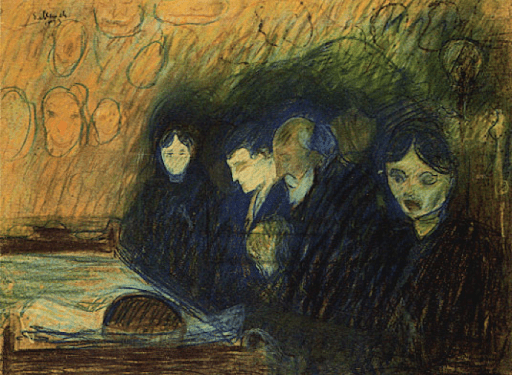
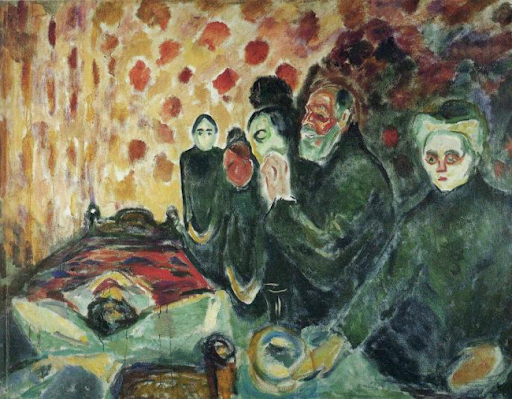
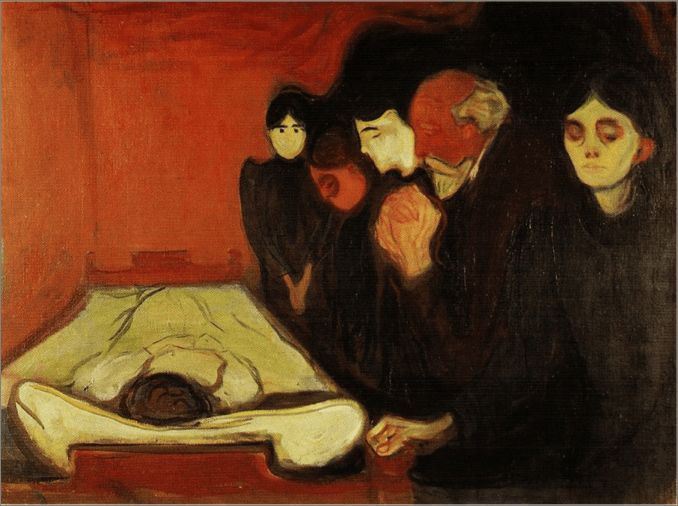
Abbiamo studiato insieme tre quadri di Edvard Munch, โ€œBy the Death Bedโ€ (Vicino al letto della morte) dagli anni 1895, 1893 e 1915 (allegato al termine di questa pagina).ย ย 

In seguito, abbiamo usato un doppio-prompt “Accanto al tuo letto…” e โ€œAccanto al mio lettoโ€ฆโ€.

Condivideremo ulteriori dettagli della sessione nei prossimi giorni; vi invitiamo a rivisitare questa pagina nei prossimi giorni!

Invitiamo i partecipanti del laboratorio a condividere i propri scritti nella parte “blog” dedicata alla fine della presente pagina (“Leave a Reply”). Speriamo di creare, attraverso questo forum di condivisione, uno spazio in cui continuare la nostra conversazione!ย 


Wirtualne Grupy Narracyjne: Czwartek 18 czerwca, 18:00 CET

Dziฤ™kujemy wszystkim, ktรณrzy wziฤ™li udziaล‚ w dzisiejszej grupie narracyjnej!

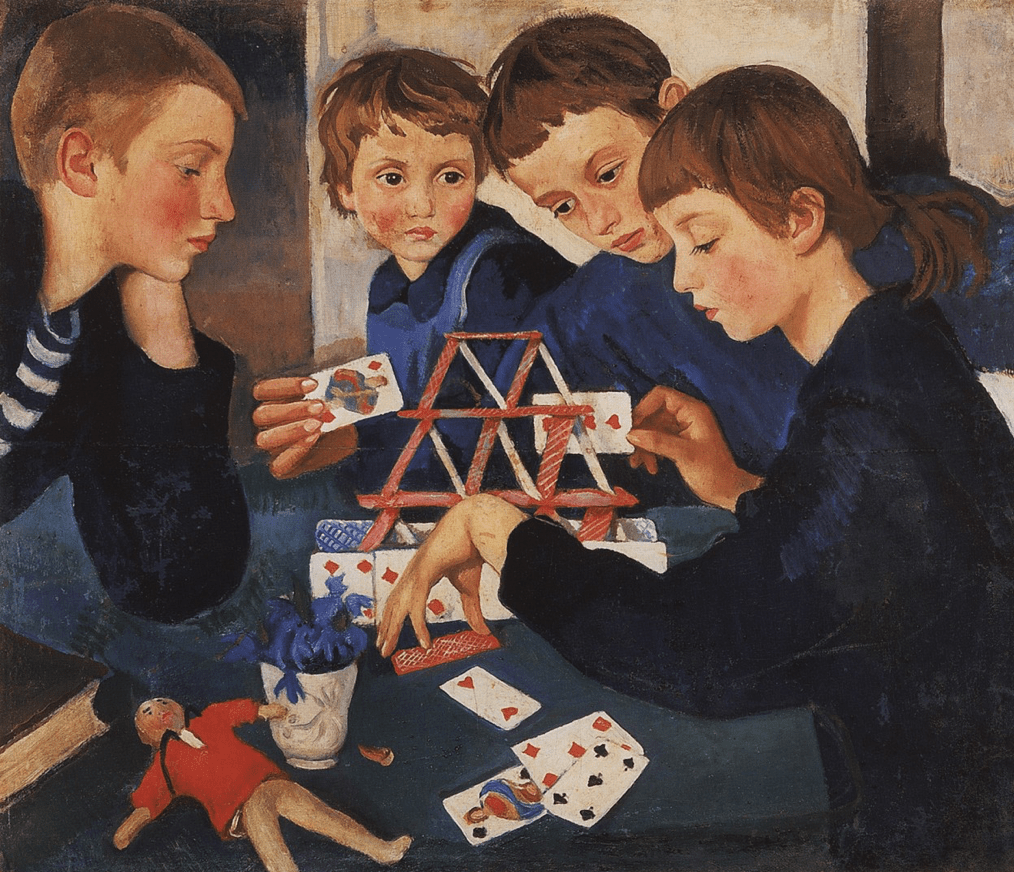
Wspรณlnie uwaลผnie przyjrzeliล›my siฤ™ obrazowi Zinaidy Serebriakovej โ€žDomek z kart (ะšะฐั€ั‚ะพั‡ะฝั‹ะน ะดะพะผะธะบ)โ€, ktรณrego reprodukcjฤ™ zamieszczamy poniลผej.

Inspiracja do kreatywnego pisania brzmiaล‚a: โ€žNapisz o czymล›, co wymaga wspรณlnego budowania.โ€

Praca grupy konsekwentnie przebiegaล‚a w doล›ฤ‡ jednoznacznie wyczuwanym kierunku. Uwaga uczestnikรณw od samego poczฤ…tku skupiaล‚a siฤ™ na moลผliwej do zaobserwowania na obrazie wspรณล‚pracy, a ich wypowiedzi przypominaล‚y proces budowania domku z kart. Mimo ลผe pewne detale obrazu byล‚y przez uczestnikรณw zauwaลผane i wskazywane, grupa nie zatrzymywaล‚a siฤ™ przy nich na dล‚ugo, przechodzฤ…c od razu do kolejnych wypowiedzi, jakby w poszukiwaniu odpowiedniego punktu podparcia. Emocje tego procesu, o doล›ฤ‡ rรณลผnorodnym zabarwieniu, posiadaล‚y energiฤ™, ktรณra byล‚a wspรณlnie przeksztaล‚cana i wykorzystywana do budowania. Byล‚ to silny, niepohamowany strumieล„ ciekawoล›ci, niepokoju, fascynacji i nadmiarowej czujnoล›ci. Wyraลบnie moลผna byล‚o zaobserwowaฤ‡ przejล›cie w pracy na poziom meta, kiedy to omawianym tekstem bardziej niลผ obraz staล‚ siฤ™ proces grupy. Tak jak na obrazie Serebriakovej nieoczywiste jest przypisanie chociaลผby dล‚oni do poszczegรณlnych osรณb, tak niejednoznaczne byล‚o zwiฤ…zanie konkretnej perspektywy z pojedynczฤ… wypowiadajฤ…cฤ… siฤ™ osobฤ…, co na pewnym etapie pracy zostaล‚o zauwaลผone. Praca grupy przesiฤ…kniฤ™ta byล‚a rรณลผnorodnoล›ciฤ…, dla ktรณrej panowaล‚o jednoznaczna przyzwolenie, co odzwierciedlaล‚o jakoล›ciowฤ… odmiennoล›ฤ‡ kart w talii. Wszystkie karty/wypowiedzi byล‚y rรณwnowaลผne jako budulec tego kolektywnego przedsiฤ™wziฤ™cia. Pomimo wieloล›ci perspektyw i sposobรณw interpretacji napiฤ™cie zwiฤ…zane z doล›wiadczeniem odmiennoล›ci zostaล‚o konstruktywnie przeksztaล‚cone we wspรณlne dzieล‚o. Chociaลผ ulotne, bo zaledwie 90-minutowe, doล›wiadczenie to wywoล‚aล‚o potrzebฤ™ zachowania na dล‚uลผej owej lekcji jednoล›ci.

Zapraszamy do udziaล‚u w kolejnych sesjach, ktรณrych terminy podane sฤ… na polskiej podstronie Wirtualnych Grup Narracyjnych. Najbliลผsza grupa odbฤ™dzie siฤ™ 23 czerwca (wtorek) o godzinie 18:00 โ€“ zarejestruj siฤ™ juลผ dziล›.

Wszelkie pytania oraz proล›by o organizacjฤ™ indywidualnych grup narracyjnych dla Waszych zespoล‚รณw moลผna przesyล‚aฤ‡ na adres: narrativemedicine@cumc.columbia.edu oraz humanistykamedyczna@cm.uj.edu.pl.

Do zobaczenia niebawem!

(Zinaida Serebriakova โ€œDomek z kart (ะšะฐั€ั‚ะพั‡ะฝั‹ะน ะดะพะผะธะบ)โ€, 1919, Paล„stwowe Muzeum Rosyjskie / Zinaida Serebriakova โ€œHouse of Cards (ะšะฐั€ั‚ะพั‡ะฝั‹ะน ะดะพะผะธะบ)โ€, 1919, State Russian Museum)

(Zinaida Serebriakova โ€œDomek z kart (ะšะฐั€ั‚ะพั‡ะฝั‹ะน ะดะพะผะธะบ)โ€, 1919, Paล„stwowe Muzeum Rosyjskie / Zinaida Serebriakova โ€œHouse of Cards (ะšะฐั€ั‚ะพั‡ะฝั‹ะน ะดะพะผะธะบ)โ€, 1919, State Russian Museum)

***

Thank you to everyone who joined us for this session!

Together we looked at โ€œHouse of Cards,โ€ a painting by Zinaida Serebriakova, posted above.

Our prompt for today was: โ€œDescribe something that has to be built together.โ€

The group’s work has been consistently going in a clearly sensed direction. From the very beginning, the participants’ attention focused on cooperation observable in the painting, and their statements resembled a process of building a house of cards. Although some details of the image were noticed and indicated by the participants, the group did not stay with them for long, going straight to the next statements, as if seeking a focus. The emotions of this process, having distinctive undertones, had energy that was jointly transformed and used for building. It was a strong, unrestrained stream of curiosity, anxiety, fascination and excessive vigilance. The transition to a meta level at work could have been clearly observed when the groupโ€™s dynamics became more discussed than the painting itself. Just as in Serebriakova’s painting, it is not obvious how to assign, for example, a hand to an individual person, and it was difficult to associate a particular perspective with a single speaking person, which was noticed at some stage of the work. The group’s work was imbued with diversity, for which there was unequivocal consent, which reflected the qualitative diversity of cards in a deck. All cards / statements were equivalent to the building blocks of this collective enterprise. Despite the multitude of perspectives and interpretations, the tension associated with the experience of otherness has been constructively transformed into a co-construction. Although ephemeral, because only 90 minutes long, this experience brought a need to preserve this unity for much longer.

Please join us for our next sessions: Saturday June 20th, 2pm EDT (in English) and Monday June 22nd, 6pm EDT (in English), with more times listed on our Live Virtual Group Sessions page.

If you have questions, or would like to schedule a personalized narrative medicine session for your organization or team, email us at narrativemedicine@cumc.columbia.edu.

We look forward to seeing you again soon!

Live Virtual Group Session: 12pm EDT June 17th 2020

Thank you to everyone who joined us for this session!

In todayโ€™s session, we read, heard, discussed and wrote in the shadow of โ€œPassion,โ€ a poem by Native American author Louise Erdrich. A mix of returning and new participants from the States and abroad noted the varying shades of devotion in the poem, enacted through destruction to bring about connection. โ€œDevotionโ€ also conjured up associations with religious attachment, and devotionals. We began with the question of what kind of dog we each imagined in the poem, which turned out to be quite varied: one person saw a compassionate animal, and another thought of a gentle personality that stayed with the bereaved lover like a service animal. A third participant drew on the poetโ€™s Native American heritage and its connections to spirituality, leading him to conjure a sin-eater or grief-eater. A fourth realized that she had not visualized the dog at all but more had imagined its large presence for its human companion. The excruciating pain of the human was considered: More than one person identified personally with the humanโ€™s situation of losing a lover and wanting to divest completely from that past. And we also thought about how the dog might be absorbing this grief, being so devoted that it is willing to take on this burden. Emotion and action were linked. We also appreciated how one listener felt annoyed โ€œin my bodyโ€ with both dog and human.ย ย 

The prompt, โ€œWrite about an expression of devotionโ€ inspired responses reflecting tokens of deep meaning (โ€œBuying a gift she didnโ€™t know she wanted,โ€ โ€œa song on WhatsAppโ€), as well as actions (stepping away from oneโ€™s own needs to self-sacrifice for the benefit of another). Writers used different forms ranging from short/specific lists of actions to longer descriptive prose — unified by structure — describing devotion over the course of a lifetime. One writer honored a mom: โ€œA stranger is not a stranger to her.โ€ The last writer circled back to the Erdrich poemโ€™s animal-companion theme, describing in vivid detail an owl diving down a chimney to rescue its mate, even at the risk of being stuck.

Participants are warmly encouraged to share what you wrote below (โ€œLeave a Replyโ€), to keep the conversation going here, bearing in mind that the blog of course is a public space where confidentiality is not assured.

Please join us for our next session Saturday, June 20th at 2pm EDT, with more times listed on our Live Virtual Group Sessions page.

We look forward to seeing you again soon!

Passion
by Louise Erdrich
 
Your dog gnaws the rug you made love upon
for the last time.
When your lover left
and you rolled yourself inside the rug
to sleep in agony
your dog stayed with you.
Your dog chews out the armpits of your loverโ€™s shirt
and shreds the underwear
you were wearing when he touched you.
Thatโ€™s devotion.
The dog chews your pen and stains his tongue
then licks the white pillows.
His way of writing you a poem.
He eats the spout off the blue plastic watering can.
He starts on the porch,
a rotted board, and soon that board rips
away from the wicked red nails.
Your dog eats the nails
and does not die.
Although you have no porch,
no lover, no rug, no underwear,
you understand.
The dog is trying to eat your grief.
In helpless longing
to get close to you
he must destroy whatโ€™s close to you.

Published in the print edition 
of the December 16, 2019, issue of the New Yorker. 

Laboratori Di Medicina Narrativa: martedรฌ 16 Giugno dalle 19 alle 20.30

Siamo stati molto lieti di avervi qui con noi!

Abbiamo ascoltato insieme la canzone “Un Medico” di Fabrizio De Andrรฉ (allegato al termine di questa pagina)ย ย 

In seguito, abbiamo usato il prompt “E i ciliegi tornano in fiore… (continua tu)”.

Condivideremo ulteriori dettagli della sessione nei prossimi giorni; vi invitiamo a rivisitare questa pagina nei prossimi giorni!

Invitiamo i partecipanti del laboratorio a condividere i propri scritti nella parte “blog” dedicata alla fine della presente pagina (“Leave a Reply”). Speriamo di creare, attraverso questo forum di condivisione, uno spazio in cui continuare la nostra conversazione!ย 


Fabrizio De Andrรฉ - Un medico

Da bambino volevo guarire i ciliegi
quando rossi di frutti li credevo feriti
la salute per me li aveva lasciati
coi fiori di neve che avevan perduti.

Un sogno, fu un sogno ma non durรฒ poco
per questo giurai che avrei fatto il dottore
e non per un dio ma nemmeno per gioco:
perchรฉ i ciliegi tornassero in fiore,
perchรฉ i ciliegi tornassero in fiore.

E quando dottore lo fui finalmente
non volli tradire il bambino per l'uomo
e vennero in tanti e si chiamavano "gente"
ciliegi malati in ogni stagione.

E i colleghi d'accordo i colleghi contenti
nel leggermi in cuore tanta voglia d'amare
mi spedirono il meglio dei loro clienti
con la diagnosi in faccia e per tutti era uguale:
ammalato di fame incapace a pagare.

E allora capii fui costretto a capire
che fare il dottore รจ soltanto un mestiere
che la scienza non puoi regalarla alla gente
se non vuoi ammalarti dell'identico male,
se non vuoi che il sistema ti pigli per fame.

E il sistema sicuro รจ pigliarti per fame
nei tuoi figli in tua moglie che ormai ti disprezza,
perciรฒ chiusi in bottiglia quei fiori di neve,
l'etichetta diceva: elisir di giovinezza.

E un giudice, un giudice con la faccia da uomo
mi spedรฌ a sfogliare i tramonti in prigione
inutile al mondo ed alle mie dita
bollato per sempre truffatore imbroglione
dottor professor truffatore imbroglione.

Live Virtual Group Session: 6pm EDT June 15th 2020

Our Narrative Medicine Live Virtual Zoom session tonight brought together 27 people from across the country โ€“ and the world โ€“ to watch and listen to a video of Joshua Bennett perform โ€œTamaraโ€™s Opusโ€ years ago at the White House. We listened to the artistโ€™s words and watched his movements enhance a lament and an apology to his sister who is Deaf. He tells of the time, as a 5-year-old, he was shocked to hear his father say that there is nothing wrong with his Tamara. She is different, his father says. Viewers feel the long-ago shattering of Joshuaโ€™s innocence. How strong must have been their sibling-bond before he felt the nine letters of the word โ€œd-i-f-f-e-r-e-n-tโ€ as hammers shattering his โ€œstained-glass innocence.โ€ His lyrics bring sounds (of rain and crickets), which he realizes Tamara never heard and evoke images of his sister and others dancing not to sound but to the vibrations of music coming from loudspeakers cranked to the max.

His narrative takes him from before either the sister or brother was born โ€œall those conversations we must have had in Heaven โ€ to the present moment when he laments โ€œno poemโ€ฆcan make up for all the time that we have lostโ€ and offers an apology by dancing his digits in Sign Language that he has learned. In so doing, Bennett shows us the power not only of opening our ears (like lotus petals) to deeply listen but also the power of learning an otherโ€™s language. Participants commented on the abyss they perceived between the two characters, and the efforts Joshua puts in to overcome it. In enjoying this beautiful performance and piece, we reflected on the ways to overcome such an abyss: by learning a new language, apologizing, or simply being present.   

In response to the prompt, โ€œWrite about shattering the silenceโ€ participants echoed back to Joshua Bennet strong visuals, sense perceptions, a list poem, the physicality of breaking cups and platters and marching in the street to shatter unjustly imposed silences. The prompt took us in many different directions in asking us to think of a silence shattered, whether it meant the novelty of introducing a new sound into a space or the tragedy of removing an ongoing sound from a scene of daily life.

Participants are warmly encouraged to share what you wrote below (โ€œLeave a Replyโ€), to keep the conversation going here, bearing in mind that the blog of course is a public space where confidentiality is not assured.

Please join us for our next session Wednesday, June 17th at 12pm EDT, with more times listed on our Live Virtual Group Sessions page.

We look forward to seeing you again soon!

โ€œTamaraโ€™s Opusโ€
by Joshua Bennett
 
Tamara has never listened
to hip-hop
Never danced
to the rhythm of raindrops
or fallen asleep to a chorus of chirping crickets
she has been Deaf
for as long as I have been alive
and ever since the day that I turned five
My father has said:
"Joshua. Nothing is wrong with Tamara.
God just makes
some people different."
And at that moment
those nine letters felt like hammers
swung gracefully by unholy hands
to shatter my stained-glass innocence
into shards that could never be pieced back together
or do anything more
than sever the ties between my sister and I.

I waited
was patient numberless years
anticipating the second
her ears would open like lotuses
and allow my sunlight sentences to seep
into her insides
make her remember all those conversations
we must have had in Heaven
back when God hand-picked us
to be sibling souls centuries ago

I still remember her 20th birthday
readily recall my awestruck eleven-year old eyes
as I watched Deaf men and women of all ages
dance in unison to the vibrations
of speakers booming so loud
that I imagined angels chastising us
for disturbing their worship
with such beautiful blasphemy
until you have seen
a Deaf girl dance
you know nothing of passion.
There was a barricade between us
that I never took the time to destroy
never for even a moment
thought to pick up a book and look up
the signs for sister
for family
for goodbye, I will see you again some day
remember the face of your little brother.
It is only now I see
that I was never willing
to put in the extra effort to love her properly
So as the only person in my family
who is not fluent in sign language
I have decided to take this time
to apologize
Tamara, I am sorry
for my silence.

But true love knows no frequency
So I will use these hands
to speak volumes
that could never be contained
within the boundaries of sound waves
I will shout at the top of my fingertips
until digits dance and relay these messages
directly to your soul
I know
that there is no poem
that can make up for all the time that we have lost
but please, if you can
just listen
as I play you a symphony
on the strings of my heart
made for no other ears on this Earth
but yours.

Brave New Voices slam champion Joshua Bennett performs "Tamaraสผs Opus
at the White House Evening of Poetry, Music, and the Spoken Word 
on May 12, 2009.


Live Virtual Group Session: 3pm EDT June 14th 2020

Thank you to everyone who joined us for this session!

With participants from Bahrain, Calgary, Massachusetts, Northern Ontario, Norwich, England, Pennsylvania, San Francisco and more, we began by looking at a video of Maya Angelou reciting โ€“or more accurately, performing her poem, โ€œWe Wear the Mask.โ€ย  The video begins with her explaining that the poem was written to honor a maid she routinely encountered on a city bus, whose seeming-laugh Angelou recognized as โ€œthat survival instinct.โ€ย  Her poem draws, she explained, upon Paul Laurence Dunbarโ€™s 1892 poem of the same name.ย  Despite the wonkiness of the video reception on Zoom, we were all deeply affected, as we went on to read the poem silently to ourselves. ย Participants remarked on Angelou’s moving and emotional presentation, noting their initial reticence to react, which was perhaps due to the personal and emotional impact of the piece, a deference to or in reverence of the recitation, or the feeling that one needed to โ€œmeet the challengeโ€ of its presentation.ย  As we proceeded, the responses to both the performance and the written word took us into the complexity of laughter as a human response, how it can express irony, submission, defiance, self-protectionย  ย โ€“and what it can conceal.ย  The on-goingness of racial suffering andย the presence of generational traumaย expressed in the poem were observed, โ€œThere in those pleated faces/I see the auction block,โ€ as was and the poemโ€™s final note of gratitude to those who wore a mask of submission, โ€œFrom living on the edge of death/They kept my race aliveโ€.

The responses to the prompt, โ€œWrite about the last mask you encountered,โ€ were stunning in their depth, and seemed to answer the poem in a way.ย ย Participants bravely experimented in their writing and gave voice to both individual and community experiences, of feeling marginalized and adjusting personal behavior, to navigate spaces that at times may not accept their identities.ย ย It was a remarkable session!ย 

Participants are warmly encouraged to share what you wrote below (โ€œLeave a Replyโ€), to keep the conversation going here, bearing in mind that the blog of course is a public space where confidentiality is not assured.

Please join us for our next session Monday, June 15th at 6pm EDT, with more times listed on our Live Virtual Group Sessions page.

We look forward to seeing you again soon!

We Wear the Mask
BYย Maya Angelou

We wear the mask that grins and lies,
It shades our cheeks and hides our eyes,โ€”
This debt we pay to human guile;
With torn and bleeding hearts we smile,
And mouth with myriad subtleties.

Why should the world be over-wise,
In counting all our tears and sighs?
Nay, let them only see us, while
We wear the mask.

We smile, but, O my God, our tears
To thee from tortured souls arise.
And we sing, but oh the clay is vile
Beneath our feet, and long the mile;
But let the world think otherwise,
We wear the mask!

When I think about myself,
I almost laugh myself to death,
My life has been one great big joke,
A dance thatโ€™s walked,
A song was spoke,
I laugh so hard, I almost choke,
When I think about myself.

Seventy years in these folksโ€™ world.
The child I works for calls me "girl";
I say, โ€œYes maโ€™am,โ€ for workingโ€™s sake.
I'm too proud to bend
And too poor to break,
So, I laugh, until my stomach ache,
When I think about myself.

My folks can make me split my side,
I laughed so hard, I nearly died.
The tales they tell, sound just like lyin',
They grow the fruit, but eat the rind.
I laugh, until I start to cryin',
When I think about myself,
And my folks, and the little children.

My Fathers sit on benches,
Their flesh count every plank,
The slats leave dents of darkness
Deep in their withered flank,

And they nod, like broken candles,
All waxed and burnt profound
They say 'But, Sugar, it was our submission
That made your world go round.'

There in those pleated faces
I see the auction block,
The chains and slavery's coffles,
The whip and lash and stock.

My Fathers speak in voices
That shred my fact and sound,
They say, 'But Sugar, it was our submission
And that made your world go round.'

They've laughed to shield their crying ,
They shuffled through their dreams
They step 'n' fetched a country
And wrote the blues in screams.

I understand their meaning,
It could and did derive,
From living on the ledge of death,
They kept my race alive.

By wearing the mask.