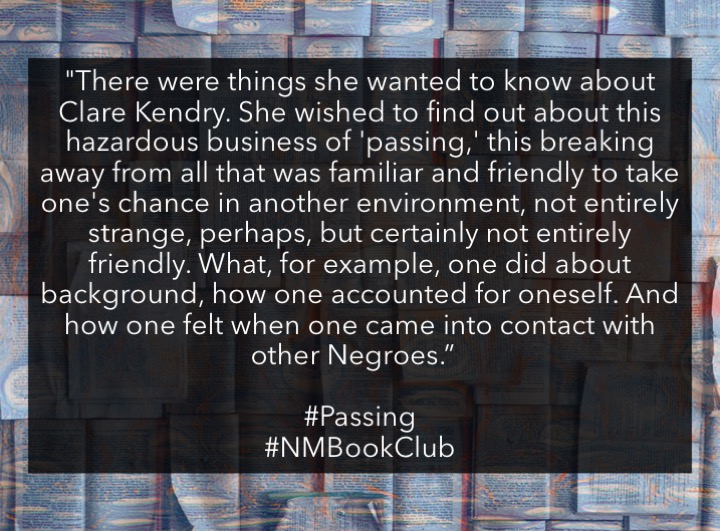
Narrative Medicine Book Club: Passing by Nella Larsen, Welcome and Our Reading Schedule

Welcome to the first week of Narrative Medicine Book Club and our reading of Passingย byย Nella Larsen. We’re excited to begin reading with you! This week, we are starting off by announcing our anticipated reading schedule, and will officially commence next week.

We’ll be reading at a pace of two chapters a week, as follows:

  • Week 1 – April 11-17: Part 1 Chapters 1&2
  • Zoom Discussion: April 17th at 11AM EDT: Register Here!
  • Week 2 – April 18-24: Part 1 Chapters 3&4
  • Week 3 – April 25-May 1: Part 2 Chapters 1&2
  • Week 4 – May 2-9: Part 2 Chapters, 3&4
  • Week 5 – May 10-15: Finale
  • Zoom Discussion: May 15th at 11AM EDT: Register Here!

To get us kicked off into our reading next week, here are our preliminary thoughts on the first pages:

Derek: “The rooftop encounter between Irene and Clare โ€” chance or fate? I felt tension in the knowing and the unknowing.”

Carmen: “For me, the tension was present from the opening sentence and didn’t let up. It seemed every moment in the present and those recounted from the past were capable of leaving me breathless.”

We look forward to diving into Part 1 Chapters 1 and 2 with you next week!

If you don’t already have your copy, books can be purchased from theย publisher, direct from your local indie bookstore, or throughย indiebound.orgย orย bookshop.org.

We hope that you are able to join us, and we look forward to reading along with you!


Live Virtual Group Session: 6pm EST April 5th 2021

Thank you to everyone who joined for this session! In honor of just having passed our one-year anniversary of launching our virtual group sessions, we are revisiting a text that was unfortunately interrupted one year ago.

That text is โ€œThe Mailmanโ€ by Nazim Hikmet, posted below.

Our prompt for this session, again, was: โ€œWrite a letter youโ€™d like to deliver.โ€

More details on this session will be posted, so check back!

Participants are warmly encouraged to share what you wrote below (โ€œLeave a Replyโ€), to keep the conversation going here, bearing in mind that the blog of course is a public space where confidentiality is not assured.

Also, we would love to learn more about your experience of these sessions, so if youโ€™re able, please take the time to fill out a follow-up survey of one to two quick questions!

Please join us for our next sessionย Friday April 9th at 12pm EDT,ย with more times listed on ourย Live Virtual Group Sessionsย page.


The Mailman, Nazim Hikmet ย from Hungarian travel notes
Author(s): NAZIM HIKMET, Randy Blasing and Mutlu Konuk
Source: The American Poetry Review, Vol. 23, No. 2 (MARCH/APRIL 1994), pp. 38-39
Published by: Old City Publishing, Inc.
ย 
Whether at dawn or in the middle of the night,
I've carried people news
โ€“ of other people, the world, and my country,
               of trees, the birds and the beasts โ€“
                               in the bag of my heart.
I've been a poet,
                which is a kind of mailman.
As a child, I wanted to be a mailman,
not via poetry or anything
but literally โ€“ a real mail carrier.
In geography books and Jules Verne's novels
my colored pencils drew a thousand different pictures
                 of the same mailmanโ€“ Nazim.
Here, I'm driving a dogsled
                                                            over ice,
canned goods and mail packets
                                                           glint in the Arctic twilight:
I'm crossing the Bering Strait.
Or here, under the shadow of heavy clouds on the steppe,
I'm handing out mail to soldiers and drinking kefir.
Or here, on the humming asphalt of a big city,
I bring only good news
                                                                 and hope.
Or I'm in the desert, under the stars,
a little girl lies burning up with fever,
and there's a knock on the door at midnight:
"Mailman!"
The little girl opens her big blue eyes:
her father will come home from prison tomorrow.
I was the one who found that house in the snowstorm
and gave the neighbor girl the telegram.
As a child, I wanted to be a mailman.
But it's a difficult art in my Turkey.
In that beautiful country
                a mailman bears all manner of pain in telegrams
                                and line on line of grief in letters.
As a child, I wanted to be a mailman.
I got my wish in Hungary at fifty.
Spring is in my bag, letters full of the Danube's shimmer,
                                                                  the twitter of birds,
and the smell of fresh grass โ€“
letters from the children of Budapest
                                to children in Moscow.
Heaven is in my bag . . .
One envelope
writes:
"Memet, Nazim Hikmet's son,
                                 Turkey."
Back in Moscow I'll deliver the letters
to their addresses one by one.
Only Memet's letter I can't deliver
or even send.
Nazim's son,
highwaymen block the roads โ€“
                                 your letter can't get through.

Live Virtual Group Session: 12pm EDT March 31st 2021

Thank you to everyone who joined us for this session!

Our text for this session was the poemย Perennialsย by Maggie Smith, posted below.

Our prompt was: “Write about something you praise.

More details on this session will be posted, so check back!

Participants are warmly encouraged to share what you wrote below (โ€œLeave a Replyโ€), to keep the conversation going here, bearing in mind that the blog of course is a public space where confidentiality is not assured.

Also, we would love to learn more about your experience of these sessions, so if youโ€™re able, please take the time to fill out a follow-up survey of one to two quick questions!

Please join us for our next sessionย Monday April 5th at 6pm EDT,ย with more times listed on ourย Live Virtual Group Sessionsย page.


Perennials by Maggie Smith

Let us praise the ghost gardens
of Gary, Detroit, Toledoโ€”abandoned

lots where perennials wake
in competent dirt and frame the absence

of a house. You can hear
the sound of wind, which isnโ€™t

wind at all, but leaves touching.
Wind itself canโ€™t speak. It needs another

to chime against, knock around.
Again and again the wind finds its tongue,

but its tongue lives outside
of its rusted mouth. Forget the wind.

Let us instead praise meadow and ruin,
weeds and wildflowers seeding

years later. Let us praise the girl
who lives in what they call

a transitional neighborhoodโ€”
another way of saying not dead?

Or risen from it? Before running
full speed through the sprinklerโ€™s arc,

she tells her mother, who kneels
in the garden: Pretend Iโ€™m racing

someone else. Pretend Iโ€™m winning.


Copyright ยฉ 2018 Maggie Smith. 
This poem originally appeared in The Southern Review, Summer 2018.

Live Virtual Group Session: 6pm EDT March 29th 2021

Thank you to everyone who joined us for this session!

Our text for this session was an excerpt from Who Will Run the Frog Hospital? by Lorrie Moore, posted below.

For prompts, we had a choice between: โ€œWrite about being strung along the same wire of a song.โ€ or “Write about being stuck deep in the brain and low in the spine.”

More details on this session will be posted, so check back!

Participants are warmly encouraged to share what you wrote below (โ€œLeave a Replyโ€), to keep the conversation going here, bearing in mind that the blog of course is a public space where confidentiality is not assured.

Also, we would love to learn more about your experience of these sessions, so if youโ€™re able, please take the time to fill out a follow-up survey of one to two quick questions!

Please join us for our next sessionย Wednesday March 31st at 12pm EDT,ย with more times listed on ourย Live Virtual Group Sessionsย page.


From Lorrie Mooreโ€™s (1994) Who Will Run the Frog Hospital?

There was an April afternoon, when I was in the tenth grade when the Girlsโ€™ choir had to meet for its final rehearsal before the spring concert. The sun was pouring in through the gym windows, and when we took our places on the bleachers we were standing in it, like something celestial lowered in. Our director, Miss Field, began to wave her arms at us, and a strange spell came over our throats. Our nerves tightened and all the bones of our ears fell in line. It was Miss Fieldโ€™s own arrangement of a Schubert rhapsody, and the notes, for once, took flight.  I didnโ€™t, couldnโ€™t, catch Silsโ€™s eyeโ€”she was standing over with the sopranosโ€”but it didnโ€™t matter, I didnโ€™t have to, because this wasnโ€™t personal, this singing, this light, this was girls, after weeks of rehearsal celebrating the ethereal work of their voices, the bellโ€“like, birdlike, childโ€“sound they could still make so strongly in unison. Strung along the same wire of song, we lost ourselves; out of separate rose and lavender mouths we formed a single living thing, like a hyacinth. It seemed even then a valedictory chorus to our childhood and struck us deep in the brain and low in the spine, like a call, and in its wave and swell lifted us, I swear, to the ceiling in astonishment and bliss, we sounded that beautiful. All of us could hear it, aloft in the bliss of it, no boys, no parents in the room, no one else to tell us, though we never managed to sound that beautiful again. In all my life as a womanโ€”which began soon after, and not unrichly, I have never known such a moment. Though sometimes in my brain I go back to that afternoon, to relive it, sail up there again toward the acoustic panels, the basketball hoops, and the old oak clock, the careful harmonies set loose from our voices so pure and exact and light we wondered later, packing to leave, how high and fast and far they had gone.

ฮ–ฯ‰ฮฝฯ„ฮฑฮฝฮฎ ฯƒฯ…ฮฝฮตฮดฯฮฏฮฑ ฮฑฯ†ฮทฮณฮทฮผฮฑฯ„ฮนฮบฮฎฯ‚ ฮนฮฑฯ„ฯฮนฮบฮฎฯ‚: ฮšฯ…ฯฮนฮฑฮบฮฎ, 28 ฮœฮฑฯฯ„ฮฏฮฟฯ…, 8:30 pm EEST

ฮฃฮฑฯ‚ ฮตฯ…ฯ‡ฮฑฯฮนฯƒฯ„ฮฟฯฮผฮต ฯ€ฮฟฯ… ฯƒฯ…ฮผฮผฮตฯ„ฮตฮฏฯ‡ฮฑฯ„ฮต ฯƒฮต ฮฑฯ…ฯ„ฮฎฮฝ ฯ„ฮท ฯƒฯ…ฮฝฮตฮดฯฮฏฮฑ.

ฮšฮตฮฏฮผฮตฮฝฮฟ: ฮšฮนฮบฮฎ ฮ”ฮทฮผฮฟฯ…ฮปฮฌ, ยซฮ•ฮบฯ„ฯฮฟฯ€ฮฎยป, ฮฑฯ€ฯŒ ฯ„ฮท ฯƒฯ…ฮปฮปฮฟฮณฮฎ ฮ‰ฯ‡ฮฟฯ‚ ฮฑฯ€ฮฟฮผฮฑฮบฯฯฮฝฯƒฮตฯ‰ฮฝ (2001)

ฮ˜ฮญฮผฮฑ: ยซฮ“ฯฮฌฯˆฯ„ฮต ฮณฮนฮฑ ฮญฮฝฮฑ ฮพฮตฯ‡ฯ‰ฯฮนฯƒฯ„ฯŒ ฮดฯŽฯฮฟ ฯ€ฮฟฯ… ฮปฮฌฮฒฮฑฯ„ฮต ฮฎ ฯ€ฯฮฟฯƒฯ†ฮญฯฮฑฯ„ฮตยป

ฮฃฯฮฝฯ„ฮฟฮผฮฑ ฮธฮฑ ฮผฮฟฮนฯฮฑฯƒฯ„ฮฟฯฮผฮต ฯ€ฮตฯฮนฯƒฯƒฯŒฯ„ฮตฯฮตฯ‚ ฯ€ฮปฮทฯฮฟฯ†ฮฟฯฮฏฮตฯ‚ ฯƒฯ‡ฮตฯ„ฮนฮบฮฌ ฮผฮต ฮฑฯ…ฯ„ฮฎฮฝ ฯ„ฮท ฯƒฯ…ฮฝฮตฮดฯฮฏฮฑ, ฮณฮน โ€˜ฮฑฯ…ฯ„ฯŒ ฮตฯ€ฮนฯƒฯ„ฯฮญฯˆฯ„ฮต ฮพฮฑฮฝฮฌ.

ฮฃฮฑฯ‚ ฯ€ฯฮฟฯƒฮบฮฑฮปฮฟฯฮผฮต ฮฝฮฑ ฮผฮฟฮนฯฮฑฯƒฯ„ฮตฮฏฯ„ฮต ฯ„ฮฑ ฮณฯฮฑฯ€ฯ„ฮฌ ฯƒฮฑฯ‚ ฮผฮฑฮถฮฏ ฮผฮฑฯ‚ ฯ€ฮฑฯฮฑฮบฮฌฯ„ฯ‰.

ฮšฮฑฮปฮฟฯฮผฮต ฯŒฮปฮตฯ‚ ฮบฮฑฮน ฯŒฮปฮฟฯ…ฯ‚ ฯ€ฮฟฯ… ฯƒฯ…ฮผฮผฮตฯ„ฮตฮฏฯ‡ฮฑฯ„ฮต ฮฝฮฑ ฮผฮฟฮนฯฮฑฯƒฯ„ฮตฮฏฯ„ฮต ฯŒฯƒฮฑ ฮณฯฮฌฯˆฮฑฯ„ฮต ฮบฮฑฯ„ฮฌ ฯ„ฮท ฮดฮนฮฌฯฮบฮตฮนฮฑ ฯ„ฮทฯ‚ ฯƒฯ…ฮฝฮตฮดฯฮฏฮฑฯ‚ ฮผฮฑฯ‚ ฯ€ฮฑฯฮฑฮบฮฌฯ„ฯ‰ (โ€œLeave a replyโ€) ฮบฮฑฮน ฮฝฮฑ ฮบฯฮฑฯ„ฮฎฯƒฮฟฯ…ฮผฮต ฮฑฯ…ฯ„ฮฎ ฯ„ฮทฮฝ ฯ„ฯŒฯƒฮฟ ฮตฮฝฮดฮนฮฑฯ†ฮญฯฮฟฯ…ฯƒฮฑ ฯƒฯ…ฮถฮฎฯ„ฮทฯƒฮฎ ฮผฮฑฯ‚ ฮถฯ‰ฮฝฯ„ฮฑฮฝฮฎ, ฯ…ฯ€ฮตฮฝฮธฯ…ฮผฮฏฮถฮฟฮฝฯ„ฮฌฯ‚ ฯƒฮฑฯ‚, ฮฒฮตฮฒฮฑฮฏฯ‰ฯ‚, ฯŒฯ„ฮน ฮฑฯ…ฯ„ฮฎ ฮตฮฏฮฝฮฑฮน ฮผฮนฮฑ ฮดฮทฮผฯŒฯƒฮนฮฑ ฯ€ฮปฮฑฯ„ฯ†ฯŒฯฮผฮฑ ฮบฮฑฮน ฮท ฯ€ฯฯŒฯƒฮฒฮฑฯƒฮท ฮฑฮฝฮฟฮนฯ‡ฯ„ฮฎ ฯƒฯ„ฮฟ ฮบฮฟฮนฮฝฯŒ.

ฮ˜ฮฑ ฮธฮญฮปฮฑฮผฮต ฮฝฮฑ ฮผฮฌฮธฮฟฯ…ฮผฮต ฯ€ฮตฯฮนฯƒฯƒฯŒฯ„ฮตฯฮฑ  ฮณฮนฮฑ ฯ„ฮทฮฝ ฮตฮผฯ€ฮตฮนฯฮฏฮฑ ฯƒฮฑฯ‚ ฮผฮต ฮฑฯ…ฯ„ฮญฯ‚ ฯ„ฮนฯ‚ ฯƒฯ…ฮฝฮตฮดฯฮฏฮตฯ‚. ฮ‘ฮฝ ฯ„ฮฟ ฮตฯ€ฮนฮธฯ…ฮผฮตฮฏฯ„ฮต, ฯ€ฮฑฯฮฑฮบฮฑฮปฮฟฯฮผฮต ฮฑฯ†ฮนฮตฯฯŽฯƒฯ„ฮต ฮปฮฏฮณฮฟ ฯ‡ฯฯŒฮฝฮฟ ฯƒฮต ฮผฮนฮฑ ฯƒฯฮฝฯ„ฮฟฮผฮท ฮญฯฮตฯ…ฮฝฮฑ ฮดฯฮฟ ฮตฯฯ‰ฯ„ฮฎฯƒฮตฯ‰ฮฝ!

ฮ‘ฮบฮฟฮปฮฟฯ…ฮธฮฎฯƒฯ„ฮต ฯ„ฮฟฮฝ ฯƒฯฮฝฮดฮตฯƒฮผฮฟ: https://tinyurl.com/nmedgsurvey

————

ฮ•ฮบฯ„ฯฮฟฯ€ฮฎ

ฮ‘ฮฝฯ„ฮฏ ฮณฮนฮฑ ฯ…ฮฑฮบฮฏฮฝฮธฮฟฯ…ฯ‚

ฮตฮฏฯ€ฮฑ ฮฝฮฑ ฯƒฮฟฯ… ฯ†ฮญฯฯ‰ ฯƒฮฎฮผฮตฯฮฑ ฮทฮปฮนฮฟฯ„ฯฯŒฯ€ฮนฮฑ

ฮฝฮฑ ฮญฯ‡ฮตฮน ฮท ฯ†ฯฮฟฮฝฯ„ฮฏฮดฮฑ ฮผฮฟฯ… ฯ€ฮนฮฟ ฮตฯ…ฮธฯ…ฯ„ฮตฮฝฮญฯ‚ ฮบฮฟฯ„ฯƒฮฌฮฝฮน

ฮบฮฑฮน ฯ„ฮฟ ฮฟฯƒฯ„ฮตฯŽฮดฮตฯ‚ ฯ€ฮปฮญฮฟฮฝ ฮฝฯŒฮทฮผฮฌ ฯ„ฮทฯ‚ ฮฝฮฑ ฮผฮฟฯ… ฯ†ฮฑฮฝฮตฮฏ

ฯƒฯ„ฯฮฟฮณฮณฯ…ฮปฮฟฯ€ฯฯŒฯƒฯ‰ฯ€ฮฟ ฮทฮปฮนฯŒฯƒฯ€ฮฟฯฮฟฯ…ฯ‚ ฮณฮตฮผฮฌฯ„ฮฟ.

ฮ—ฮปฮนฮฟฯ„ฯฯŒฯ€ฮนฮฑ. ฮฃฯ…ฯƒฯƒฯ‰ฯฮตฯ…ฯ„ฮญฯ‚ ฮปฮฌฮผฯ€ฮฟฯ…ฯƒฮฑฯ‚ ฮธฮตฯฮผฯŒฯ„ฮทฯ„ฮฑฯ‚.

ฮ•ฯ…ฯ‡ฮฎฮธฮทฮบฮฑ ฮฝฮฑ ฮตฯ€ฯ‰ฯ†ฮตฮปฮทฮธฮตฮฏฯ‚.

ฮšฮน ฮฑฯ†ฮฟฯ ฮตฯ„ฮฑฮบฯ„ฮฟฯ€ฮฟฮฏฮทฯƒฮฑ ฯƒฮต ฯฯˆฮฟฯ‚ ฮฟฮผฮฟฮนฯŒฮผฮฟฯฯ†ฮฟ

ฮฑฮนฯƒฮธฮทฯ„ฮนฮบฮฌ ฯ„ฮฟ ฯ‡ฯฮญฮฟฯ‚ ฮผฮฟฯ… ฯƒฯ„ฮฟ ฮฒฮฌฮถฮฟ

ฮบฮฟฮฝฯ„ฮฟฯƒฯ„ฮฌฮธฮทฮบฮฑ ฮปฮฏฮณฮฟ ฮฝฮฑ ฮฒฮตฮฒฮฑฮนฯ‰ฮธฯŽ

ฯŒฯ„ฮน ฯ„ฮฑ ฮทฮปฮนฮฟฯ„ฯฯŒฯ€ฮนฮฑ ฮธฮฑ ฯ„ฯฮฑฯ€ฮฟฯฮฝ

ฮตฮบฮตฮฏ ฯ€ฮฟฯ… ฮตฯ€ฮฑฮณฮณฮญฮปฮปฮตฮน ฯ„ฮฟ ฯŒฮฝฮฟฮผฮฌ ฯ„ฮฟฯ…ฯ‚.

ฮšฮฑฯ„ฮฌฯ€ฮปฮทฮบฯ„ฮท ฮฝฮฑ ฯƒฯ„ฯฮญฯ†ฮฟฯ…ฮฝฮต ฯ„ฮฑ ฮตฮฏฮดฮฑ

ฯ€ฯฮฟฯ‚ ฯ„ฮทฯ‚ ฮตฯ…ฯ‡ฮฎฯ‚ ฮผฮฟฯ… ฯ„ฮทฮฝ ฯ€ฮฑฯฮฌฯ†ฯฮฟฮฝฮฑ ฮตฮบฯ€ฮปฮฎฯฯ‰ฯƒฮท

ฮบฮฟฮนฯ„ฮฌฮถฮฟฮฝฯ„ฮฑฯ‚ ฮฑฮฝฯ„ฮฏ ฯ„ฮฟฮฝ ฮฎฮปฮนฮฟ ฮตฯƒฮญฮฝฮฑ.

ฮคฮนฮผฮฎฯ‚ ฮญฮฝฮตฮบฮตฮฝ.

ฮฅฯ€ฮฎฯฮพฮตฯ‚

ฯ‡ฮนฮปฮนฮฌฮดฮตฯ‚ ฮญฯ„ฮท ฯ†ฯ‰ฯ„ฯŒฯ‚

ฮฑฯ€ฮญฯ‡ฮตฮนฯ‚


Encuentros virtuales en vivo: Sรกbado 27 de marzo, 13:00 EST (17:00 UTC)

Tuvimos una muy divertida sesiรณn en espaรฑol. Atendieron 7 participantes en total, representando a estados locales (incluyendo California, Michigan, Nueva Jersey, Nueva York,) y otros paรญses (incluyendo Argentina y Espaรฑa).

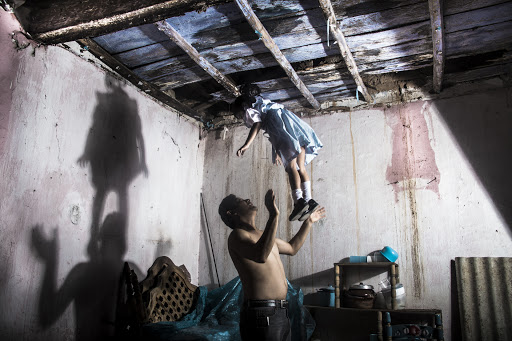
Hicimos una lectura atenta de una fotografรญa con el tรญtulo, โ€œLa casa que sangra (autorretrato con mi hija y la presencia de un ahorcado) Guerrero, Mexico, 2013.โ€ La complexidad de la fotografรญa despertรณ mรบltiples lecturas en los participantes. Lo primero que notamos fue la sombra y que todos vimos diferentes imรกgenes en la sombra: una niรฑa parada en los hombros de su padre, una niรฑa ahorcada, un padre pidiendo socorro. De la imagen en sรญ, hablamos de la obvia pobreza en la casaโ€”las paredes y techo ruinosas. A pesar de eso y que el padre no tiene camisa, la niรฑa tiene un vestido bonito y medias y zapatos a juego demostrando el cariรฑo que el padre le tiene a su hija. Esto tambiรฉn se nota en el modo que ellos se miran a la cara con tanta ternura y devociรณn. Notamos tres niveles en la fotografรญa: la imagen, la sombra, y las metรกforas y implicaciones que le imponemos. Hay diferentes cuentos en la sombra, pero una obvia narrativa en la foto.

Los participantes no sabรญan el titulo de la foto, y cuando lo compartimos abriรณ aun mas la conversaciรณn. Muchos participantes sintieron que el titulo hace la foto aรบn mรกs oscura. Cuando se hizo la pregunta de quรฉ otros tรญtulos podรญan tener la fotografรญa, estas fueron unas sugerencias: โ€œdos vidas,โ€ โ€œla esperanza contra la injusticia econรณmica,โ€ y โ€œel dolor oculto.โ€

Tambiรฉn observamos la semejanza roja en la pared y que tenรญa la forma del vestido. ยฟQue es el significado de la mancha? ยฟSerรก esta la sangre que es mencionada en el titulo?

La propuesta de escritura fue โ€œEscribe acerca de una sombra.โ€ย Algunos participantes compartieron sus textos que hablaban de ver la sombra por primera vez. Otros escribieron sobre la sombra como extensiรณn de si mismo y otros compararon una afirmaciรณn con el posible significado de la sombra, como una yuxtaposiciรณn.

Se alienta a las/los participantes a compartir lo que escribieron a continuaciรณn (โ€œDeja una respuestaโ€), para mantener la conversaciรณn aquรญ, teniendo en cuenta que el blog, por supuesto, es un espacio pรบblico donde no se garantiza la confidencialidad.

Por favor, รบnase a nosotros para nuestra prรณxima sesiรณn en espaรฑol: Sรกbado, 17 de abril a las 13:00 EDT (17:00 UTC) (inscrรญbete aqui), con mรกs veces listadas en inglรฉs en nuestra pรกgina deย sesiones grupales virtuales en vivo.

ยกEsperamos verte pronto!


Photograph by Yael Martรญnez V , Mexico  | www.yaelmartinez.com


Live Virtual Group Session: 12pm EDT March 24th 2021

Thank you to everyone who joined us for this session!

Four new participants joined our international group today for two readings of a short monologue from the Tony Kushner play, โ€œAngels in America: A Gay Fantasia on National Themes. Part 2: Perestroika.โ€ Our discussion began with โ€œWhat places does this text bring us?โ€ Brief stage directions cued us to the characterโ€™s physical location (the window seat of an airborne jumbo jet), and participants discussed the dual sense of internal and external space as Harper flies West in a spiritual realm offering a perspective of oneself as well as a connection to souls rising. We identified a dream space, celestial room for a greater purpose to emerge. The unity of suffering reminded one participant of post-9/11 memories. We discussed how the narrator expresses a confidence in her ability to see things, and how the mood shifts from darkness to the recognition of suffering that accompanies painful progress.


Our prompt today was: Write about what only you can see. The first writing was brief and puzzling, almost like a Buddhist koan โ€” it offered that what others say they see and you cannot, is at odds with what you see and they cannot โ€” a universal nod to our limitations in both communication and understanding. The second offering took us on a lyrical memory journey of childhood, death, aging and the light of beauty that is an internalization of all that we see throughout our lives; relating back to the external and internal movement of our close reading text. A third reflection started with the notion of โ€œseeing beyond the skinโ€ that is enhanced in walking through nature; a special journey the writer seeks to share with patients hoping that they will โ€œseeโ€ as well. This evoked connection to our text and the special power of seeing what others cannot yet trying to communicate the experience through listening and sharing. Our final share presented us with the observation that only we can see our own dreams โ€” dreams are for us alone; though we often long to share our dreams we are mostly glad to be the only one who sees them. A line about โ€œdreams being nothing more than the mind processingโ€ provoked the question โ€œwhy is this a diminished valueโ€, as dreams provide such opportunity to imagine?

Participants are warmly encouraged to share what you wrote below (โ€œLeave a Replyโ€), to keep the conversation going here, bearing in mind that the blog of course is a public space where confidentiality is not assured.

Also, we would love to learn more about your experience of these sessions, so if youโ€™re able, please take the time to fill out a follow-up survey of one to two quick questions!

Please join us for our next session Monday March 29th at 6pm EDT, with more times listed on our Live Virtual Group Sessions page.


Angels in America: A Gay Fantasia on National Themes. Part 2: Perestroika by Tony Kushner

(Night. Harper appears. She is in a window seat on board a jumbo jet, airborne.)

HARPER: Night flight to San Francisco. Chase the moon across America. God! Itโ€™s been years since I was on a plane! When we hit thirty-five thousand feet, weโ€™ll have reached the tropopause. The great belt of calm air. As close as Iโ€™ll ever get to the ozone. I dreamed we were there. The plane leapt the tropopause, the safe air, and attained the outer rim, the ozone, which was ragged and torn, patches of it threadbare as old cheesecloth, and that was frighteningโ€ฆ But I saw something only I could see, because of my astonishing ability to see such things: Souls were rising, from the earth far below, souls of the dead, of people who had perished, from famine, from war, from the plague, and they floated up, like skydivers in reverse, limbs all akimbo, wheeling and spinning. And the souls of these departed joined hands, clasped ankles, and formed a web, a great net of souls, and the souls were three-atom oxygen molecules, of the stuff of ozone, and the outer rim absorbed them, and was repaired. Nothingโ€™s lost forever. In this world, there is a kind of painful progress. Longing for what weโ€™ve left behind, and dreaming ahead. At least I think thatโ€™s so.


Live Virtual Group Session: 6pm EDT March 22nd 2021

Thank you to everyone who joined us for this session!

Our text for this session wasย โ€œthe bullet was a girlโ€ by Danez Smith, posted below.

Our prompt was to begin your writing with โ€œIn another life…โ€

More details on this session will be posted, so check back!

Participants are warmly encouraged to share what you wrote below (โ€œLeave a Replyโ€), to keep the conversation going here, bearing in mind that the blog of course is a public space where confidentiality is not assured.

Also, we would love to learn more about your experience of these sessions, so if youโ€™re able, please take the time to fill out a follow-up survey of one to two quick questions!

Please join us for our next sessionย Wednesday March 24th at 12pm EDT,ย with more times listed on ourย Live Virtual Group Sessionsย page.


the bullet was a girl by Danez Smith


the bullet is his whole life.
his mother named him & the bullet

was on its way. in another life
the bullet was a girl & his skin

was a boy with a sad laugh.
they say he asked for itโ€” 

must I define they? they are not
monsters, or hooded or hands black

with cross smoke.
they teachers, they pay tithes

they like rap, they policeโ€”good folks
gather around a boyโ€™s body

to take a picture, share a prayer.
oh da horror, oh what a shame

whyโ€™d he do that to himself?
they really should stop
getting themselves killed


Copyright ยฉ 2015 by Danez Smith. 
Originally published in Poem-a-Day 
on September 3, 2015, 
by the Academy of American Poets


Live Virtual Group Session: 12pm EST March 17th 2021

Thank you to everyone who joined us for this session!

Our text for this session was โ€œThe Lost Landโ€ by Eavan Boland, posted below.

Our prompt was: โ€œBring us to a lost land.โ€

More details on this session will be posted, so check back!

Participants are warmly encouraged to share what you wrote below (โ€œLeave a Replyโ€), to keep the conversation going here, bearing in mind that the blog of course is a public space where confidentiality is not assured.

Also, we would love to learn more about your experience of these sessions, so if youโ€™re able, please take the time to fill out a follow-up survey of one to two quick questions!

Please join us for our next session Monday March 22nd at 6pm EST, with more times listed on our Live Virtual Group Sessions page.


The Lost Land by Eavan Boland


I have two daughters.

They are all I ever wanted from the earth.

Or almost all.

I also wanted one piece of ground:

One city trapped by hills. One urban river.
An island in its element.

So I could say mine. My own.
And mean it.

Now they are grown up and far away

and memory itself
has become an emigrant,
wandering in a place
where love dissembles itself as landscape:

Where the hills
are the colours of a child's eyes,
where my children are distances, horizons:

At night,
on the edge of sleep,

I can see the shore of Dublin Bay.
Its rocky sweep and its granite pier.

Is this, I say
how they must have seen it,
backing out on the mailboat at twilight,

shadows falling
on everything they had to leave?
And would love forever?
And then

I imagine myself
at the landward rail of that boat
searching for the last sight of a hand.

I see myself
on the underworld side of that water,
the darkness coming in fast, saying
all the names I know for a lost land:

Ireland. Absence. Daughter.

Live Virtual Group Session: 6pm EST March 15th 2021

Thank you to everyone who joined us for this session!

Our text for this session wasย “Yellow Glove” by Naomi Shihab Nye, posted below.

Our prompt was: โ€œWrite about where the yellow glove has been.โ€

More details on this session will be posted, so check back!

Participants are warmly encouraged to share what you wrote below (โ€œLeave a Replyโ€), to keep the conversation going here, bearing in mind that the blog of course is a public space where confidentiality is not assured.

Also, we would love to learn more about your experience of these sessions, so if youโ€™re able, please take the time to fill out a follow-up survey of one to two quick questions!

Please join us for our next sessionย Wednesday March 17th at 12pm EST, with more times listed on ourย Live Virtual Group Sessionsย page.


Yellow Glove byย Naomi Shihab Nye

What can a yellow glove mean in a world of motorcars and governments?

I was small, like everyone. Life was a string of precautions: Donโ€™t kiss the squirrel before you bury him, donโ€™t suck candy, pop balloons, drop watermelons, watch TV. When the new gloves appeared one Christmas, tucked in soft tissue, I heard it trailing me: Donโ€™t lose the yellow gloves.

I was small, there was too much to remember. One day, waving at a streamโ€”the ice had cracked, winter chipping down, soon we would sail boats and roll into ditchesโ€”I let a glove go. Into the stream, sucked under the street. Since when did streets have mouths? I walked home on a desperate road. Gloves cost money. We didnโ€™t have much. I would tell no one. I would wear the yellow glove that was left and keep the other hand in a pocket. I knew my motherโ€™s eyes had tears they had not cried yet, I didnโ€™t want to be the one to make them flow. It was the prayer I spoke secretly, folding socks, lining up donkeys in windowsills. To be good, a promise made to the roaches who scouted my closet at night. If you donโ€™t get in my bed, I will be good. And they listened. I had a lot to fulfill.

The months rolled down like towels out of a machine. I sang and drew and fattened the cat. Donโ€™t scream, donโ€™t lie, donโ€™t cheat, donโ€™t fightโ€”you could hear it anywhere. A pebble could show you how to be smooth, tell the truth. A field could show how to sleep without walls. A stream could remember how to drift and changeโ€”next June I was stirring the stream like a soup, telling my brother dinner would be ready if heโ€™d only hurry up with the bread, when I saw it. The yellow glove draped on a twig. A muddy survivor. A quiet flag.

Where had it been in the three gone months? I could wash it, fold it in my winter drawer with its sister, no one in that world would ever know. There were miracles on Harvey Street. Children walked home in yellow light. Trees were reborn and gloves traveled far, but returned. A thousand miles later, what can a yellow glove mean in a world of bankbooks and stereos?

Part of the difference between floating and going down.