Live Virtual Group Session: 6PM EST January 30th 2023

Thank you to everyone who joined us for this session!

For this session we read a poem Brave World” by Tony Hoagland, posted below. 

Our prompt was: โ€œTake us to an unknown shore.โ€

More details will be posted on this session, so check back again!

Participants are warmly encouraged to share what you wrote below (โ€œLeave a Replyโ€), to keep the conversation going here, bearing in mind that the blog of course is a public space where confidentiality is not assured.

Also, we would love to learn more about your experience of these sessions, so if youโ€™re able, please take the time to fill out a follow-up survey of one to two quick questions!

Please join us for our next session Friday February 3rd at 12pm EST, with more times listed on our Live Virtual Group Sessions.


"Brave World" by Tony Hoagland

But what about the courage
of the cancer cell
that breaks out from the crowd
it has belonged to all its life

like a housewife erupting
from her line at the grocery store
because she just canโ€™t stand
the sameness anymore?

What about the virus that arrives
in town like a traveler
from somewhere faraway
with suitcases in hand,

who only wants a place
to stay, a chance to get ahead
in the land of opportunity,
but who smells bad,

talks funny, and reproduces fast?
What about the microbe that
hurls its tiny boat straight
into the rushing metabolic tide,

no less cunning and intrepid
than Odysseus; that gambles all
to found a city
on an unknown shore?

What about their bill of rights,
their access to a full-scale,
first-class destiny?
their chance to realize

maximum potential?-which, sure,
will come at the expense
of someone else, someone
who, from a certain point of view,

is a secondary character,
whose weeping is almost
too far off to hear,

a noise among the noises
coming from the shadows
of any brave new world.

Credit: Tony Hoagland

Encuentros virtuales en vivo: Sรกbado 28 de enero, 13:00 EST

8 participantes desde Espaรฑa, Florida, Argentina, Los รngeles, Manhattan, y Syracuse nos reunimos para leer un fragmento de El Hombre es lo que importa, de Leรณn Felipe.

Lo primero que se notรณ fue el aislamiento que se siente al leer el poema, ni el viento responde a estas preguntas. El viento juega un papel opuesto que en el poema de Antonio Machado. โ€œLlamรณ a Mi Corazรณn un Claro Dรญaโ€: โ€œLlamรณโ€™ a mi corazรณn un claro dรญa con el perfume de jazmรญn, el vientoโ€. En el poema de Machado el viento estรก presente, atento, previendo belleza, pero nada de esto aparece en este fragmento. Otra participante mencionรณ que estas frases la hacen sentir como si fuera el final de la vida, apocalรญptica. 

Despuรฉs se empezรณ un debate que el fragmento es totalmente existencial; lo que mรกs importa es el Hombre. El fragmento empieza con lo impersonal y sigue a lo personal y vuelve a lo impersonal. El misterio y el dolor estรก ahรญ. Ni el viento, ni la gente responde, por eso viene el dolor. 

Otra participante contesto que, aunque el fragmento termina de forma impersonal, es muy personal. El hombre es muy importante, ยฟpero para quiรฉn?

Citando a Borges, otro participante comento, โ€œCualquier destino, por largo y complicado que sea, consta en realidad de un solo momento: el momento en que el hombre sabe para siempre quiรฉn esโ€. Se notรณ que la conciencia siempre nos acompaรฑa. 

Otra persona comento que hay tanta gente hoy en dรญa que no toma el tiempo de pensar en estas preguntas porque se mantienen en sus dispositivos, perdidos en videos, en la mรบsica, etc., pero no en sus pensamientos, en las preguntas existenciales.
Tambiรฉn se observรณ que el uso de โ€œHombreโ€ es anticuado. Que coincidentemente dos hombres leyeron el poema y que hubiera sido muy diferente si una mujer hubiera leรญdo el poema. Surgiรณ una conversaciรณn sobre el uso del masculino en el lenguaje.    
La propuesta de escritura, โ€œEl Hombre esโ€ฆ,โ€ fue muy bien recibida por los participantes. Escribieron de la dicotomรญa entre el Hombre y Dios. Del daรฑo que puede hacer el Hombre contra el planeta y como pueden reversar estรฉ daรฑo. Se escribieron listas de lo que es y no es El Hombre. Y tambiรฉn la incertidumbre de ser Humano. Un participante compartiรณ un relato que responde a la propuesta en una forma concreta.

Aquรญ, ahora alentamos a los participantes que si asรญ lo desean, compartan lo que escribieron a continuaciรณn. Deja tu respuesta aquรญ, si deseas continuar la conversaciรณn. Pero antes, les recomendamos tener en cuenta que el blog es un espacio pรบblico donde, por supuesto, no se garantiza la confidencialidad.

Por favor, รบnase a nosotros en nuestra prรณxima sesiรณn en espaรฑol: El sรกbado 18 febrero a las 13 hrs. o a la 1 pm EST. Tambiรฉn, ofrecemos sesiones en inglรฉs. Ve a nuestra pรกgina de sesiones grupales virtuales.


"El Hombre es lo que importa, de Leon Felipe (fragmento)."

El Hombre es lo que importa.E
l Hombre ahรญ,
desnudo bajo la noche y frente al misterio,
con su tragedia a cuestas,
con su verdadera tragedia,
con su รบnica tragedia...
la que surge, la que se alza cuando preguntamos,
cuando gritamos en el viento:
ยฟ Quiรฉn soy yo?
Y el viento no responde... Y no responde nadie.
ยฟQuiรฉn es el Hombre?โ€ฆ


Live Virtual Group Session: 12PM EST January 27th 2023

Thank you to everyone who joined us for this session!

For this session we read an excerpt from the essay “Damage” by Wendell Berry, posted below. 

Our prompt was: โ€œWrite about what is enough.โ€

More details will be posted on this session, so check back again!

Participants are warmly encouraged to share what you wrote below (โ€œLeave a Replyโ€), to keep the conversation going here, bearing in mind that the blog of course is a public space where confidentiality is not assured.

Also, we would love to learn more about your experience of these sessions, so if youโ€™re able, please take the time to fill out a follow-up survey of one to two quick questions!

Please join us for our next session Monday January 30th at 6pm EST, with more times listed on our Live Virtual Group Sessions.


"Damage" by Wendell Berry

III 

It used to be that I could think of art as a refuge from such troubles. From the imperfections of life, one could take refuge in the perfections of art. One could read a good poem โ€“ or better, write one. 

Art was what was truly permanent, therefore what truly mattered. The rest was "but a spume that plays / Upon a ghostly paradigm of things." 

I am no longer able to think that way. That is because I now live in my subject. My subject is my place in the world, and I live in my place. 

There is a sense in which I no longer "go to work." If I live in my place, which is my subject, then I am "atโ€ my work even when I am not working. It is "my" work because I cannot escape it. 

If I live in my subject, then writing about it cannot "free" me of it or "get it out of my system." When I am finished writing, I can only return to what I have been writing about. 

While I have been writing about it, time will have changed it. Over longer stretches of time, I will change it. Ultimately, it will be changed by what I write, inasmuch as I, who change my subject, am changed by what I write about it. 

If I have damaged my subject, then I have damaged my art. What aspired to be whole has met damage face to face, and has come away wounded. And so it loses interest both in the anesthetic and in the purely esthetic. 
 
It accepts the clarification of pain, and concerns itself with healing. It cultivates the scar that is the course of time and nature over damage: the landmark and mindmark that is the notation of a limit. 

To lose the scar of knowledge is to renew the wound. 

An art that heals and protects its subject is a geography of scars. 

IV 

"you never know what is enough unless you know what is more than enough." 

I used to think of Blake's sentence as a justification of youthful excess. By now I know that it describes the peculiar condemnation of our species. When the road of excess has reached the palace of wisdom it is a healed wound, a long scar. 

Culture preserves the map and the records of past journeys so that no generation will permanently destroy the route.  

The more local and settled the culture, the better it stays put, the less the damage. It is the foreigner whose road of excess leads to a desert. 

Blake gives the just proportion or control in another proverb: "No bird soars too high, if he soars with his own wings." Only when our acts are empowered with more than bodily strength do we need to think of limits. 

It was no thought or word that called culture into being, but a tool or a weapon. After the stone axe we needed song and story to remember innocence, to record effect โ€“ and so to describe the limits, to say what can be done without damage. 

The use only of our bodies for work or love or pleasure, or even for combat, sets us free again in the wilderness, and we exult. 

But a man with a machine and inadequate culture โ€“ such as I was when I made my pond โ€“ is a pestilence. He shakes more than he can hold.

Credit: Wendell Berry, Damage, 4 Hastings West Northwest J. of Envtl. L. & Pol'y 71 (1997) 

Live Virtual Group Session: 6PM EST January 23rd 2023

Thank you to everyone who joined us for this session!

For this session we read a poem “Lines for Winter ” by Mark Strand, posted below. 

Our prompt was: โ€œWrite about the tune your bones play.โ€

More details will be posted on this session, so check back again!

Participants are warmly encouraged to share what you wrote below (โ€œLeave a Replyโ€), to keep the conversation going here, bearing in mind that the blog of course is a public space where confidentiality is not assured.

Also, we would love to learn more about your experience of these sessions, so if youโ€™re able, please take the time to fill out a follow-up survey of one to two quick questions!

Please join us for our next session Friday January 27th at 12pm EST, with more times listed on our Live Virtual Group Sessions.


"Lines for Winter " by Mark Strand

Tell yourself
as it gets cold and gray falls from the air
that you will go on
walking, hearing
the same tune no matter where
you find yourselfโ€”
inside the dome of dark
or under the cracking white
of the moon's gaze in a valley of snow.
Tonight as it gets cold
tell yourself
what you know which is nothing
but the tune your bones play
as you keep going. And you will be able
for once to lie down under the small fire
of winter stars.
And if it happens that you cannot
go on or turn back
and you find yourself
where you will be at the end,
tell yourself
in that final flowing of cold through your limbs
that you love what you are.

Copyright ยฉ 1979 by Mark Strand. 

Live Virtual Group Session: 12PM EST January 20th 2023

Thank you to everyone who joined us for this session!

For this session we read an excerpt from the essay “Damage” by Wendell Berry, posted below. 

Our prompt was: โ€œWrite about a time you tried to repair something.โ€

More details will be posted on this session, so check back again!

Participants are warmly encouraged to share what you wrote below (โ€œLeave a Replyโ€), to keep the conversation going here, bearing in mind that the blog of course is a public space where confidentiality is not assured.

Also, we would love to learn more about your experience of these sessions, so if youโ€™re able, please take the time to fill out a follow-up survey of one to two quick questions!

Please join us for our next session Monday January 23rd at 6pm EST, with more times listed on our Live Virtual Group Sessions.


"Damage" by Wendell Berry

I

I have a steep wooded hillside that I wanted to be able to pasture occasionally, but it had no permanent water supply. 

About halfway to the top of the slope there is a narrow bench, on which I thought I could make a small pond. I hired a man with a bulldozer to dig one. He cleared away the trees and then formed the pond, cutting into the hill on the upper side, piling the loosened dirt in a curving earthwork on the lower. 

The pond appeared to be a success. Before the bulldozer quit work, water had already begun to seep in. Soon there was enough to support a few head of stock. To heal the exposed ground, I fertilized it and sowed it with grass and clover. 

We had an extremely wet fall and winter, with the usual freezing and thawing. The ground grew heavy with water, and soft. The earthwork slumped; a large slice of the woods floor on the upper side slipped down into the pond.

The trouble was the familiar one: too much power, too little knowledge. The fault was mine. 

I was careful to get expert advice. But this only exemplifies what I already knew. No expert knows everything about every place, not even everything about any place. If one's knowledge of one's whereabouts is insufficient, if one's judgment is unsound, then expert advice is of little use. 

II 

In general, I have used my farm carefully. It could be said, I think, that I have improved it more than I have damaged it.

My aim has been to go against its history and to repair the damage of other people. But now a part of its damage is my own. 

The pond was a modest piece of work, and so the damage is not extensive. In the course of time and nature it will heal. 

And yet there is damage to my place, and to me. I have carried out, before my own eyes and against my intention, a part of the modern tragedy: I have made a lasting flaw in the face of the earth, for no lasting good. 

Until that wound in the hillside, my place, is healed, there will be something impaired in my mind. My peace is damaged. I will not be able to forget it. 


Credit: Wendell Berry, Damage, 4 Hastings West Northwest J. of Envtl. L. & Pol'y 71 (1997)


Live Virtual Group Session: 12PM EST January 13th 2023

Thank you to everyone who joined us for this session!

For this session we took a close look at a performance titled Celui qui tombe” by Yoann Bourgeois, posted below. 

Our prompt was: โ€œWrite about falling down OR  Write about a time you took a stand.โ€

More details will be posted on this session, so check back again!

Participants are warmly encouraged to share what you wrote below (โ€œLeave a Replyโ€), to keep the conversation going here, bearing in mind that the blog of course is a public space where confidentiality is not assured.

Also, we would love to learn more about your experience of these sessions, so if youโ€™re able, please take the time to fill out a follow-up survey of one to two quick questions!

Please join us for our next session Friday January 20th at 12pm EST, with more times listed on our Live Virtual Group Sessions.


Celui qui tombe” by Yoann Bourgeois


Live Virtual Group Session: 6PM EST January 9th 2023

Thank you to everyone who joined us for this session!

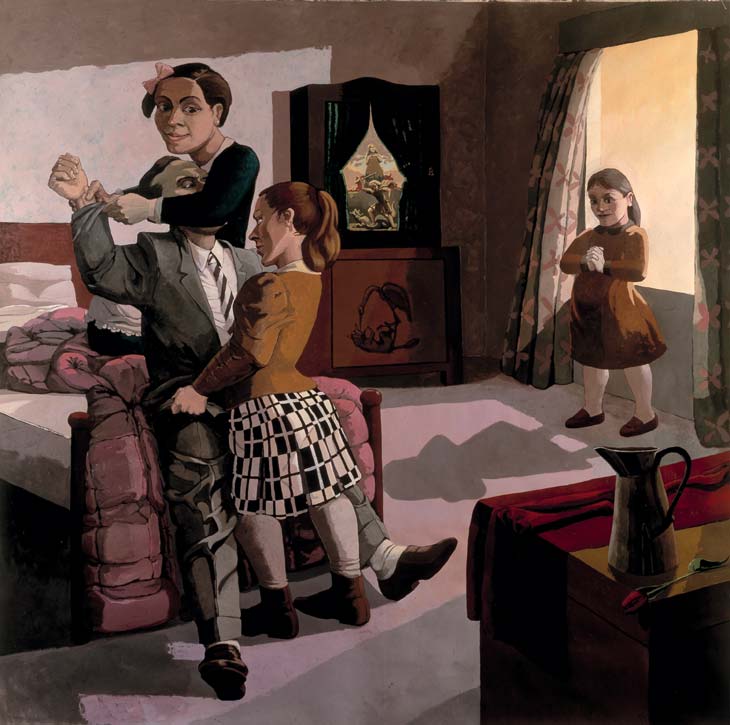
For this session we took a close look at the painting The Family, 1988″ by  Paula Rego, posted below. 

Our prompt was: โ€œWrite about a moment of power or powerlessness.โ€

More details will be posted on this session, so check back again!

Participants are warmly encouraged to share what you wrote below (โ€œLeave a Replyโ€), to keep the conversation going here, bearing in mind that the blog of course is a public space where confidentiality is not assured.

Also, we would love to learn more about your experience of these sessions, so if youโ€™re able, please take the time to fill out a follow-up survey of one to two quick questions!

Please join us for our next session Friday January 13th at 12pm EST, with more times listed on our Live Virtual Group Sessions.


The Family, 1988″ by  Paula Rego

ยฉ by MCH Swiss Exhibition (Basel) Ltd


Encuentros virtuales en vivo: Sรกbado 7 de enero, 13:00 EST

Nos conectamos 8 personas: desde Nueva York, Espaรฑa y Argentina.

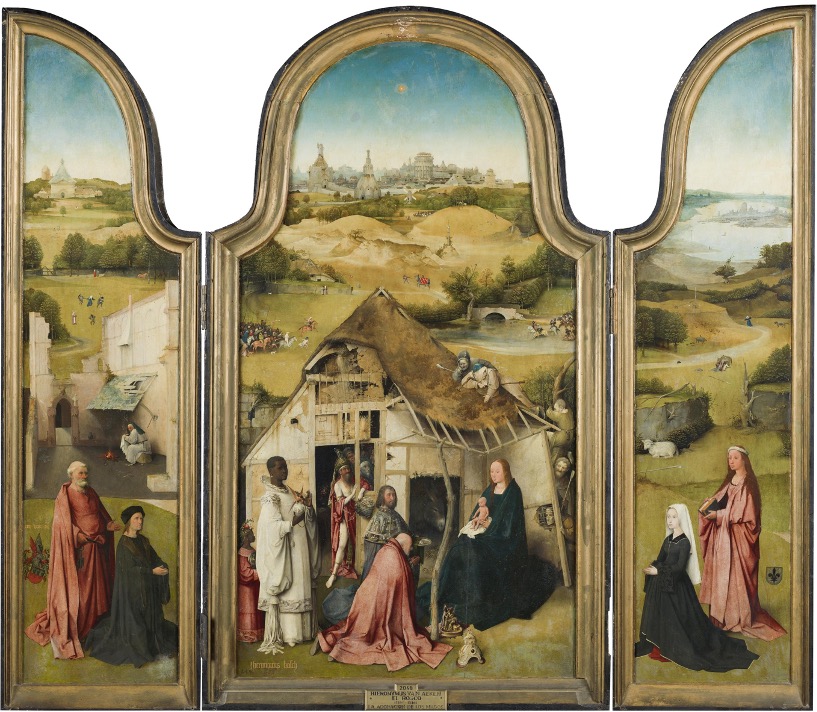
Analizamos la pintura โ€œAdoraciรณn de los Magosโ€, de El Bosco.

Los participantes empiezan destacando los personajes y escenas que parecen ser extraรฑos a la imagen de la adoraciรณn: la batalla que ocurre detrรกs, los personajes que estรกn detrรกs de diferente color, pequeรฑos, sin detalles. La historia se contextualiza en un entorno. Hay muchos contrastes. A la vez es muy simรฉtrico. Destacan muchos detalles extraรฑos: la virgen maria parece rica. La cantidad de detalles difรญciles de contar. El cuadro da lugar a muchas historias extraรฑas. Encontramos de quรฉ modo vamos dando sentido a las imรกgenes del cuadro, sentidos que dependen de cada uno. Destaca que todos los asistentes nos hemos concentrado en el entorno de la imagen principal pero no en la historia central.

La propuesta de escritura fue escribe sobre un regalo. Se escribiรณ sobre el regalo como concepto, sobre el agradecimiento que lleva asociado. Sobre la amistad como el regalo que a su vez regala tiempo, como resonancia. Tambiรฉn se escribiรณ sobre el regalo que no es objeto sino sujeto. El acto de regalar como algo que se contagia. Se hablรณ del valor de los regalos inmateriales y de como, al final, esos son los regalos que mรกs deseamos. Se escribieron historias, ensayos y relatos personales.

Aquรญ, ahora alentamos a los participantes que si asรญ lo desean, compartan lo que escribieron a continuaciรณn. Deja tu respuesta aquรญ, si deseas continuar la conversaciรณn. Pero antes, les recomendamos tener en cuenta que el blog es un espacio pรบblico donde, por supuesto, no se garantiza la confidencialidad.

Por favor, รบnase a nosotros en nuestra prรณxima sesiรณn en espaรฑol: El sรกbado 28 enero a las 13 hrs. o a la 1 pm EST. Tambiรฉn, ofrecemos sesiones en inglรฉs. Ve a nuestra pรกgina de sesiones grupales virtuales .


โ€œAdoraciรณn de Los Magos,โ€ de El Bosco

Copyright ยฉ 2022. Museo Nacional del Prado


Encuentros virtuales en vivo: Sรกbado 17 de diciembre, 13:00 EST

Sesiรณn de medicina narrativa 17 de diciembre, 2022.ย Nos reunimos 6 participantes, desde Argentina, Espaรฑa, Chile, Nueva York, y California.

Comentamos sobre un extracto de la novela โ€œDel Amor y Otro Demonios, escrito porย Gabriel Garcรญa Mรกrquez,ย 

Inmediatamente alguien comentรณ que el รบltimo pรกrrafo es hermoso, que llama la atenciรณn por lo que tiene que ver con la naturaleza. Uno no puede hacer a los pรกjaros cantarโ€”hay que tener paciencia y darle prioridad a los ejemplos que da el doctor. Hoy en dรญa, uno vive de meta en meta en vez de vivir en el momento. Es importante estar activamente en el momento. Es el tiempo el que estรก presente en el cuento. Otro participante notรณ que, si uno estรก pasando bien, el tiempo pasa ligero, pero si uno estรก pasando mal, el tiempo se demora demasiado.

El marquรฉs y los demรกs tienen una gran responsabilidad, deben hacer feliz a la paciente y para hacer esto, los que la cuidan tienen que conocerla muy bien.

Una participante notรณo que la enferma no estรก; hablan de ella, pero no se habla con ella. Son los otros los que son responsables por hacerla feliz. La indicaciรณn se hace al entorno y no al paciente. Esto hizo recordar a otra participante en la diferencia de autonomรญa de muchos pacientes los cuales estรกn decidiendo sus fines de vida en los estados y paรญses que lo permiten.

Al leer el fragmento varias veces nos quedamos pensando si โ€œy mientras tantoโ€ tiene que ver con la paciente o con los que la cuidan. La ambigรผedad del lenguaje deja mucha interpretaciรณn.

Antes de escribir, alguien comentรณ que, โ€œla imaginaciรณn es la mitad de la enfermedadโ€.

La propuesta de escritura fue: escribe sobre un tiempo o momento de espera, sobre un โ€œmientras tantoโ€. Pudimos compartir varios escritos. Un participante escribiรณ sobre estar en un no lugar. Otro participante leyรณ una lista de ejemplos de mientras tantos en la vida. Otro participante se despidiรณ de una etapa difรญcil en su vida. Y otra participante compartiรณ un principio y final.

Aquรญ, ahora alentamos a los participantes que si asรญ lo desean, compartan lo que escribieron a continuaciรณn. Deja tu respuesta aquรญ, si deseas continuar la conversaciรณn. Pero antes, les recomendamos tener en cuenta que el blog es un espacio pรบblico donde, por supuesto, no se garantiza la confidencialidad.

Por favor, รบnase a nosotros en nuestra prรณxima sesiรณn en espaรฑol: El sรกbado 7 enero a las 13 hrs. o a la 1 pm EST. Tambiรฉn, ofrecemos sesiones en inglรฉs. Ve a nuestra pรกgina de sesiones grupales virtuales

DEL AMOR Y OTRO DEMONIOS por Gabriel Garcรญa Mรกrquez

ยซNo podรญa esperarse menos grandeza de su parte, seรฑorยป, le dijo. ยซy no dudo de que su alma tendrรก el temple para soportarloยป.Insistiรณ una vez mรกs en que el pronรณstico no era alarmante. La herida estaba lejos del รกrea de mayor riesgo y nadie recordaba que hubiera sangrado. Lo mรกs probable era que Sierva Marรญa no contrajera la rabia.ยซยฟy mientras tanto?ยป, preguntรณ el marquรฉs.ยซMientras tantoยป, dijo Abrenuncio, ยซtรณquenle mรบsica, llenen la casa de flores, hagan cantar los pรกjaros, llรฉvenla a ver los atardeceres en el mar, denle todo lo que pueda hacerla felizยป. Se despidiรณ con un voleo del sombrero en el aire y la sentencia latina de rigor. Pero esta vez la tradujo en honor del marquรฉs: ยซNo hay medicina que cure lo que no cura la felicidadยป. p. 24


Live Virtual Group Session: 12PM EST December 16th 2022

Thank you to everyone who joined us for this session!

For this session we read a poem What You Missed That Day You Were Absent from Fourth Grade” by Brad Aaron Modlin from Everyone at This Party Has Two Names, posted below. 

Our prompt was: โ€œWrite about what you had to learn on your own.โ€

More details will be posted on this session, so check back again!

Participants are warmly encouraged to share what you wrote below (โ€œLeave a Replyโ€), to keep the conversation going here, bearing in mind that the blog of course is a public space where confidentiality is not assured.

Also, we would love to learn more about your experience of these sessions, so if youโ€™re able, please take the time to fill out a follow-up survey of one to two quick questions!

Please join us for our next session Monday January 9th at 6pm EST, with more times listed on our Live Virtual Group Sessions.


"What You Missed That Day You Were Absent from Fourth Grade" by Brad Aaron Modlin

Mrs. Nelson explained how to stand still and listen
to the wind, how to find meaning in pumping gas,

how peeling potatoes can be a form of prayer. She took
questions on how not to feel lost in the dark

After lunch she distributed worksheets
that covered ways to remember your grandfatherโ€™s

voice. Then the class discussed falling asleep
without feeling you had forgotten to do something elseโ€”

something importantโ€”and how to believe
the house you wake in is your home. This prompted

Mrs. Nelson to draw a chalkboard diagram detailing
how to chant the Psalms during cigarette breaks,

and how not to squirm for sound when your own thoughts
are all you hear; also, that you have enough.

The English lesson was that I am
is a complete sentence.

And just before the afternoon bell, she made the math equation
look easy. The one that proves that hundreds of questions,

and feeling cold, and all those nights spent looking
for whatever it was you lost, and one person

add up to something.

credit: Everyone at This Party Has Two Names by Brad Aaron Modlin. Copyright ยฉ 2016