Live Virtual Group Session: 12PM EST January 31st 2025

Thank you to everyone who joined us for this session!

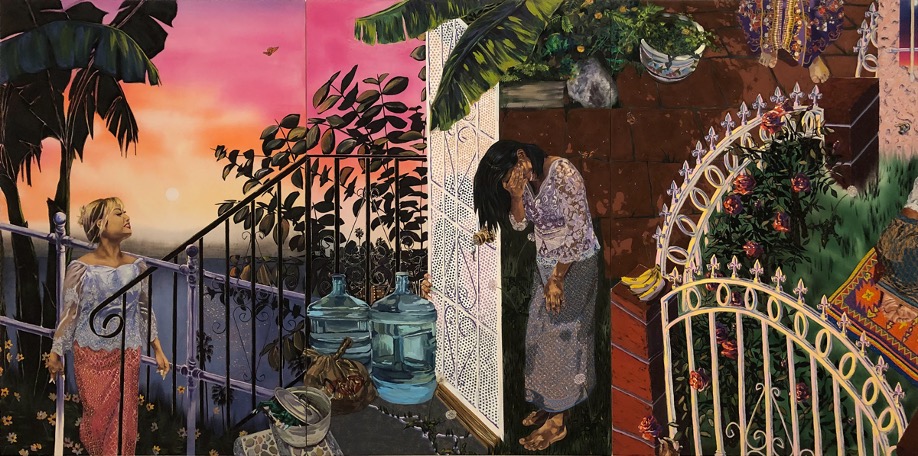
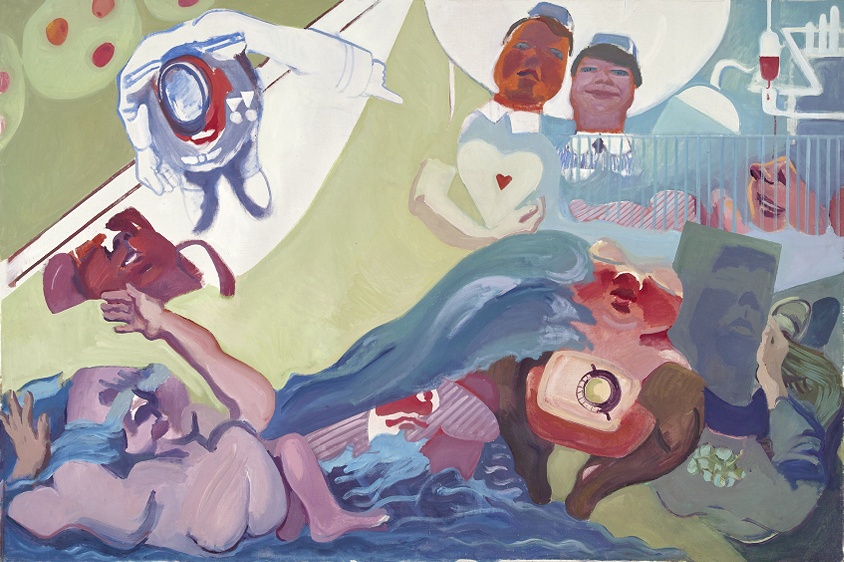
For this session we took a close look at the 1947 painting “Les Clochards, Montmartre, Paris” by Loรฏs Mailou Jones, posted below.

Our prompt was:ย โ€œWrite about going our separate ways.โ€

Participants are warmly encouraged to share what you wrote below (โ€œLeave a Replyโ€), to keep the conversation going here, bearing in mind that the blog of course is a public space where confidentiality is not assured.

Also, we would love to learn more about your experience of these sessions, so if youโ€™re able, please take the time to fill out a follow-up survey of one to two quick questions!

Please join us for our next session Friday February 7th at 12pm EST, with more times listed on our Live Virtual Group Sessions.

Les Clochards, Montmartre, Paris by Loรฏs Mailou Jones

Credit: Loรฏs Mailou Jones, Les Clochards, Montmartre, Paris, 1947, casein on board, 21 x 35 1/2 in. (53.3 x 90.2 cm), Smithsonian American Art Museum, Bequest of the artist, 2006.24.9

Live Virtual Group Session: 12PM EST January 24th 2025

Thank you to everyone who joined us for this session!

For this session we read a poem Breaking [News]” by Noor Hindi, posted below.

Our prompt was:ย โ€œWhat buoysย me through the world...โ€

Participants are warmly encouraged to share what you wrote below (โ€œLeave a Replyโ€), to keep the conversation going here, bearing in mind that the blog of course is a public space where confidentiality is not assured.

Also, we would love to learn more about your experience of these sessions, so if youโ€™re able, please take the time to fill out a follow-up survey of one to two quick questions!

Please join us for our next session Friday January 31st at 12pm EST, with more times listed on our Live Virtual Group Sessions.

Breaking [News] by Noor Hindi

Weโ€™ll wake up, Sunday morning, and read the paper. Read each other. Become

consumers

of each otherโ€™s stories, a desperate reaching

for another bodyโ€™s warmthโ€”its words buoying us through a world. We carry

graveyards on our backs and Iโ€™m holding a lightning bug

hostage in one hand, its light dimming in the warmth

of โ€Šmy fist, and in the other, a pen, to document its death. Isnโ€™t that terrible?

Iโ€™ll ask you, shutting my fist once more.

In interviews, I frame my subjectโ€™s stories through a lens to make them digestible

to consumers.

Iโ€Š become a machine. A transfer of information. Theyโ€Š become a plea for empathy,

an oversaturation of feelings weโ€™ll fail at transforming into action.

Whatโ€™s lost is incalculable.

And at the end of โ€Šsummer, the swimming pools will be gutted of โ€Šwater.

And itโ€™ll be impossible to swim.

Source: Poetry (December 2020)


Live Virtual Group Session: 12PM EST January 17th 2025

Thank you to everyone who joined us for this session!

For this session we read a poem “Another Antipastoral” by Vievee Francis, posted below.

Our prompt was: Begin with โ€œMy curious tale...โ€

Participants are warmly encouraged to share what you wrote below (โ€œLeave a Replyโ€), to keep the conversation going here, bearing in mind that the blog of course is a public space where confidentiality is not assured.

Also, we would love to learn more about your experience of these sessions, so if youโ€™re able, please take the time to fill out a follow-up survey of one to two quick questions!

Please join us for our next session Friday January 24th at 12pm EST, with more times listed on our Live Virtual Group Sessions.

Another Antipastoral by Vievee Francis

I want to put down what the mountain has awakened.


My mouthful of grass.
My curious tale. I want to stand still but find myself moved patch by patch.
There's a bleat in my throat. Words fail me here. Can you understand? I sink
to
my knees tired or not. I now know the ragweed from the goldenrod, and the
blinding
beauty of green. Don't you see? I am shedding my skins. I am a paper hive, a
wolf spider,
the creeping ivy, the ache of a birch, a heifer, a doe. I have fallen from my
dream
of progress: the clear-cut glass, the potted and balconied tree, the lemon-
waxed
wood over a marbled pillar, into my own nocturne. The lullabies I had
forgotten.
How could I know what slept inside? What would rend my fantasies to cud
and up
from this belly's wet straw-strewn fieldโ€”

these soundings.

Copyright Credit: Vievee Francis, "Another Antipastoral" from Forest Primeval.
Source: Forest Primeval (TriQuarterly Books, 2016)


Live Virtual Group Session: 12PM EST January 10th 2025

Thank you to everyone who joined us for this session!

For this session we read a poem Some Things I Like” from Listener by Lemn Sissay, posted below.

Our prompt was: โ€œI like...โ€

Participants are warmly encouraged to share what you wrote below (โ€œLeave a Replyโ€), to keep the conversation going here, bearing in mind that the blog of course is a public space where confidentiality is not assured.

Also, we would love to learn more about your experience of these sessions, so if youโ€™re able, please take the time to fill out a follow-up survey of one to two quick questions!

Please join us for our next session Friday January 17th at 12pm EST, with more times listed on our Live Virtual Group Sessions.

Some Things I Like from Listener by Lemn Sissay

I like wrecks, I like ex-junkies,
I like flunks and ex-flunkies,
I like the way the career-less career,
I like flat beer,
I like people who tell half stories and forget the rest,
I like people who make doodles in important written tests,
I like being late. I like fate. I like the way teeth grate,
I like laceless shoes cordless blues,
I like the one-bar blues,
I like buttonless coats and leaky boats,
I like rubbish tips and bitten lips,
I like yesterdayโ€™s toast,
I like cold tea, I like reality,
I like ashtrays, I write and like crap plays.

I like curtains that donโ€™t quite shut,
I like bread knives that donโ€™t quite cut,
I like rips in blue jeans,
I like people who canโ€™t say what they mean,
I like spiders with no legs, pencils with no lead,
Ants with no heads, worms that are half dead.
I like holes, I like coffee cold. I like creases in neat folds.
I like signs that just donโ€™t know where theyโ€™re going,
I like angry poems,
I like the way you canโ€™t pin down the sea.
See.

Credit: fromย Listenerย by Lemn Sissay.


Encuentros virtuales en vivo: Sรกbado 21 de diciembreย , 13:00 EST

El texto que escogimos para hoy fue Laย ย Apariciรณn 1963 por Antonio Lรณpez Garcรญa.”

La propuesta de escritura fue “Escribeย sobreย laย mirada.”

Aquรญ, ahora alentamos a los participantes que si asรญ lo desean, compartan lo que escribieron a continuaciรณn. Deja tu respuesta aquรญ, si deseas continuar la conversaciรณn. Pero antes, les recomendamos tener en cuenta que el blog es un espacio pรบblico donde, por supuesto, no se garantiza la confidencialidad.

Por favor, รบnase a nosotros en nuestra prรณxima sesiรณn en espaรฑol: El sรกbado 11 enero a las 13 hrs. o a la 1 pm EST. Tambiรฉn, ofrecemos sesiones en inglรฉs. Ve a nuestra pรกgina de sesiones grupales virtuales.


Laย ย Apariciรณn 1963 por Antonio Lรณpez Garcรญa

Credit:Antonio Lรณpez Garcรญa


Live Virtual Group Session: 12PM EST December 20th 2024

Thank you to everyone who joined us for this session!

For this session we read an excerpt from the novel The Tidewater Tales” by John Barth, posted below.

Our prompt was: โ€œWrite about the story you would like someone in your life to tell.โ€

More details will be posted on this session, so check back again!

Participants are warmly encouraged to share what you wrote below (โ€œLeave a Replyโ€), to keep the conversation going here, bearing in mind that the blog of course is a public space where confidentiality is not assured.

Also, we would love to learn more about your experience of these sessions, so if youโ€™re able, please take the time to fill out a follow-up survey of one to two quick questions!

Please join us for our next session Friday January 10th at 12pm EST, with more times listed on ourย Live Virtual Group Sessions.

An excerpt from the novel The Tidewater Tales by John Barth.

KATHERINE SHERRITT SAGAMORE, 39 YEARS OLD,
AND 8 ยฝ MONTHS PREGNANT,
BECALMED IN OUR ENGINELESS SMALL SAILBOAT,
AT THE END OF A STICKY JUNE CHESAPEAKE AFTERNOON
AMID EVERY SIGN OF THUNDERSTORMS APPROACHING
FROM ACROSS THE BAY,
AND SPEAKING AS SHE SOMETIMES DOES IN VERSE,
SETS HER HUSBAND A TASK.


Tell me a story of women and men,
Like us: like us in love for ten
Years, lovers for seven, spouses
Two, or two point five. Their Houses
Increase is the tale Iโ€™d wish you tell.

Why did that perfectly happy pair
Like us, decide this late to bear
A child? Why toil so to conceive
One (or more), when they both believe
The worldโ€™s aboard a handbasket bound for hell?
Well?

Credit: John Barth

Live Virtual Group Session: 6PM EST December 9th 2024

Thank you to everyone who joined us for this session!

For this session we read an excerpt from Held ” by Anne Michaels, posted below.

Our prompt was: โ€œWrite about a pair of socks.โ€

Participants are warmly encouraged to share what you wrote below (โ€œLeave a Replyโ€), to keep the conversation going here, bearing in mind that the blog of course is a public space where confidentiality is not assured.

Also, we would love to learn more about your experience of these sessions, so if youโ€™re able, please take the time to fill out a follow-up survey of one to two quick questions!

Please join us for our next session Friday December 20th at 12pm EST, with more times listed on our Live Virtual Group Sessions.

Held by Anne Michaels pg. 11-12

The black lines of the trees reminded him of a winter field he'd once seen from the window of a train. And the black sea of evening, and the deep black bonnet and apron of his grandmother climbing up from the harbour, knitting all the while, leading their ancient donkey burdened with heavy baskets of crab. All the women in the village wore their tippie and carried their knitting easy to hand, under their arm or in their apron pocket, sleeves and sweater- fronts, filigree work, growing steadily over the course of the day. Each village with its own stitch; you could name a sailorโ€™s home port by the pattern of his gansey, which contained a further signature - a deliberate error by which each knitter could identify her work. Was an error deliberately made still an error?

Coastal Knitters cast their stitches like a protective spell to keep their men safe and warm and dry, the oil in the wool repelling the rain and sea spray, armour passed down, father to son. They knitted shorter sleeves that did not need to be pushed out of the way of work. Dense worsted, faded by the salt wind. The ridge and furrow stitch, like the fields in March when they put in the potatoes. The moss stitch, the rope stitch, the honeycomb, the triple sea wave, the anchor; the hailstone stitch, the lightning, diamonds, ladders, chains, cables, squares, fishnets, arrows, flags, rigging. The Noordwijk bramble stitch. The black-and-white socks of Terschelling (two white threads, a single black). The Goedereede zigzag. The tree of life. The eye of God over the wearerโ€™s heart.

Credit: Anne Michaels


Live Virtual Group Session: 12PM EST December 6th 2024

Thank you to everyone who joined us for this session!

For this session we listened to an instrumental piece of music “Skimming the Fractured Surface to a Place of Endless Light” by Kaki King, from the Albumย Glow posted below.

Our prompt was: โ€œWrite about a place of endless light.โ€

Participants are warmly encouraged to share what you wrote below (โ€œLeave a Replyโ€), to keep the conversation going here, bearing in mind that the blog of course is a public space where confidentiality is not assured.

Also, we would love to learn more about your experience of these sessions, so if youโ€™re able, please take the time to fill out a follow-up survey of one to two quick questions!

Please join us for our next session Monday December 9th at 6pm EST, with more times listed on our Live Virtual Group Sessions.

Skimming the Fractured Surface to a Place of Endless Light by Kaki King

Credit: Kaki King


Live Virtual Group Session: 6PM EST November 25th 2024

Thank you to everyone who joined us for this session!

For this session we read an excerpt from “The Night Watchman” by Louise Erdrich, posted below.

Our prompt was: โ€œTell a story about diving to the bottom.โ€

More details will be posted on this session, so check back again!

Participants are warmly encouraged to share what you wrote below (โ€œLeave a Replyโ€), to keep the conversation going here, bearing in mind that the blog of course is a public space where confidentiality is not assured.

Also, we would love to learn more about your experience of these sessions, so if youโ€™re able, please take the time to fill out a follow-up survey of one to two quick questions!

Please join us for our next session Friday December 6th at 12pm EST, with more times listed on our Live Virtual Group Sessions.

 The Night Watchman by Louise Erdrich

As he did at the change of every season, Thomas gave his father a pinch of tobacco and asked for the story of his name. This story tied them together as Thomas was named after his grandfather, whose name had become the family surname. The original and real Wazhashk was a little muskrat.

"In the beginning," said Biboon, "the world was covered with water. The Creator lined up the animals who were the best divers. First the Creator sent down Fisher, the strongest. But Fisher came up gasping, couldn't find the bottom. Next Mang, the loon, ducked under the way they do."

Biboon curved his hand. "Loon tried. But failed." Thomas nodded in appreciation, loving the gestures he remembered from childhood.

"The Hell-diver flashed into the water, bragging it would succeed. That Hell-diver pulled itself deep down, and down. But no!"

Biboon waited, took in a deep breath.

"Last the humble water rat. The Creator called on that one.

Wazhashk. The little fellow dived down. He took a long time, a very long time, and then finally Wazhashk floated to the top. He was drowned but his paw was clenched. The Creator unfolded Wazhashk's webbed hands. He saw that the muskrat had carried up just a little off the bottom. From that tiny pawโ€™s grip of dirt, the Creator made the whole earth.โ€

"Miiโ€™iw. That's it," said Biboon.

They were sitting outside. Biboon stared at the bright popple leaves, trembling and flashing as they swirled thickly off the branches. Once, the wild prairies had been littered with bones. Bones thick and white as far as he could see. He'd gathered and hauled the buffalo bones with his father. Eight dollars a ton down at the railroad yard in Devils Lake. His family had all dived to the bottom to scrape up dirt. But now his son was sitting with him. Their chairs tipped back against the whitewashed wall of old logs. The sun struck Biboon's face, no warmth to the light, a sign his own namesake was just over the horizon.

"I'm an old pinto pony, scrawny and always hungry. This winter might do me in," he said. His voice was light, amused.

"No," said Thomas. "You have to stick around here, Daddy.โ€

"I'm a weight around your necks," said Biboon.

"Don't say that. We need you."

"I can't even dig a potato! Yesterday I fell over."

"Iโ€™m sending Wade down to stay with you. We need you, like I said. This thing that's coming at us from Washington. I need you to help me fight it."

"Oh, fine," said Biboon, putting up his fists.

Credit:The Night Watchman, Louise Erdrich, p 172-173

Encuentros virtuales en vivo: Sรกbado 23 de noviembre, 13:00 EST

Nos reunimos siete personas desde Nueva York, California, Argentina, Chile, y las Islas Canarias.

Pasemos el tiempo debatiendo el poema No la herida, sino lo que implica la herida por Maya C. Popa (traducido por Olga L. Torres).

A una participante le recordรณ a un regalo roto, sobre todo el final, las palabras โ€œplateado, relucienteโ€. Otra persona ve depresiรณn, sin luz ni esperanza, con una dura helada. Una persona muy anciana, sin esperanza, no tiene sueรฑos. Esta persona ya no ve claras las cosas. 

Alguien notรณ que la sintaxis es difรญcil de entender.  La pรฉrdida de la memoria que decide que se queda nos recuerda de la narrativa del caos (bรบsqueda, triunfa, y caos). Se mencionรณ que ยฟquiรฉn puede decir quรฉ es lo que yo sueรฑo; cuรกl es mi dolor? Nadie puede calificar. Una persona nos hablรณ de Elaine Scarry, โ€œEl cuerpo en dolorโ€, que escribiรณ que cuando uno tiene mucho dolor fรญsico, uno regresa al tiempo de no tener palabras, y Anatole Broyard, โ€œIntoxicado por mi enfermedadโ€, que escribiรณ sobre querer ser una buena historia para su mรฉdico. 

Otra participante dijo que la poeta reflexiona sobre cรณmo el dolor, como la escarcha en los tulipanes, puede parecer duro e inescrutable, pero tiene el poder de dar forma a lo que perdura en nuestra memoria. La herida en sรญ misma no es tan significativa como el crecimiento, el cambio y el significado que implica a lo largo del tiempo. A travรฉs de esta perspectiva, el poema invita a los lectores a abrazar la complejidad del dolor y la memoria como parte de la experiencia humana.

Propusimos para escribir โ€œEscribe sobre una heridaโ€. Escribimos en la sombra del texto. Se contaron cuentos que terminaron en llanto, en el permiso de tocar el cuerpo, la filosofรญa de las heridas, y un poema.

Aquรญ, ahora alentamos a los participantes que, si asรญ lo desean, compartan lo que escribieron a continuaciรณn. Deja tu respuesta aquรญ, si deseas continuar la conversaciรณn sobre el poema de Maya C. Popo (traducido por Olga L. Torres). Pero antes, les recomendamos tener en cuenta que el blog es un espacio pรบblico donde, por supuesto, no se garantiza la confidencialidad.


No la herida, sino lo que la herida implica por Maya c. popo.

Quiรฉn puede decir

lo que sueรฑan los tulipanes

en una dura helada, 

el cielo tan frรญo

como claro

y aรบn ilegible.

O cรณmo el dolor 

decide quรฉ se queda

en la memoria, un regalo

roto para cuando

nos llega,

plateado, reluciente por la edad.