Live Virtual Group Session: 12PM EST December 8th 2023

Thank you to everyone who joined us for this session!

For this session we read a poem “The Mountains” by D’Arcy McNickle, posted below.

Our prompt was: โ€œWrite about what is seen in the half-night.โ€

More details will be posted on this session, so check back again!

Participants are warmly encouraged to share what you wrote below (โ€œLeave a Replyโ€), to keep the conversation going here, bearing in mind that the blog of course is a public space where confidentiality is not assured.

Also, we would love to learn more about your experience of these sessions, so if youโ€™re able, please take the time to fill out a follow-up survey of one to two quick questions!

Please join us for our next session Friday December 15th at 12pm EST, with more times listed on our Live Virtual Group Sessions.


"The Mountains" by D'Arcy McNickle

There is snow, nowโ€”
A thing of silent creepingโ€”
And day is strange half-night . . .
And the mountains have gone, softly murmuring something . . .

And I remember pale days,
Pale as the half-night . . . and as strange and sad.

I remember times in this room
When but to glance thru an opened window
Was to be filled with an ageless crying wonder:
The grand slope of the meadows,
The green rising of the hills,
And then far-away slumbering mountainsโ€”
Dark, fearful, oldโ€”
Older than old, rusted, crumbling rock,
Those mountains . . .
But sometimes came a strange thing
And theirs was the youth of a cloudlet flying,
Sunwise, flashing . . .

And such is the wisdom of the mountains!
Knowing it nothing to be old,
And nothing to be young!

There is snow, nowโ€”
A silent creeping . . .

And I have walked into the mountains,
Into canyons that gave back my laughter,
And the lover-girlโ€™s laughter . . .
And at dark,
When our skin twinged to the night-wind,
Built us a great marvelous fire
And sat in quiet,
Carefully sipping at scorching coffee . . .

But when a coyote gave to the night
A wail of all the bleeding sorrow,
All the dismal, grey-eyed pain
That those slumbering mountains had ever knownโ€”
Crept close to each other
And close to the fireโ€”
Listeningโ€”
Then hastily doused the fire
And fled (giving many excuses)
With tightly-clasping hands.

Snow, snow, snowโ€”
A thing of silent creeping

And once,
On a night of screaming chill,
I went to climb a mountainโ€™s cold, cold body
With a boy whose eyes had the ancient look of the mountains,
And whose heart the swinging dance of a laughter-child . . .
Our thighs ached
And lungs were fired with frost and heaving breathโ€”
The long, long slopeโ€”
A wind mad and raging . . .
Thenโ€”the top!

There should have been . . . something . . .
But there was silence, onlyโ€”
Quiet after the windโ€™s frenzy,
Quiet after all frenzyโ€”
And more mountains,
Endlessly into the night . . .

And such is the wisdom of mountains!
Knowing how great is silence,
How nothing is greater than silence!

And so they are gone, now,
And they murmured something as they wentโ€”
Something in the strange half-night . . .

Credit: Dโ€™Arcy McNickle. poets.org


Live Virtual Group Session: 6PM EST November 27th 2023

Thank you to everyone who joined us for this session!

For this session we read a poem Under Ideal Conditions” by Al Zolynas, posted below.

Our prompt was:ย โ€œWrite about losing the light.โ€

More details will be posted on this session, so check back again!

Participants are warmly encouraged to share what you wrote below (โ€œLeave a Replyโ€), to keep the conversation going here, bearing in mind that the blog of course is a public space where confidentiality is not assured.

Also, we would love to learn more about your experience of these sessions, so if youโ€™re able, please take the time to fill out a follow-up survey of one to two quick questions!

Please join us for our next session Friday December 8th at 12pm EST, with more times listed on ourย Live Virtual Group Sessions.


 "Under Ideal Conditions" by Al Zolynas

say in the flattest part of North Dakota
on a starless moonless night
no breath of wind

a man could light a candle
then walk away
every now and then
he could turn and see
the candle burning

seventeen miles later
provided conditions remained ideal
he could still see the flame

somewhere between the seventeenth and eighteenth mile
he would lose the light

if he were walking backwards
he would know the exact moment
when he lost the flame

he could step forward and find it again
back and forth
dark to light light to dark

what's the place where the light disappears?
where the light reappears?
don't tell me about photons
and eyeballs
reflection and refraction
don't tell me about one hundred and eighty-six thousand
miles per second and the theory of relativity

all I know is that place
where the light appears and disappears
that's the place where we live

originally published by Laterthanever Press, 1994, San Diego CA
Copyright Al Zolynas

Live Virtual Group Session: 6PM EST November 20th 2023

Thank you to everyone who joined us for this session!

For this session we read an excerpt from a story “The Great Silence” by Ted Chiang, posted below.

Our prompt was: โ€œWrite about a call from the wild.โ€

More details will be posted on this session, so check back again!

Participants are warmly encouraged to share what you wrote below (โ€œLeave a Replyโ€), to keep the conversation going here, bearing in mind that the blog of course is a public space where confidentiality is not assured.

Also, we would love to learn more about your experience of these sessions, so if youโ€™re able, please take the time to fill out a follow-up survey of one to two quick questions!

Please join us for our next session Monday November 27th at 6pm EST, with more times listed on our Live Virtual Group Sessions.


 "The Great Silence" by Ted Chiang

The humans use Arecibo to look for extraterrestrial intelligence. Their desire to make a connection is so strong that theyโ€™ve created an ear capable of hearing across the universe.

But I and my fellow parrots are right here. Why arenโ€™t they interested in listening to our voices?

Weโ€™re a non-human species capable of communicating with them. Arenโ€™t we exactly what humans are looking for?

The universe is so vast that intelligent life must surely have arisen many times. The universe is also so old that even one technological species would have had time to expand and fill the galaxy. Yet there is no sign of life anywhere except on Earth. Humans call this the Fermi paradox.

One proposed solution to the Fermi paradox is that intelligent species actively try to conceal their presence, to avoid being targeted by hostile invaders.

Speaking as a member of a species that has been driven nearly to extinction by humans, I can attest that this is a wise strategy.

It makes sense to remain quiet and avoid attracting attention.

The humans use Arecibo to look for extraterrestrial intelligence. Their desire to make a connection is so strong that theyโ€™ve created an ear capable of hearing across the universe.

But I and my fellow parrots are right here. Why arenโ€™t they interested in listening to our voices?

Weโ€™re a non-human species capable of communicating with them. Arenโ€™t we exactly what humans are looking for?

The universe is so vast that intelligent life must surely have arisen many times. The universe is also so old that even one technological species would have had time to expand and fill the galaxy. Yet there is no sign of life anywhere except on Earth. Humans call this the Fermi paradox.

One proposed solution to the Fermi paradox is that intelligent species actively try to conceal their presence, to avoid being targeted by hostile invaders.

Speaking as a member of a species that has been driven nearly to extinction by humans, I can attest that this is a wise strategy.

It makes sense to remain quiet and avoid attracting attention.

Credit: โ€œThe Great Silenceโ€ by Ted Chiang from THE BEST AMERICAN SCIENCE FICTION AND FANTASY 2016 published by Houghton Mifflin Harcourt. Copyright ยฉ 2015 by Ted Chiang. 

Encuentros virtuales en vivo: Sรกbado 18 de noviembre, 13:00 EST

Asistimos 7 personas de diferentes lugares: desde Nueva York, California, Argentina, Tenerife y Bilbao en Espaรฑa.

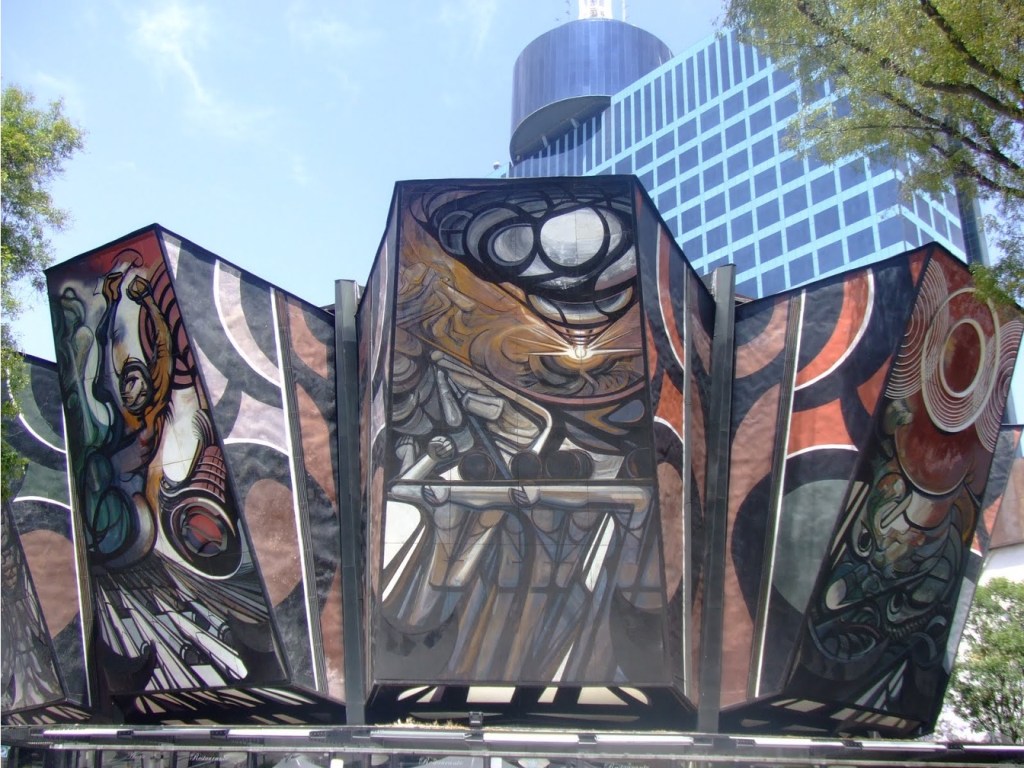
Trabajamos una obra de arte mural, parte de los murales exteriores del Polyforum Cultural Siqueiros de David Alfaro Siqueiros (muralista mexicano, 1896-1974). Para ello mostramos una perspectiva del edificio que incluรญa 3 paneles.

Las primeras impresiones mencionaron que parecรญa muy belicoso, con los dibujos tan marcados, como si representara una batalla. Tambiรฉn recuerda a una nave espacial. Poco a poco se van identificando imรกgenes y componentes de los murales. Se aprecia que es un espacio que irrumpe en el entorno, es agresivo, no queda claro la intenciรณn del mural, brazos levantados, una luz que asemeja una bomba. Hace imaginar una lucha. Es muy disruptivo.

La idea inicial fue, en general, muy relacionada con la guerra. Se lee como muy violenta. A lo largo del debate vamos descubriendo detalles y los posibles significados de la estructura. Se menciona la lucha del edificio con el resto del entorno. La foto muestra lucha de poder.

El espacio, las otras estructuras marcan un simbolismo diferente, el edificio aparece como trascendente y el resto, muy homogรฉneo, parece el cielo. Destaca del entorno en el que se ha construido. Tambiรฉn se mencionรณ que el conjunto en general parecรญa querer mostrar le pasado, el presente y el futuro.

Cuando comentamos la historia del edificio y de los murales pudimos contrastar nuestra percepciรณn con la idea inicial del autor. Descubrimos como no siempre la impresiรณn que nos dejan las historias es la que pretendรญa transmitir el autor de la historia.

La propuesta de escritura fue: โ€œDibuja tu mural (en imagen o palabras)โ€. Muchos asistentes dibujaron historias vitales, esquemas bรกsicos de una idea. Algunos escribieron y algunos dibujaron palabras. Dibujos y textos a la sombra del texto: esquemas de las historias vitales, del pasado, presente y futuro. Ha sido nuestra primera propuesta artรญstica y ha sido muy enriquecedora.

Aquรญ, ahora alentamos a los participantes que, si asรญ lo desean, compartan lo que escribieron a continuaciรณn. Deja tu respuesta aquรญ, si deseas continuar la conversaciรณn sobre parte de los murales exteriores del Polyforum Cultural Siqueiros de David Alfaro Siqueiros. Pero antes, les recomendamos tener en cuenta que el blog es un espacio pรบblico donde, por supuesto, no se garantiza la confidencialidad.

Por favor, รบnase a nosotros en nuestra prรณxima sesiรณn en espaรฑol: El sรกbado 16 diciembre a las 13 hrs. o a la 1 pm EST. Tambiรฉn, ofrecemos sesiones en inglรฉs. Ve a nuestra pรกgina de sesiones grupales virtuales.

ยกEsperamos verte pronto!


“Polyforum Siqueiros Cuidad de Mรฉxico por David Alfaro Siqueiros.”


Live Virtual Group Session: 12PM EST November 17th 2023

Thank you to everyone who joined us for this session!

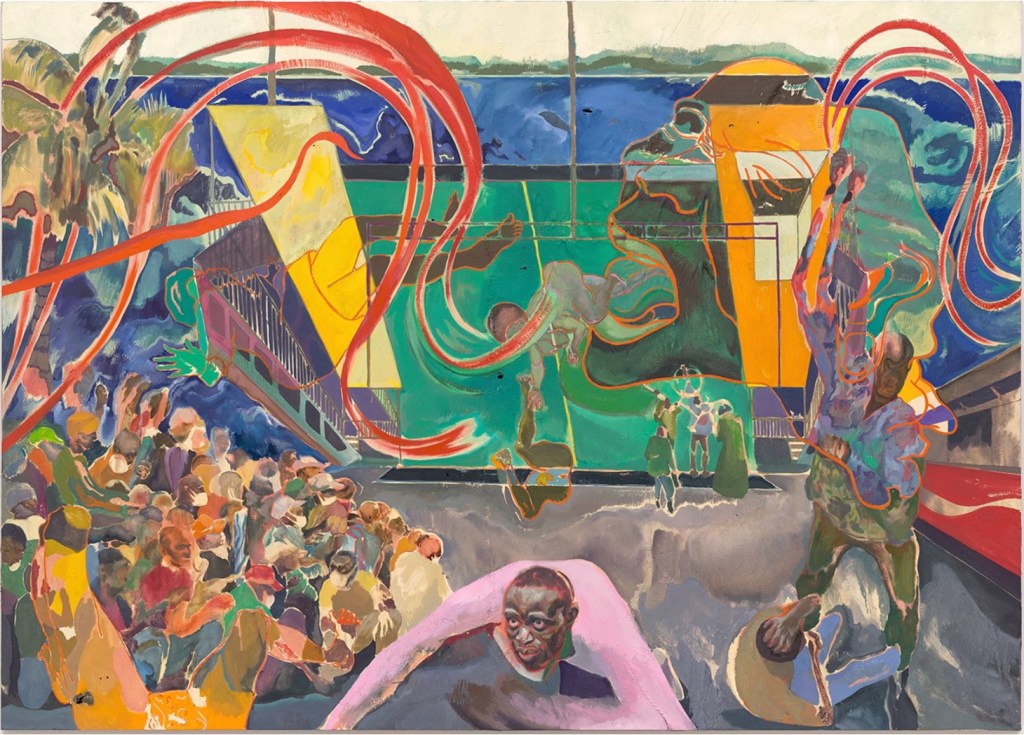
For this session we took a close look at the painting Curfew (Likoni March 27 2020) 2022″ by Michael Armitage, posted below.

Our prompt was:ย “Start with I have witnessed…”

More details will be posted on this session, so check back again!

Participants are warmly encouraged to share what you wrote below (โ€œLeave a Replyโ€), to keep the conversation going here, bearing in mind that the blog of course is a public space where confidentiality is not assured.

Also, we would love to learn more about your experience of these sessions, so if youโ€™re able, please take the time to fill out a follow-up survey of one to two quick questions!

Please join us for our next session Monday November 20th at 6pm EST, with more times listed on our Live Virtual Group Sessions.


Curfew (Likoni March 27 2020) 2022″ by Michael Armitage

Credit: Michael Armitage.


Live Virtual Group Session: 12PM EST November 10th 2023

Thank you to everyone who joined us for this session!

For this session we read a poem Fourth Wall Arpeggio” by A. Van Jordan, posted below.

Our prompt was: โ€œWrite about love’s austere and lonely offices.โ€

More details will be posted on this session, so check back again!

Participants are warmly encouraged to share what you wrote below (โ€œLeave a Replyโ€), to keep the conversation going here, bearing in mind that the blog of course is a public space where confidentiality is not assured.

Also, we would love to learn more about your experience of these sessions, so if youโ€™re able, please take the time to fill out a follow-up survey of one to two quick questions!

Please join us for our next session Friday November 17th at 12pm EST, with more times listed on our Live Virtual Group Sessions.


 "Fourth Wall Arpeggio" by A. Van Jordan

Lately, my friends ask me, out of love,
have I written about my mother,
who suffers under the storm of Alzheimerโ€™s disease,
and I tell them, โ€œI donโ€™t write about my family,
never directly, at least.โ€ To write this poem seems so

out of character for me, but itโ€™s not about my mother,
as much as itโ€™s about how, as a son, the disease
measures the changing rituals of family.
And 28 linesโ€”all Iโ€™ve provided myselfโ€”seems so
anemic. Now, I barely have 18 lines left for a love

I donโ€™t have the vigor to describe. Reticence is a disease
Iโ€™ve suffered from throughout my life. Without family,
I donโ€™t know what it means to live as myself, and, so,
I hide in the reflection of others, which, after all, others love:
people care more about themselves than a friendโ€™s mother.

I mean, how does one explain to someone whoโ€™s not family
how you now see the patterns into which a parent would sew
a quilt to lay over a child, the child neither hip to love
nor Haydenโ€™s โ€œaustere and lonely officesโ€? My motherโ€™s
silence seems like indifference except I know the disease,

which changes our relationship, the parent and child; I sow
healing from my memory of how she taught me to love,
not knowing her movement through a day as a mother,
as someone whose sole gig was to keep me alive, free of disease
and, whenever possible, embarrassment. But now, family

means playing the parent; Iโ€™m still just a son, writing about love,
but, lowering my eyes from the trauma, I lift her body, her disease,
for a shower, straining under all the love she sowed.

Source: Poetry (November 2023)

Live Virtual Group Session: 6PM EDT October 30th 2023

Thank you to everyone who joined us for this session!

For this session we read a poem “Crows” by Mary Oliver, posted below.

Our prompt was: โ€œWrite an equation for your morning.โ€

More details will be posted on this session, so check back again!

Participants are warmly encouraged to share what you wrote below (โ€œLeave a Replyโ€), to keep the conversation going here, bearing in mind that the blog of course is a public space where confidentiality is not assured.

Also, we would love to learn more about your experience of these sessions, so if youโ€™re able, please take the time to fill out a follow-up survey of one to two quick questions!

Please join us for our next session Friday November 10th at 12pm EST, with more times listed on our Live Virtual Group Sessions.


 "Crows" by Mary Oliver

In Japan, in Seattle, In Indonesiaโ€”there they wereโ€”
each one loud and hungry,
crossing a field, or sitting
above the traffic, or dropping
ย 
to the lawn of some temple to sun itself
or walk about on strong legs,
like a landlord. I think
they donโ€™t envy anyone or anythingโ€”
ย 
not the tiger, not the emperor
not even the philosopher.
Why should they?
The wind is their friend, the least tree is home. 
ย 
Nor is melody, they have discovered, necessary
Nor have they delicate palates;
without hesitation they will eat
anything you can think ofโ€”
ย 
corn, mice, old hamburgersโ€”
swallowing with such hollering and gusto
no one can tell whether it is a brag
or a prayer of deepest thanks. At sunrise, when I walk out,

I see them in trees, or on ledges of buildings,
 as cheerful as saints, or thieves of the small job
who have been, one more night, successfulโ€”
and like all successes, it turns my thoughts to myself.

Should I have led a more simple life?
Have my ambitions been worthy?
Has the wind, for years, been talking to me as well?
Somewhere, among all my thoughts, there is a narrow path.
ย 
Itโ€™s attractive, but who could follow it?
Slowly the full morning
draws over us its mysterious and lovely equation.
Then, in the branches poling from their dark center,
ย 
ever more flexible and bright,
sparks from the sun are bursting and melting on the birdsโ€™ wings
as, indifferent and comfortable,
they lounge, they squabble in the vast, rose-colored light. 

Credit: Mary Oliver

Live Virtual Group Session: 6PM EDT October 23rd 2023

Thank you to everyone who joined us for this session!

For this session we viewed the painting Flight of the Swallows” by John Henry Lorimer, posted below.

Our prompt was: โ€œThe others were so excited but Iโ€ฆโ€ 

More details will be posted on this session, so check back again!

Participants are warmly encouraged to share what you wrote below (โ€œLeave a Replyโ€), to keep the conversation going here, bearing in mind that the blog of course is a public space where confidentiality is not assured.

Also, we would love to learn more about your experience of these sessions, so if youโ€™re able, please take the time to fill out a follow-up survey of one to two quick questions!

Please join us for our next session Monday October 30th at 6pm EDT, with more times listed on our Live Virtual Group Sessions.


The Flight of the Swallows – John Henry Lorimer (1856โ€“1936)


Encuentros virtuales en vivo: Sรกbado 21 de octubre, 13:00 EDT

Seis participantes se reunieron desde Espaรฑa, Argentina y EEUU.

Leรญmos el poema โ€œEl amor despuรฉs de amorโ€, de Derek Walcott, traducido por Alex Jadad.

El debate sobre el poema fue muy enriquecedor. En su transcurso aparecieron mรบltiples perspectivas y significados, que ademรกs se iban construyendo ante las aportaciones de los demรกs. Hablamos de las disonancias que nos provocaba el poema, de su belleza, de los tiempos y las personas que aparecen explรญcita o implรญcitamente. Se destacaron algunas imรกgenes, como las del espejo y la del festรญn, por todo lo que significan en la vida: verse a sรญ mismo desde la perspectiva de otros, celebrar saber quiรฉn eres. El poema es complejo, difรญcil y a la vez muy resonante.

La propuesta de escritura fue, โ€œEscrรญbete una cartaโ€. Compartimos los textos escritos, destacando la dificultad de escribirse a uno mismo. Surgieron diferentes perspectivas: la carta a uno mismo, a lo que fuimos, a los queremos ser, a lo que somos. 

Aquรญ, ahora alentamos a los participantes que, si asรญ lo desean, compartan lo que escribieron a continuaciรณn. Deja tu respuesta aquรญ, si deseas continuar la conversaciรณn sobre el poema de Derek Walcott. Pero antes, les recomendamos tener en cuenta que el blog es un espacio pรบblico donde, por supuesto, no se garantiza la confidencialidad.

Por favor, รบnase a nosotros en nuestra prรณxima sesiรณn en espaรฑol: El sรกbado 18 noviembre a las 13 hrs. o a la 1 pm EST. Tambiรฉn, ofrecemos sesiones en inglรฉs. Ve a nuestra pรกgina de sesiones grupales virtuales.

ยกEsperamos verte pronto!


“El Amor Despuรฉs del Amor por Derek Walcott, Traducciรณn: Alex Jadad.”

Llegarรก el dรญa
en que, exultante,
te vas a saludar a ti mismo al llegar
a tu propia puerta, en tu propio espejo,
y cada uno sonreirรก a la bienvenida del otro,
y dirรก: Siรฉntate aquรญ. Come.
Otra vez amarรกs al extraรฑo que fuiste para ti.
Dale vino. Dale pan. Devuรฉlvele el corazรณn
a tu corazรณn, a ese extraรฑo que te ha amado
toda tu vida, a quien ignoraste
por otro, y que te conoce de memoria.
Baja las cartas de amor de los estantes,
las fotos, las notas desesperadas,
arranca tu propia imagen del espejo.
Siรฉntate. Haz con tu vida un festรญn.


Live Virtual Group Session: 12PM EDT October 20th 2023

Thank you to everyone who joined us for this session!

For this session we read a poem Sorrow Is Not My Name” by Ross Gay, posted below.

Our prompt was: โ€œWrite about what keeps you from sorrow.โ€

More details will be posted on this session, so check back again!

Participants are warmly encouraged to share what you wrote below (โ€œLeave a Replyโ€), to keep the conversation going here, bearing in mind that the blog of course is a public space where confidentiality is not assured.

Also, we would love to learn more about your experience of these sessions, so if youโ€™re able, please take the time to fill out a follow-up survey of one to two quick questions!

Please join us for our next session Monday October 23rd at 6pm EDT, with more times listed on our Live Virtual Group Sessions.


"Sorrow Is Not My Name" by Ross Gay

       โ€”after Gwendolyn Brooks

No matter the pull toward brink. No
matter the florid, deep sleep awaits.
There is a time for everything. Look,
just this morning a vulture
nodded his red, grizzled head at me,
and I looked at him, admiring
the sickle of his beak.
Then the wind kicked up, and,
after arranging that good suit of feathers
he up and took off.
Just like that. And to boot,
there are, on this planet alone, something like two
million naturally occurring sweet things,
some with names so generous as to kick
the steel from my knees: agave, persimmon,
stick ball, the purple okra I bought for two bucks
at the market. Think of that. The long night,
the skeleton in the mirror, the man behind me
on the bus taking notes, yeah, yeah.
But look; my niece is running through a field
calling my name. My neighbor sings like an angel
and at the end of my block is a basketball court.
I remember. My color's green. I'm spring.

      โ€”for Walter Aikens

Copyright ยฉ 2011 by Ross Gay. 
Source: Bringing the Shovel Down (University of Pittsburgh Press, 2011)